
Editor’s note: first in a three-part series.
Much of Southeast Tennessee’s landscape was impacted historically by the force of the Tennessee River as it swept southward from the Holston River, coursed through what became Knoxville and the Cherokee lands to the future Chattanooga area before flowing westward through the beautiful Sequatchie Valley. Today, any drive from Chattanooga west toward Monteagle with its beautiful scenery offers glimpses of the river’s smooth surface and accommodating depth. But, 120 years ago, navigating the Tennessee was difficult; boats encountered “the skillet, the suck, the washboard” and other natural impediments to travel.
But, by 1905, visionaries — and investors — were planning for changes in the river as they conceived of ways the Tennessee might be harnessed for industrial and residential use.
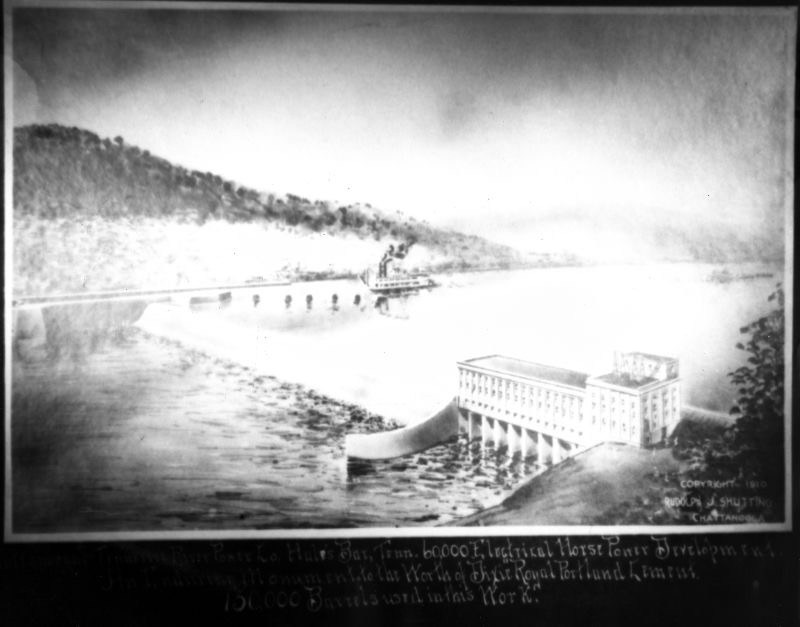
The Chattanooga News on Thursday, March 30, 1905, headlined: “Big Plant is a Certainty; Deal will be Finally Closed Prior to April 26 for Lock and Dam Electric Power Plant at Hale’s Bar on River.” The story “with reliably stated” accuracy reported that a lock and dam would be erected near the “Suck.” Charles James, Jo Conn Guild, and a number of eastern capitalists had secured, via the passage of a congressional bill, “the right to harness the water power in the Tennessee River.” The work would begin as soon as Maj. Henry C. Newcomer and his Corps of Engineers completed investigations and created working plans. To further the development, the investors agreed to “cede” jurisdiction to the national government within the next month over the land required for the lock and dam in exchange for the right to control the power plant. The proposed site was identified as “about five miles above Shellmound and thirty-three miles from Chattanooga.”
The proposed dam, lock and power plant would benefit the region beyond the production of “electric power.” The construction of the lock and dam at Hale’s Bar — later commonly written as Hales Bar — would improve navigation by providing backwater through the shoals, since the “Suck” and others had long presented an impediment to the effective use of the Tennessee and connecting rivers in reaching the sea.