
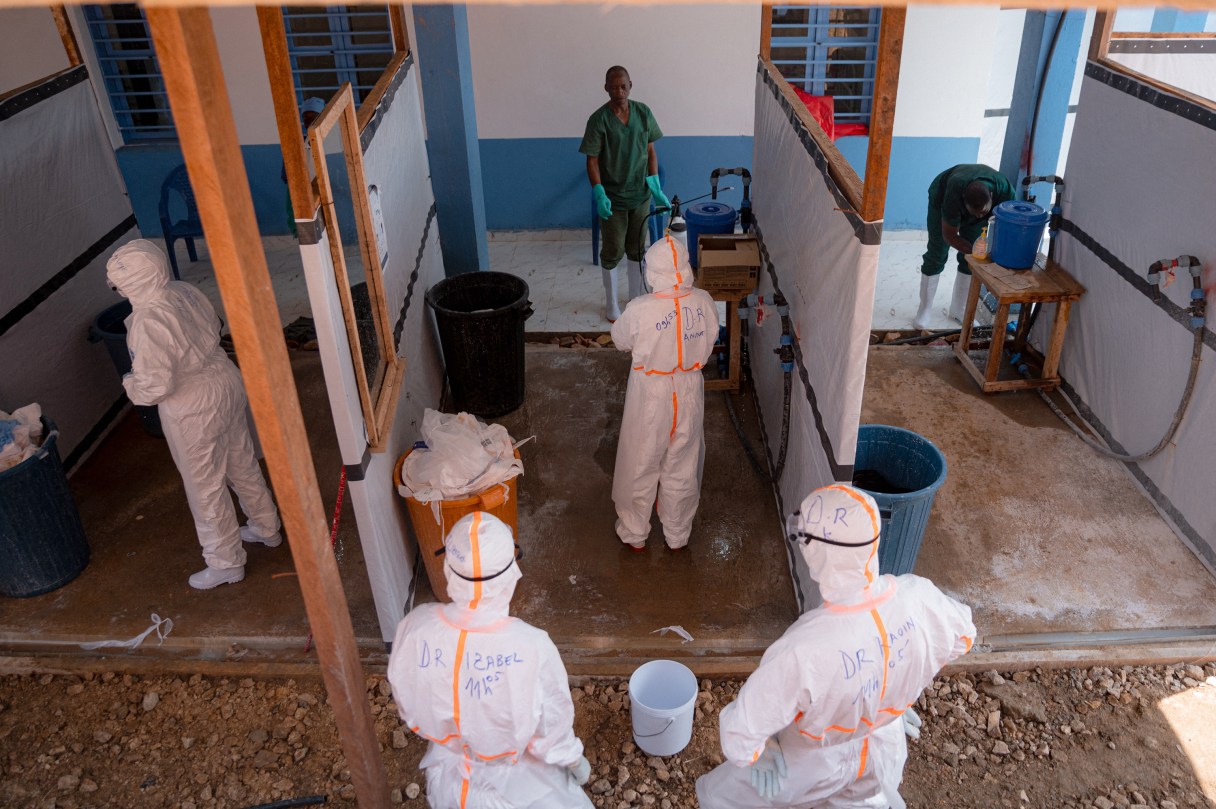
When the World Health Organization declared the West African Ebola epidemic a global emergency in 2014, I sat with my wife, Julie, and said aloud what both of us were thinking: People needed to step forward to fight the virus. As an ER nurse, I had the training; I had the experience. If not me, then who?
That question took me to Port Loko, Sierra Leone, where I worked with Partners In Health in an Ebola treatment unit. When I arrived in November, hospital services had collapsed following the deaths of many staff members. Bodies lay on porches and in the streets. Families were terrified. Health workers were exhausted. The Ministry of Health was desperate.
What I remember most is not simply the horror of the virus’s devastation, but also the extraordinary cooperation of the international response. I worked alongside Sierra Leonean nurses, cleaners, chlorine sprayers and doctors, as well as a Cuban medical team and Nigerian clinicians. Partners In Health and the World Health Organization were both active on-site. The effort was imperfect, under-resourced and often improvised. But it was also a living rebuke to the practice of nations walling themselves off.
At the 108-bed unit where I worked, we were treating Ebola in a building never designed for that work, often without adequate equipment. At first, about 90% of our patients died. We hung IV bags from nails pounded into wooden posts, and tracked patients on a whiteboard. We learned from our Sierra Leonean colleagues, from our patients and from our own mistakes. We developed new protocols, and our survival rate improved to 40%.
That experience taught me Ebola response cannot be only about containment. It must also be about care. If outsiders arrive only to take those who are sick into quarantine and bury the dead without traditional rituals, trust collapses. People hide their symptoms, families resist treatment and rumors spread faster than facts. In Sierra Leone, outreach to families and tribal chiefs and education were essential.