
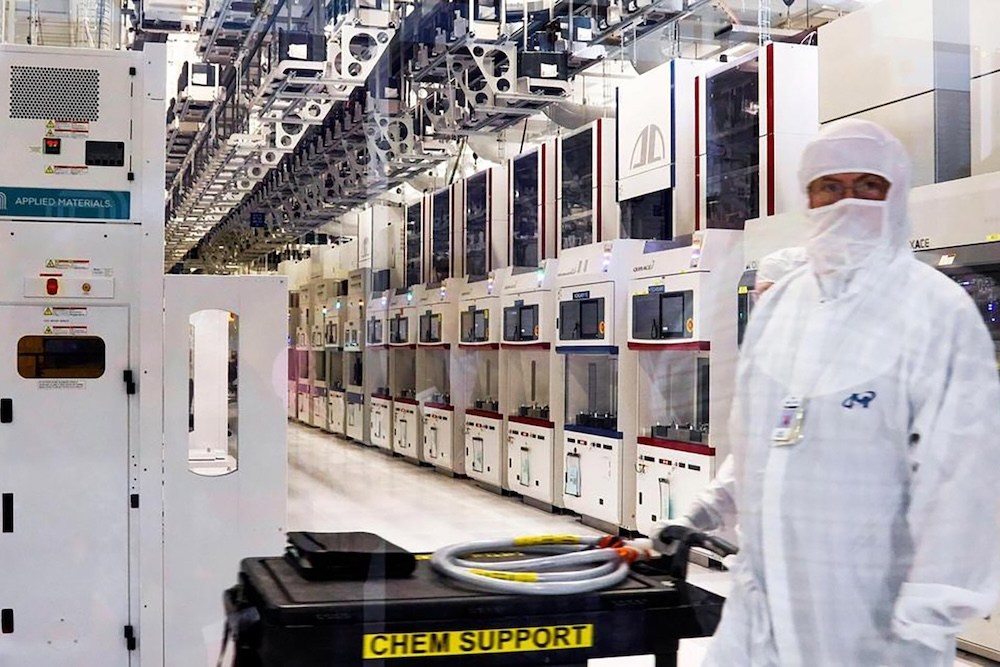
A growing nationwide shortage of high-skilled workers threatens to delay construction of billions of dollars in new semiconductor plants across the US and constrain future chip production unless the industry pools resources and the government keeps up funding, according to a new report.
The deficit is expected to be most acute in states such as Texas, California, Arizona, New York and Ohio, where many of the new facilities are being planned, according to new analysis including a survey of employers from McKinsey & Co., the chip industry group SEMI and the National Science Foundation. Altogether, the skilled labor deficit is projected to reach as much as 157,000 full-time workers by 2030, the study released Tuesday found.
The dearth of talent risks stalling plans by Taiwan Semiconductor Manufacturing Co. to invest as much as $265 billion in a dozen chipmaking and packaging facilities in Arizona, as well as Micron Technology Inc.’s vision to spend $100 billion on memory chip production in New York and Samsung Electronics Co.’s logic chip facility in Texas. Even Intel Corp.’s delayed $28 billion investment in Ohio is set for shortages once production ramps up, the report said.
The workforce challenges mark the latest hurdle for chipmakers seeking to expand their manufacturing footprint in the US and reverse the migration of production capacity to Asia that unfolded decades ago. Rising prices for a wide range of goods including copper, steel and cement threaten to increase the cost of construction for new facilities billed as a centerpiece of President Donald Trump’s economic agenda.
At the same time the chip industry expects to see a worker shortfall, the AI boom — and companies’ rush to invest in it — has also been blamed for layoffs in other parts of the labor market, including in the tech industry. Challenger, Gray & Christmas, which tracks layoff plans, found almost 102,000 announced job cuts attributed to AI so far this year.