
The separation of church and state is under attack from familiar quarters.
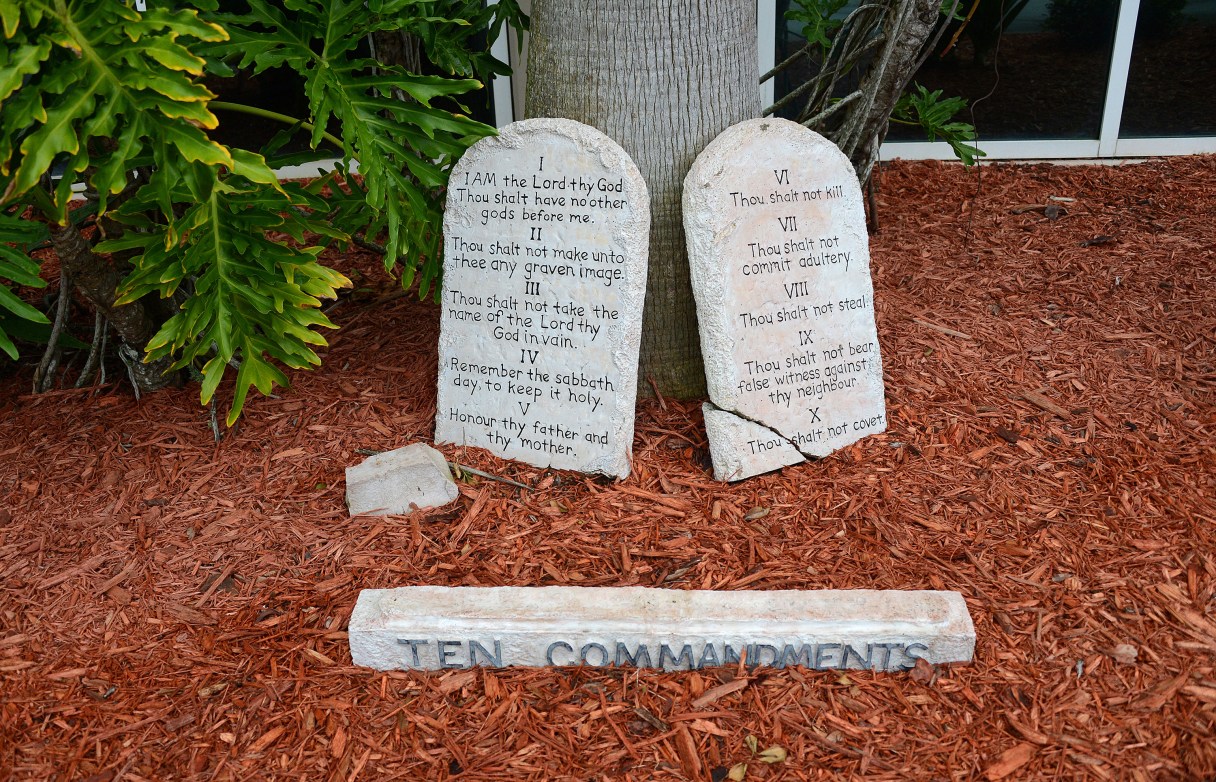
Not only does Texas require a copy of the Ten Commandments in classrooms, but it has also voted to make Protestant translations of the Bible required reading in English classes. To add insult to injury, the recently released report by the president’s Religious Liberty Commission called for a bridge between church and state, rather than a wall as Thomas Jefferson once described it.
The reasoning is that America was founded on Christian principles, and, according to some, ought to adopt Christianity as its official religion. This ignores the obvious fact that the Constitution prohibits Congress from giving official status to any religion or from preventing someone from practicing the religion of their choice.
Let’s ignore the Constitution for a moment and ask what the country would look like if it were a Christian nation. The first question is: Whose Christianity?
Would it be Roman Catholic, Eastern Orthodox, Reformed/Presbyterian, Methodist, Baptist, Pentecostal or Adventist? Some people raise doubts about Mormons and Unitarians. Anyone who thinks that the differences between these sects are minor is invited to read about the wars, massacres and persecutions that erupted between them in the 16th and 17th centuries.
Once we settle that question, we will face a host of other questions. Can non-Christians vote, run for public office or serve in the military? Will tax dollars be used to build churches or pay clergy? Will alcohol be legal? Can stores stay open on Sundays?
We don’t need to speculate because history offers numerous examples. In Colonial times, it was illegal to celebrate Christmas in Massachusetts because the Puritans considered it a papal and therefore idolatrous celebration. It was not until 1856 that the legislature granted Christmas the status of a legal holiday. At one point, it was illegal to teach the theory of evolution in Tennessee. To this day, many states prohibit the sale of alcohol on Sundays or Christmas. Some prohibit the sale of automobiles on Sunday as well.
It is not my intention to single out Christianity. Jew-on-Jew violence goes back to ancient times. In modern-day Israel, the state grants a monopoly to Orthodox Judaism over marriage, divorce and kosher certification in addition to providing financial support for Orthodox institutions. Shiite and Sunni Muslims have been killing each other for centuries, and the status of women in some Muslim countries is deplorable.
The problem with breaking down the wall that Jefferson envisioned is this. The state has two ways of regulating behavior: persuasion and coercion. If you are not convinced that paying your taxes is the right thing to do, the state can fine you or incarcerate you. The church has only one way: persuasion. If the boundary is compromised, the church too will become coercive. This often means that those not persuaded by its teachings can be fined, jailed, even killed.
It is at exactly the point where religion becomes coercive that it fails us. Instead of promoting quiet virtues such as charity, humility and repentance, it becomes dogmatic, sure that it and only it offers the way to salvation. The next step is often violence against those who think differently.
If religion is corrupted by breaking down the wall of separation, the same is true of the state. At the moment, Congress is having a terrible time deciding how to levy taxes, go to war, protect Social Security, confirm judges and live within its means. Do we really want it to take up what Jesus or another religious figure tried to teach as well?
The framers of the Constitution knew what they were doing when they prevented the establishment of a national religion. Having witnessed centuries of religious warfare in Europe, when millions were killed for their beliefs, the framers took pains to make sure nothing like that would happen here.
We are asking for trouble if we ignore or try to dismantle one of the most important features of our heritage.
Kenneth Seeskin is an emeritus professor of philosophy and Jewish civilization at Northwestern University.