
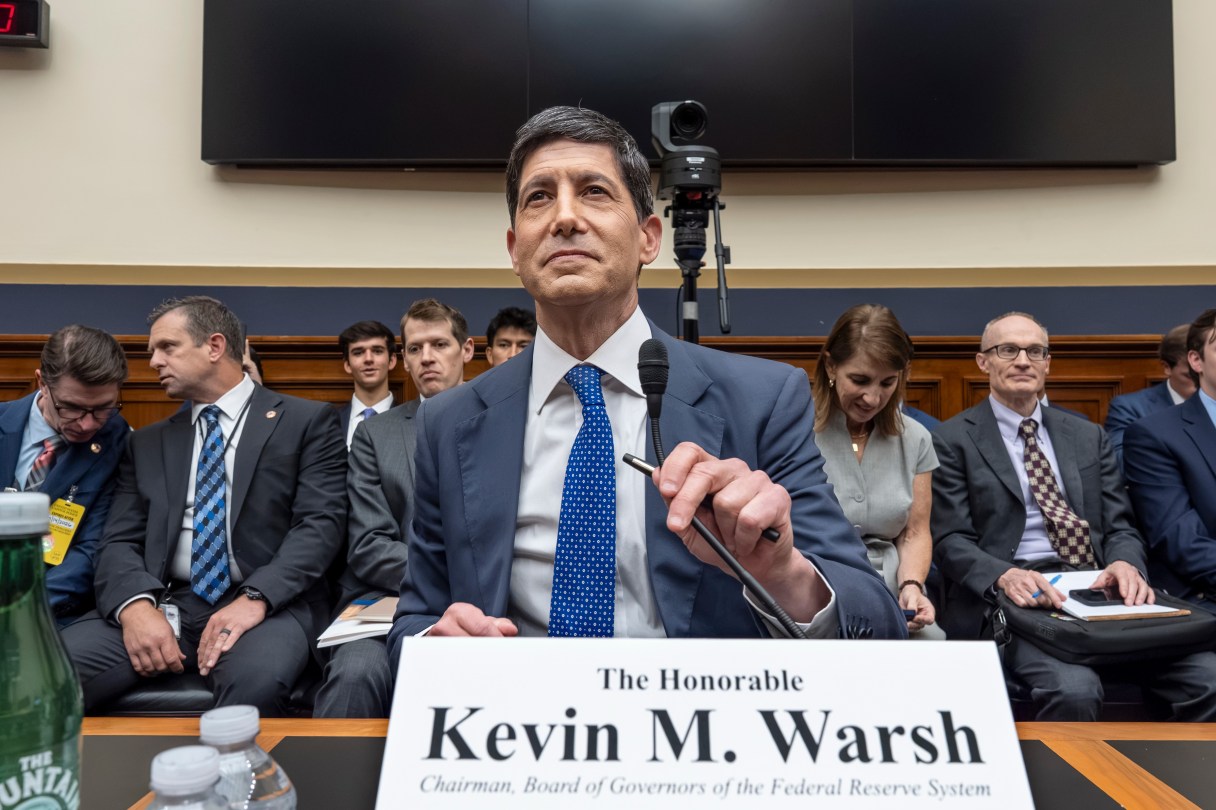
WASHINGTON (AP) — Federal Reserve Chair Kevin Warsh said Tuesday that the Fed will make high inflation “a thing of the past,” yet he provided no signal about the central bank’s next steps.
Fed policymakers “have no tolerance for persistently elevated inflation,” Warsh said in his first appearance before Congress since becoming chair May 22, replacing former chair Jerome Powell. “And we share a resolute commitment to restoring price stability.”
Still, Warsh heads a sharply divided rate-setting committee, with about half of the 19 policymakers penciling in higher interest rates by the end of the year in forecasts released last month. Another half have signaled that they support keeping rates unchanged or even cutting them. Warsh faces a stiff challenge in reconciling the divided committee while navigating a rapidly-changing economic outlook.
Warsh spoke to the House Financial Services Committee soon after the government reported that inflation fell 0.4% from May to June, driven down mostly by cheaper gas prices. Core inflation — which excludes the volatile energy and food categories — was unchanged last month, a broader slowdown in price increases than economists expected.
Compared with a year ago, inflation dropped to 3.5% from 4.2% in May. Core inflation rose just 2.6% in June from a year earlier, down from 2.9% in May, a positive sign that higher gas costs haven’t yet lifted broader prices. Still, the core figure is above the Fed’s 2% target.