
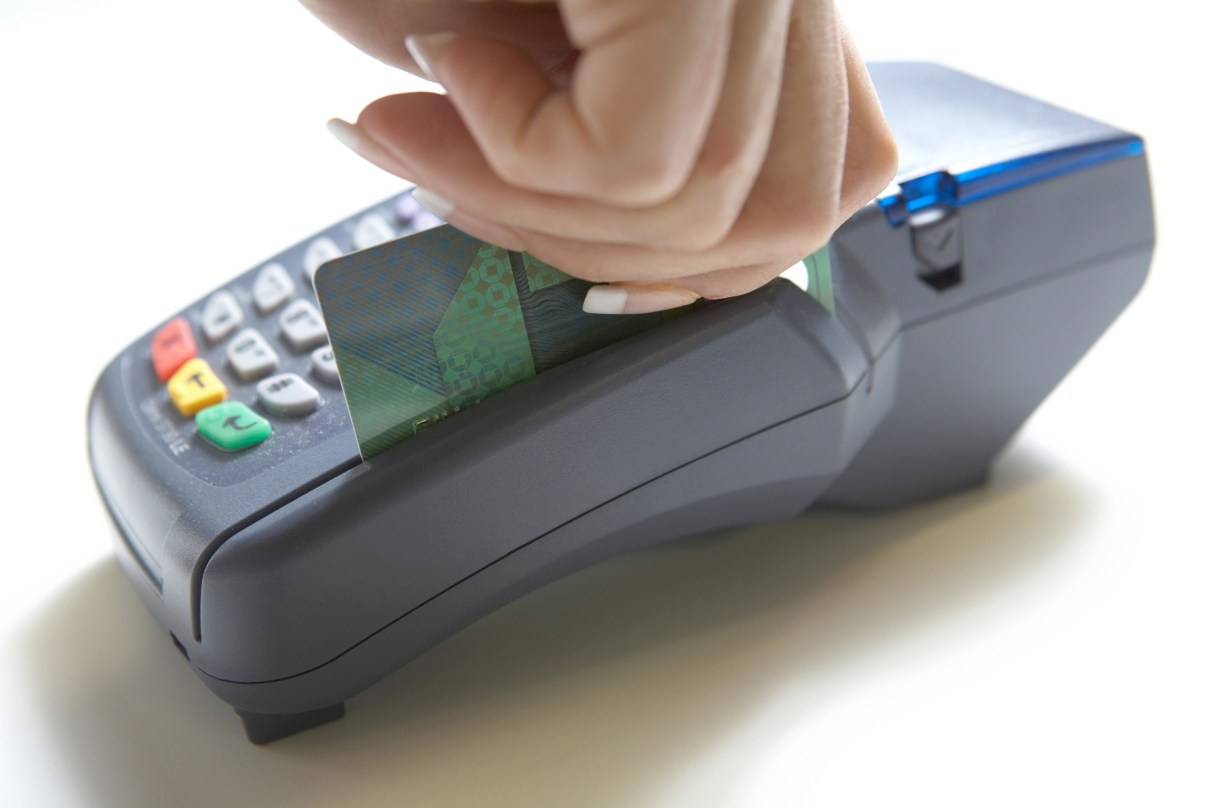
People love the convenience of simply swiping a credit card or tapping their smartphones when making a purchase, but now lawmakers want to micromanage these transactions line by line, imposing intrusive bureaucracy that will add costs and interference to a well-oiled machine.
When a customer makes an electronic payment, data on the sales travels from the register to the merchant’s bank, to a card network, to the customer’s bank and back again, giving a thumbs up or down on the transaction. Along with this instant authorization, there’s fraud protection and a guarantee that the merchant gets paid even if the customer doesn’t pay his bill.
To finance this massive payment network — which Americans use billions of times each day — card companies charge an interchange fee, typically a percentage of the total sale. Some politicians now want to exempt the sales tax portion of a bill from being subject to that interchange fee.
The proposal sounds modest: Buy a $50 item in a state with a 6% sales tax, and the pitch is that the network should collect its fee on $50, not $53. Who could object to shaving off a few pennies from such a transaction? But the pennies aren’t the point — it’s the mechanics.
Sales tax varies widely around the country. States like Delaware have no sales tax and ban local governments from charging one. Alaska has no sales tax, but local jurisdictions can charge up to 7.5%, which happens to be the state sales tax in California. But then local governments can add several percentage points on top of that.