
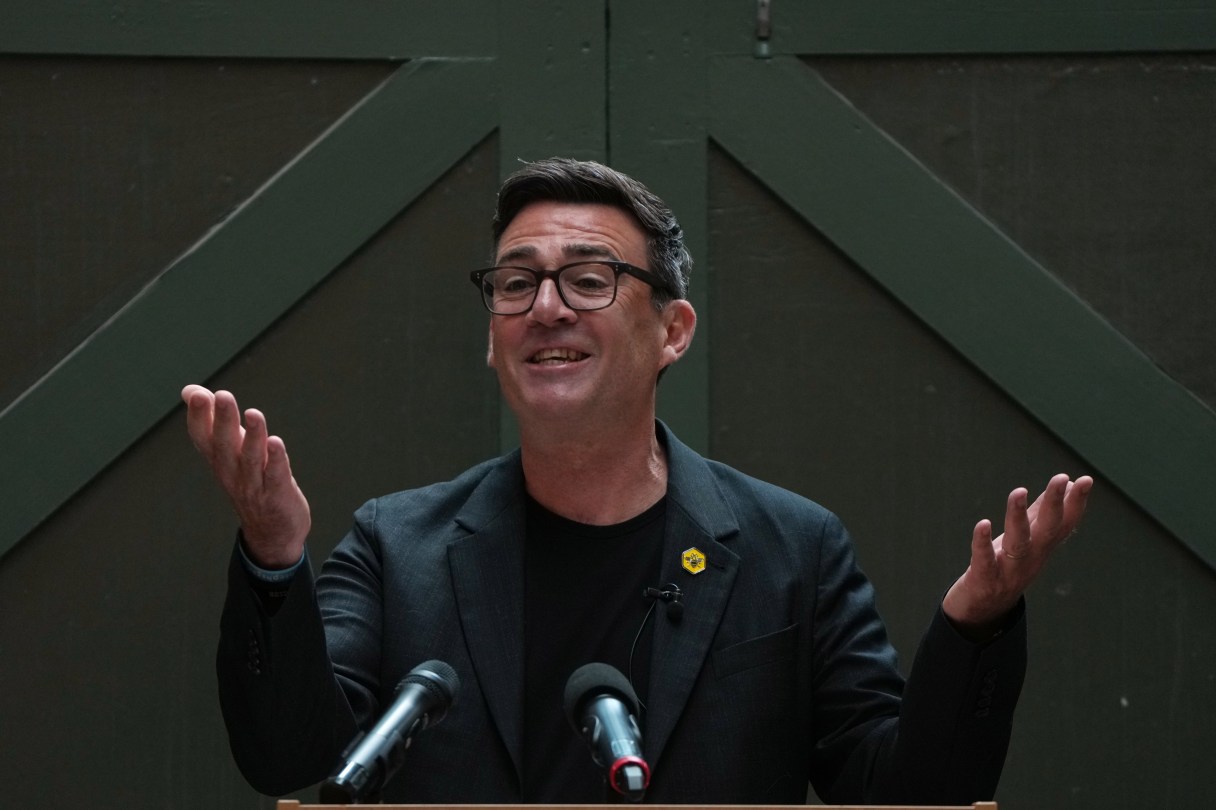
LONDON (AP) — Veteran Labour Party politician and popular former Greater Manchester mayor Andy Burnham is set to become Britain’s next prime minister on Monday, formally taking over from Keir Starmer, who announced his resignation last month.
Burnham was the only candidate to secure enough support from his fellow Labour lawmakers to replace Starmer as leader of the governing party. Because Labour holds a majority in government, its leader also becomes the U.K. prime minister.
Burnham received support from 349 out of 401 Labour Party lawmakers, and was announced Labour leader at a special party conference on Friday. He didn’t officially become prime minister right away, though — that happens on Monday, when he meets King Charles III at Buckingham Palace for a formal go-ahead. Until then, Starmer remains caretaker prime minister.
A look at how and why Britain is getting a new prime minister just two years after Starmer led his party to a landslide election victory:
Why is there a change of leader without a general election?