
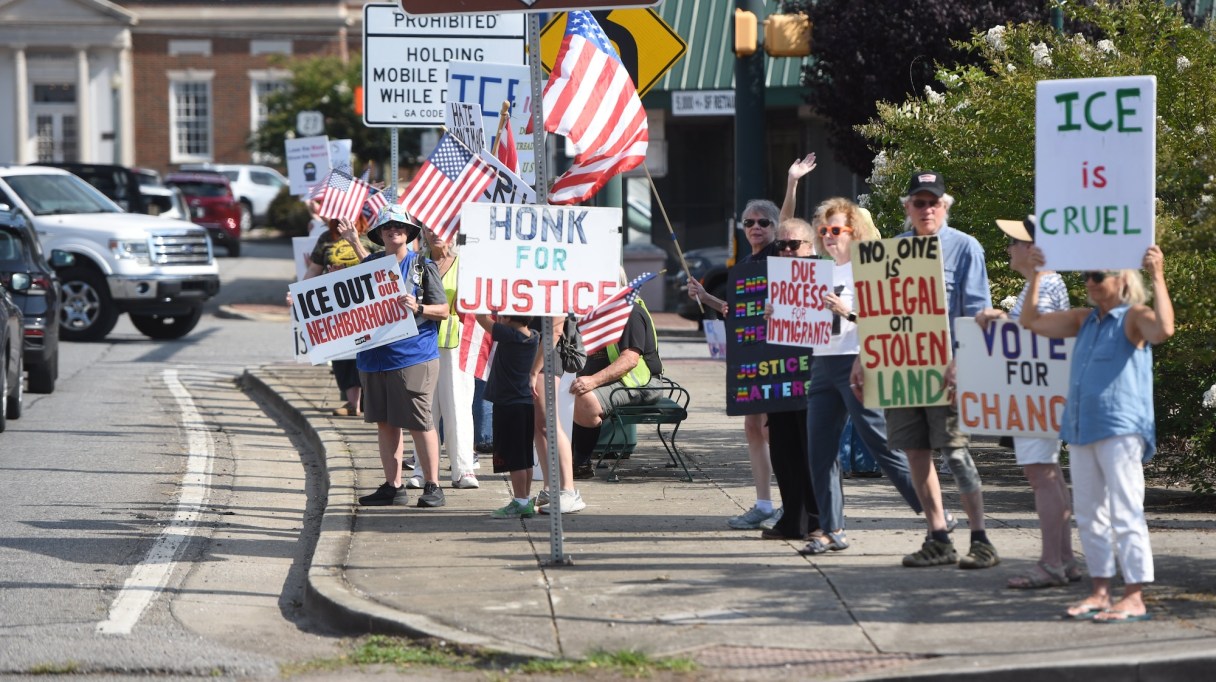
The five largest single-day political protests in U.S. history have occurred during recent years, all in reaction to Trump administration policies. The unprecedented activism of today’s protest movement surpasses that of years past.
The Crowd Counting Consortium, jointly sponsored by the Harvard Kennedy School and the University of Connecticut, has found recent political protests to be more massive than those during the 1960s. More importantly, those protesting today reflect broader participation across age, race and gender groups compared to the younger, more homogenous anti-war protesters of 60 years ago.
Current political protests have not been limited to immense events, such as the No Kings rallies. Week after week, many thousands of tirelessly engaged Americans throughout the country repeatedly express opposition to administration policies. Readers of this commentary have likely witnessed, if not directly participated in, such smaller scale, rush-hour political demonstrations by sign-carrying protesters on the streets and bridges of Chattanooga.
Modern political protesters are not driven by a single ideology but find common cause in a multiplicity of overlapping concerns about the direction of our government. Examples crowd one another for attention.
Some choose activism because of cutbacks of support for those most vulnerable among us, as reflected in reduced funding for the Supplemental Nutrition Assistance Program, or SNAP, and Medicaid.