
SAN FRANCISCO — When Google prepared to go public in 2004, Larry Page, a co-founder of the company, wrote a letter to shareholders describing the internet firm’s responsibility to the world.
“We believe a well-functioning society should have abundant, free and unbiased access to high-quality information,” Page said.
Google fulfilled that responsibility by acting as a gateway to the internet. It answered people’s search queries with lists of hyperlinks, pushing users out to what is known as the “open web” — the millions of websites run by merchants, publishers, universities and others — for more information. In the ensuing decades, Google became one of the planet’s richest and most powerful companies by directing people to the vastness of the open web.
Now in the age of artificial intelligence, Google appears to be shrinking back from the open web — and may be imperiling it.
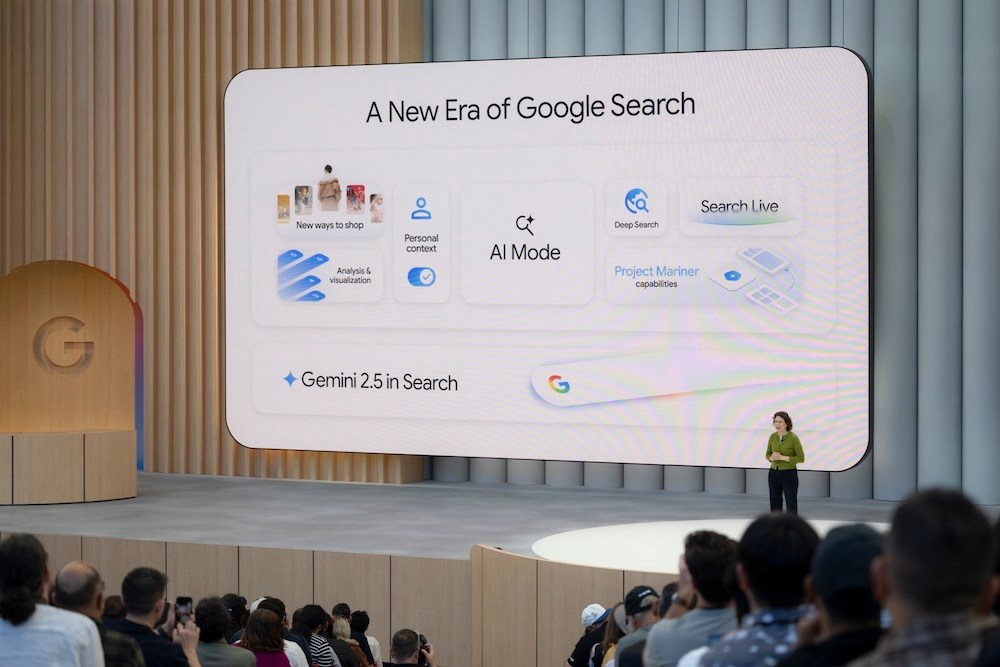
Since last year, the Silicon Valley giant has revamped its search with AI. It introduced AI Mode, which replaces search results of hyperlinks with conversational responses written by Gemini, its AI chatbot. Most recently, Google changed its iconic search box for the first time in 25 years so that people could add photos and videos to their queries and assign AI “agents” to run searches for them.