
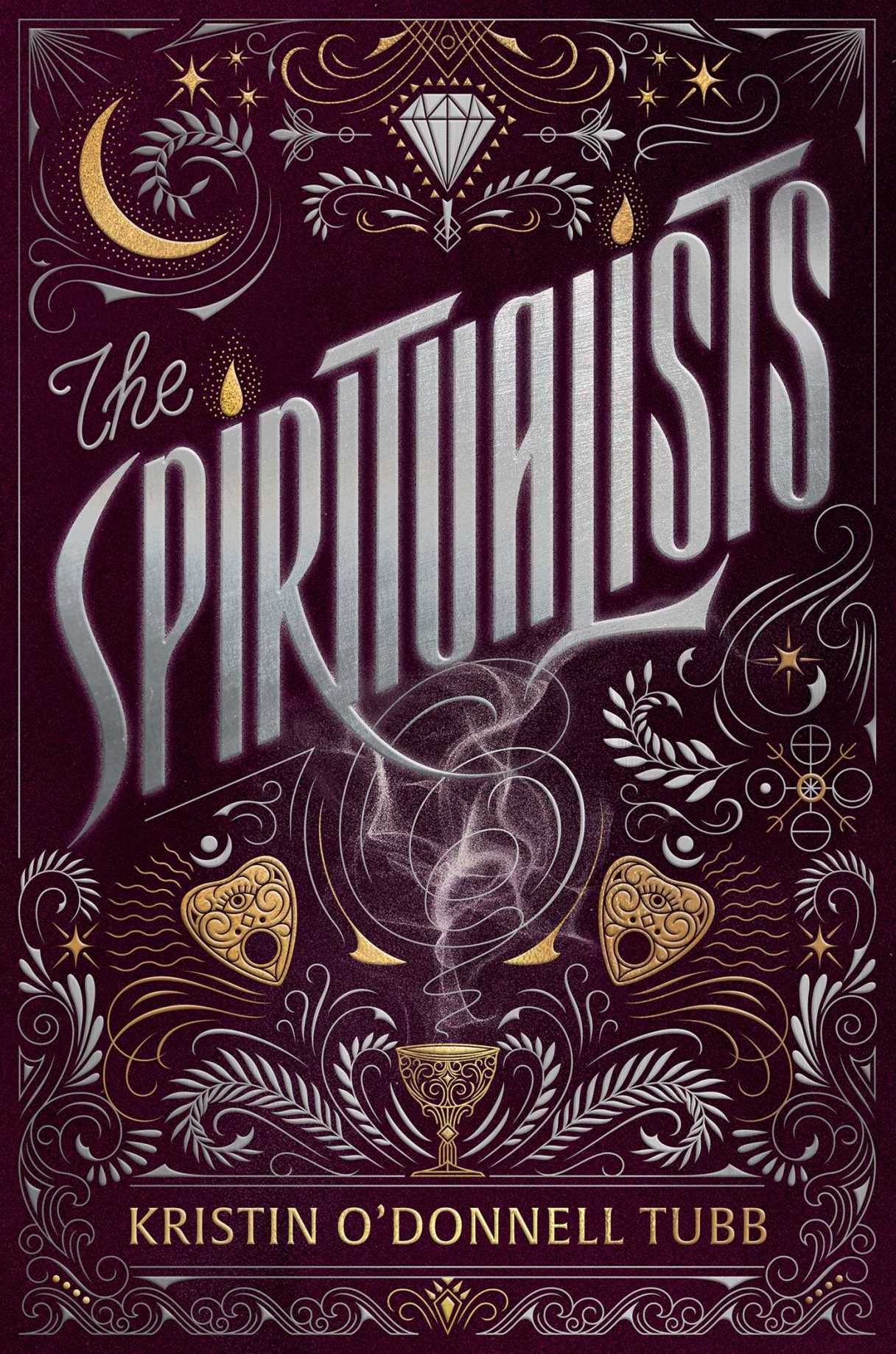
“The Spiritualists” By Kristin O’Donnell Tubb (Simon & Schuster Books for Young Readers, 416 pages, $19.99)
“In one week, my life will be different,” muses 17-year-old Stella Bohdan, the narrator of Kristin O’Donnell Tubb’s first YA novel, “The Spiritualists.” “I might be wealthy, I might be on the lam, I might be in jail. But it will be different, at long last. The possibilities are endless, and I can practically taste the danger and excitement of it all.”
The year is 1912, and the place is New York City, where Stella is a medium called Lady Rose, legitimately able to hear the voices of the dead, whom she collectively refers to as “Spirit.” While this ability enables her to make a living, it’s definitely a double-edged sword: “I am never alone, never, and yet I’m the loneliest person I know, dead or alive,” Stella complains. “My whole life is noise, constant static from the Other Side.”
In addition to the sounds, smells, tastes and visions that Spirit sends her — whether she wants them or not — she is also on the run from zealots following her around the city to denounce her as a witch and Satanist. And worst of all are the three malevolent figures who appear in the shadows of Stella’s consciousness when her choices flirt with the dark side: “Their eyes are inky hollow pits, their tongues like snakes, their breath like garbage. They are monsters. They are fiends. I’ve not looked at them directly, ever. I instinctively feel that if I look directly at them, I’m inviting evil in.” It’s a lot for a teenager to deal with.
Stella is also suffering from grief and guilt over the death of her beloved older sister, Daisy, who perished the previous year in the infamous Triangle Shirtwaist Factory fire, in which 146 garment workers died, mostly women and girls. Her sister’s is the one voice Stella cannot hear, and it seems that Daisy, a tarot reader in life, has plans of her own regarding the living — plans that may put her soul in jeopardy. “If I decide to help Stella avenge my murder, I am choosing Darkness,” Daisy explains. “But if I choose to move into the light, I leave forever. I cannot continue to guide and protect my little sister.” Daisy’s voice comes through to the reader clearly, in intermittent chapters in which she highlights particular tarot cards and their meanings as they relate to the story.