
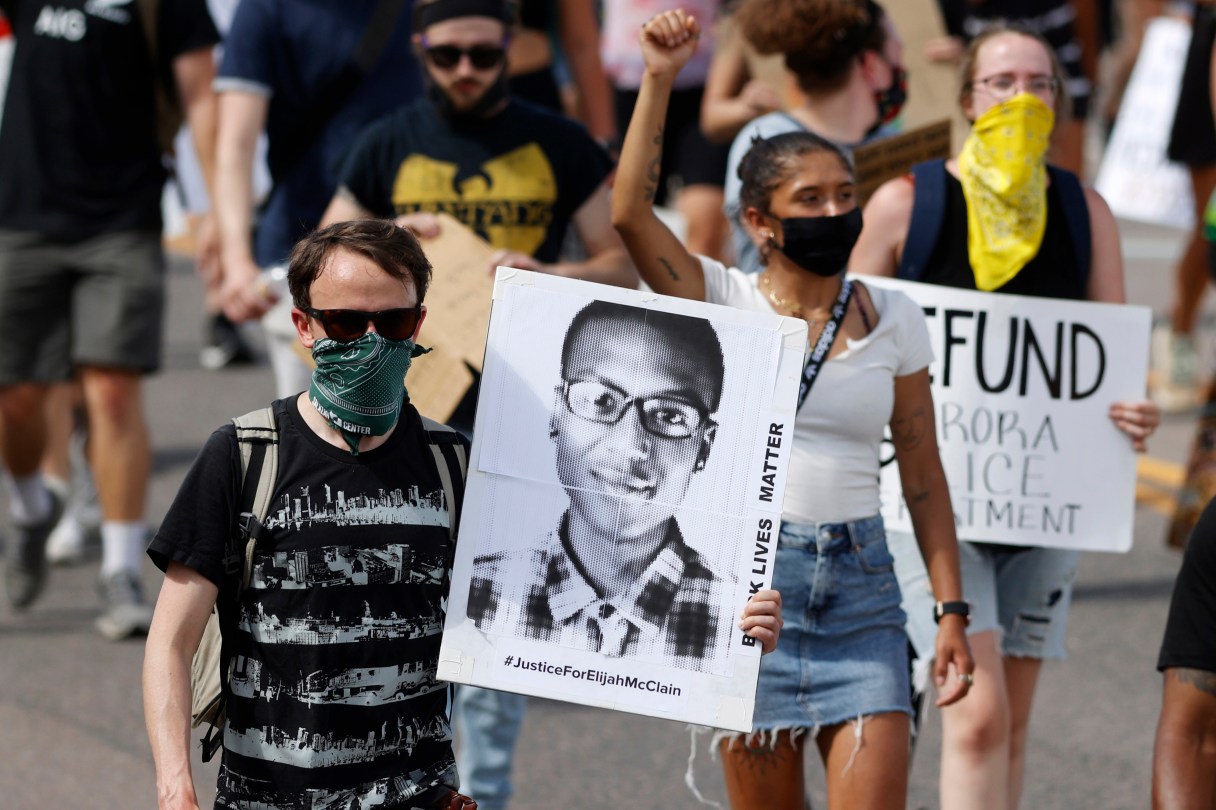
FORT COLLINS, Colo. (AP) — A Colorado court reversed homicide convictions against two paramedics on Thursday in the 2019 death of Elijah McClain, a Black man who was pinned down by police and injected with a fatal dose of ketamine.
McClain’s final words — “I can’t breathe” — foreshadowed those of George Floyd a year later in Minneapolis, and the Colorado man’s name became part of the rallying cries for social justice that swept the U.S. in 2020.
The appeals court ordered new trials for Aurora Fire Rescue paramedics Jeremy Cooper and Peter Cichuniec. McClain, 23, had been forcibly restrained and put in a neck hold by police, who stopped him in response to a suspicious person complaint as the massage therapist walked home from a convenience store in the Denver suburb in 2019.
Criminal charges against paramedics and emergency medical technicians involved in police custody cases are rare. As McClain’s death and others raised questions about the use of ketamine to subdue struggling suspects, this prosecution sent shock waves through the ranks of first responders across the U.S.
New trials in the case will return the issue to the spotlight, and that could make first responders think twice when responding to calls involving people in police custody, said University of Miami criminologist Alex Piquero.