
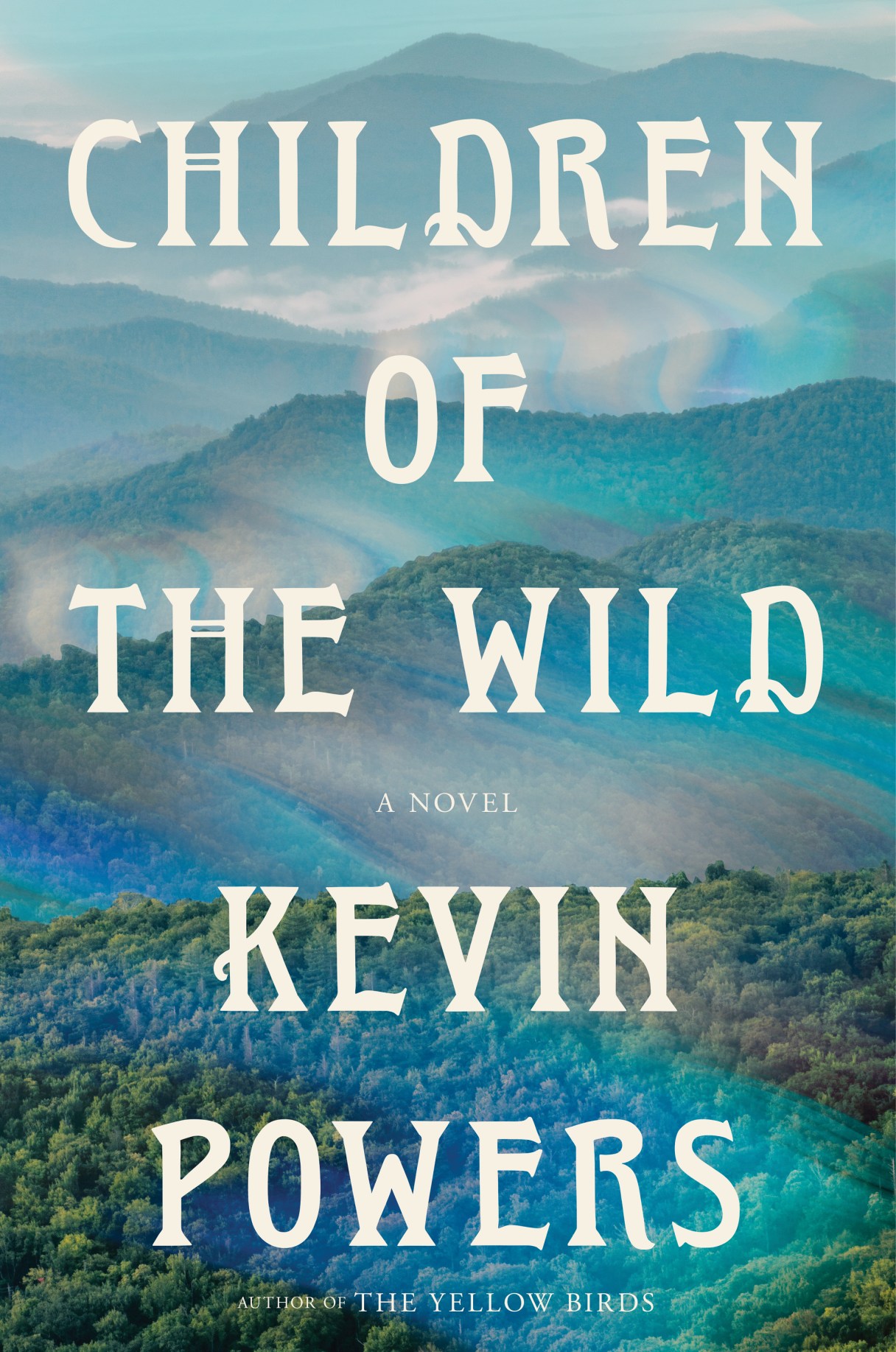
“Children of the Wild” By Kevin Powers (Harper, 320 pages, $30)
In 2012, Kevin Powers published his landmark debut novel, “The Yellow Birds.” A stark, elegiac tale of American soldiers enduring the chaos of the Iraq War, the novel was the PEN/Faulkner Award winner, a National Book Award finalist and a bestseller. Powers’ intense depiction of combat and camaraderie and his credibility as an Iraq War combat veteran certainly played some role in the popularity of “The Yellow Birds.” But its critical acclaim derived much more from the lyricism of Powers’ sentences and the precision and vividness of his images, earning him comparisons to the likes of Tim O’Brien, Cormac McCarthy and even Erich Maria Remarque.
The last comparison feels especially apt with respect to Powers’ new novel, “Children of the Wild,” the story of two young men from rural Virginia — one rich, one penniless, both in love with the same woman — and the inseparable bond they form through the shared experience of the horrors of World War I. Powers’ themes draw to mind Remarque’s timeless classic “All Quiet on the Western Front,” but the style and form of “Children of the Wild” hew closer to that of McCarthy, American fiction’s archetypal bard of graphic violence and humanity’s capacity for inhumanity.
The novel begins in 1917, as wealthy scion Roy Young returns from his studies at Vanderbilt to Ewer’s Rock, a fictional town in the Appalachian region of Southwest Virginia. After college, Roy expects to take up his rightful place as his father’s heir and to marry Samantha Hatton, his lifelong friend and childhood sweetheart. Samantha, however, doesn’t view herself as Roy’s to claim.
When the mysterious Ennis Duke emerges from the mountain woods and is taken in by the people of Ewer’s Rock, a powerful mutual attraction draws Sam into a passionate romance with the so-called “wild boy.” This love triangle results first in conflict, followed by the less predictable formation of a fast friendship, as Roy humbly accepts Sam’s choice and embraces Ennis as a kindred spirit. Such a turn of events would stretch credulity from a less skillful writer, but Powers’ subtle characterization makes the intense bond between the raw, uneducated Ennis and the entitled but honorable Roy not just plausible but persuasive. “Roy sensed that, despite their differences, they shared certain qualities,” Powers writes. “For one, they were likely the kind of boys for whom violence was a native tongue, a way of expressing themselves that didn’t require insight or maturity. If they both spoke that language, Roy figured, it was no surprise they’d tried to understand each other by conversing in it.”