
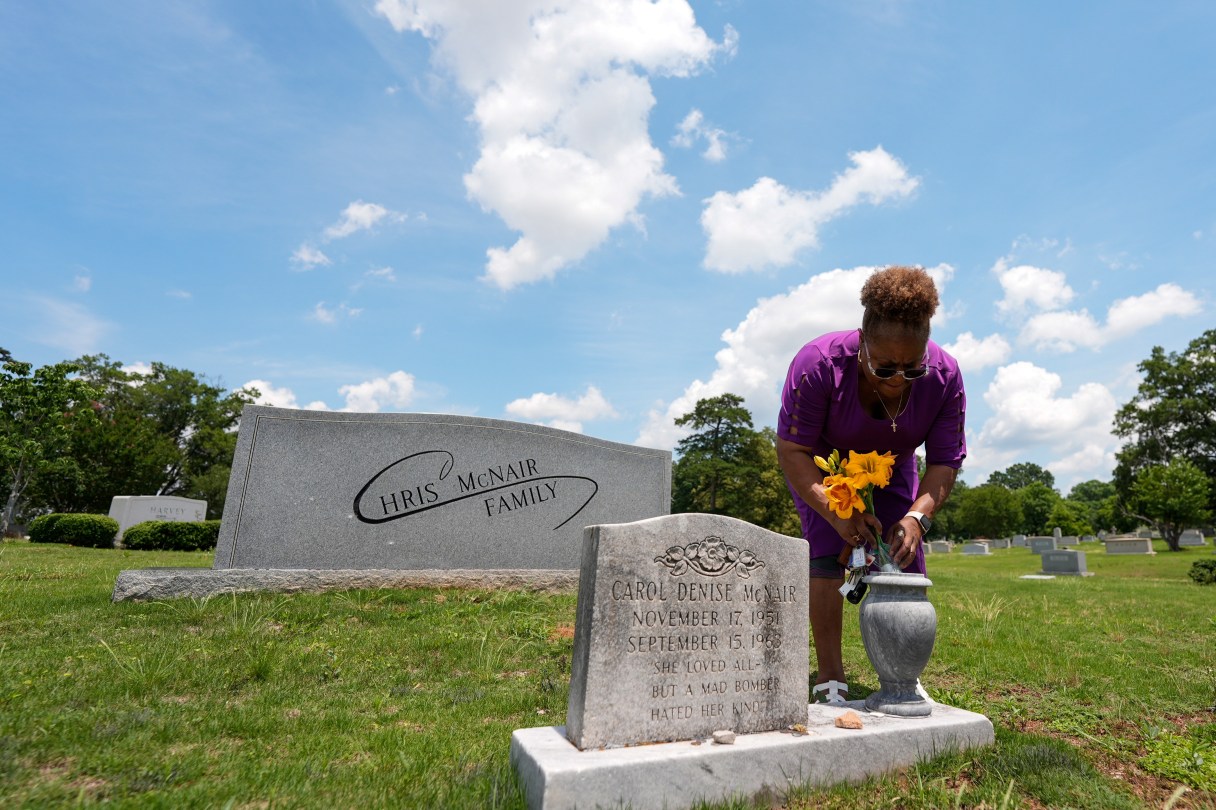
WASHINGTON (AP) — Holiday gatherings and major life events have come with an empty seat. Certain dates on the calendar meant time at a cemetery, standing before granite stones.
They are a relatively small group of people, scattered across different states, but they share a common bond that stretches back decades: Each had a family member die violently in the struggle for voting and civil rights, victims on a long and difficult path marked by blood that ended when the country seemed to mature into the nation of its creed.
But 61 years later, and as the country approaches its 250th anniversary, those sacrifices are in question. In a series of decisions over the past dozen years, including one in April, the Supreme Court has effectively dismantled the law that their family members died to see enacted, the Voting Rights Act of 1965.
“My mother’s blood is on that bill. We were always proud of that, and now it’s gone,” said Anthony Liuzzo, whose mother, Viola Liuzzo, died on an Alabama highway between Selma and Montgomery while driving marchers in 1965.
Critics of the law argue that times have changed, a point Chief Justice John Roberts made in a 2013 decision that was the first major step in rolling back the law.