
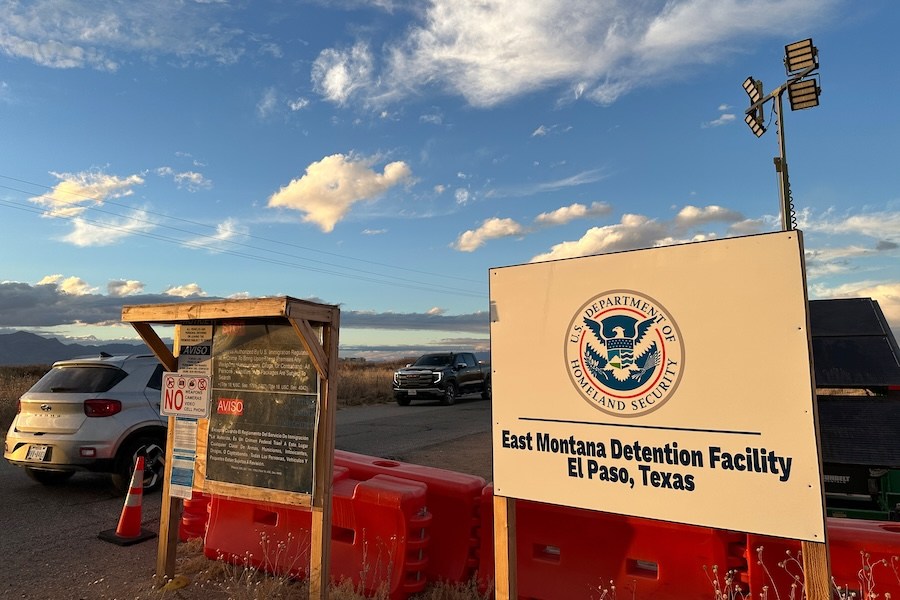
EL PASO, Texas (AP) — Serious medical and mental health emergencies have been routine at the nation’s largest U.S. Immigration and Customs Enforcement detention facility since its opening, according to records obtained by The Associated Press.
Data and recordings from more than a hundred 911 calls at Camp East Montana in El Paso, Texas, along with interviews and court filings, offer a disturbing portrait of overcrowding, medical neglect, malnutrition and emotional distress.
Current and former detainees describe a camp where about 3,000 people have lived per day in loud and unsanitary quarters. They say detainees struggle to obtain health care as disease spreads, lose weight because of a lack of food, and fear security guards known to use force to put down disturbances.
“Every day felt like a week. Every week felt like a month. Every month felt like a year,” said Owen Ramsingh, a former property manager in Columbia, Missouri, who spent several weeks in the camp before his deportation in February to the Netherlands. “Camp East Montana was 1,000% worse than a prison.”
A Department of Homeland Security spokesperson who did not provide their name rejected claims of subprime conditions, saying Camp East Montana detainees receive food, water and medical treatment in a facility that is regularly cleaned.