
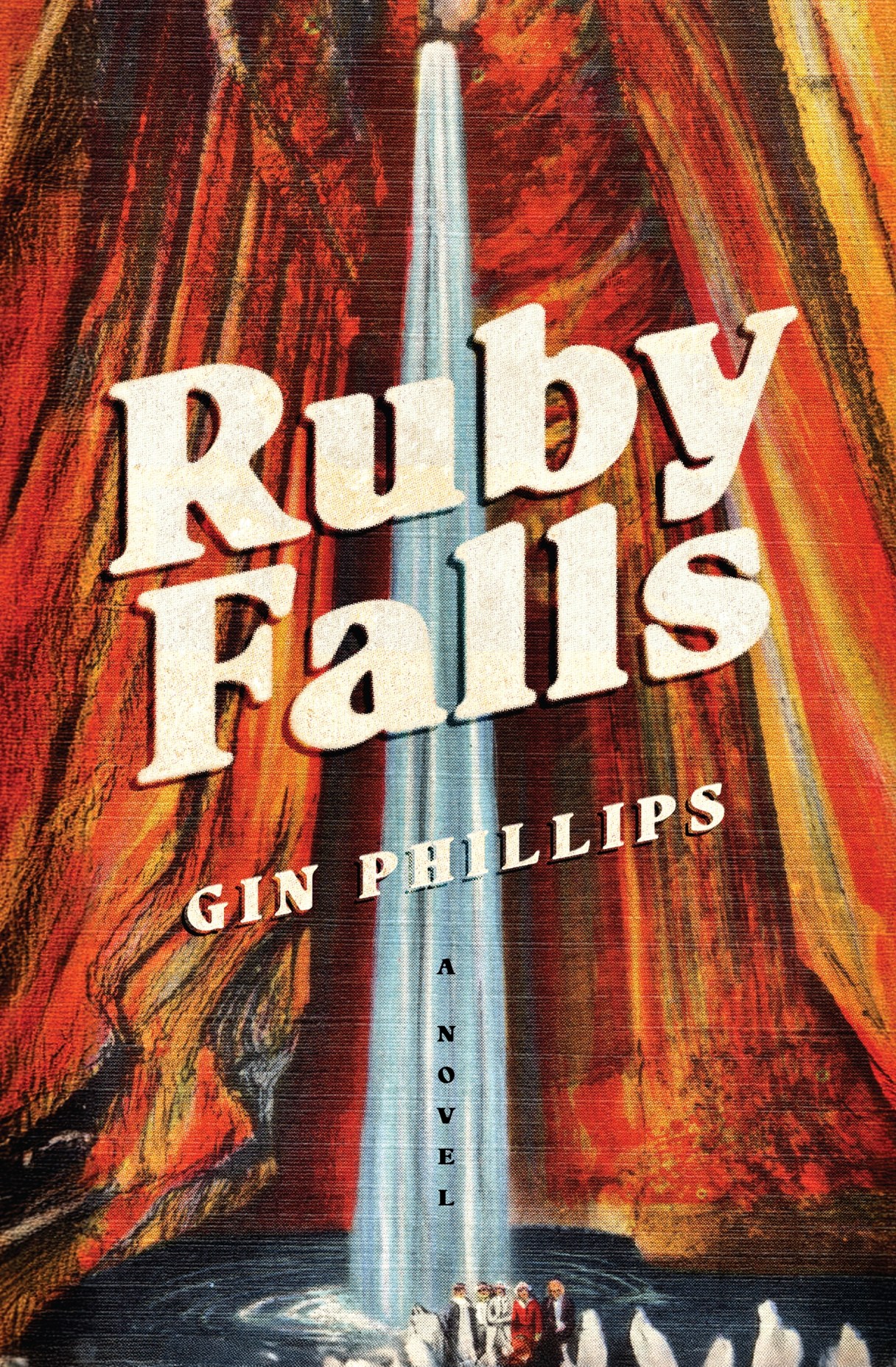
“Ruby Falls” By Gin Phillips (Atlantic Crime, 368 pages, $28)
The latest novel by Gin Phillips, “Ruby Falls,” opens with a brief scene of a corpse in a cavern deep underground in Chattanooga. “He is not alone. … He is a banquet,” the author writes, “and, if he were alive, he would be equally disturbed and pleased. He dislikes — disliked — wastefulness, so it’s appropriate that at least the bugs are getting something out of his murder.”
With that unsettling introduction, the novel proper begins a few years earlier and follows the events leading up to the crime. Because the dead man’s name is not given, the reader spends the first half of this engrossing and suspenseful novel wondering who has been killed. Six men and two women go into the cave for a publicity stunt that quickly turns frightening as tempers flare and patience frays. When the victim’s identity is finally revealed, the question remains: Who among them in this dark, damp and claustrophobic environment is the killer?
The real Ruby Falls Cave was discovered in 1928 by Leo Lambert, who named its majestic 145-foot-tall waterfall after his wife. Public tours began in 1930. Located more than 1,000 feet beneath Lookout Mountain, it remains the tallest underground waterfall open to visitors in the U.S.
In the novel, the tourist business hits a slump in 1932 due to the Great Depression. That’s when the fictional Lambert gets creative. To promote the attraction, he hires a psychic to find a hatpin hidden somewhere deep in the cave, using only the power of his mind.