
A few weeks ago I wrote about why I joined the Walk for Peace in Washington, D.C. Not long after that walk, our country moved toward war with Iran.
(READ MORE: Community Voice: Why I walked for peace — and why I’m staying in Chattanooga)
Just as painfully, my own community faced battles at home: Our school board proposed eliminating the district’s diversity policy in a system where 55% of students are students of color. The timing felt jarringly ironic, forcing me to reflect on a question people sometimes ask me: When did my view of the world change?
(READ MORE: Community voice: NAACP urges keeping HCS educator diversity policy)
The question often carries a quiet accusation, as if I must have been captured by a political ideology. The truth is much less dramatic. My perspective didn’t shift overnight. It changed slowly, through a lifetime of moments that made it harder to believe the simple story I had once been told about how the world works.
Some of those moments came early. When I was about 10, my African American nanny — who was like a second mother while my parents worked long hours — was driving us down Tunnel Boulevard in an old Chrysler LeBaron. She was the slowest, most careful driver I’ve ever known. A police officer pulled her over. I don’t remember what he said to her at first. I just remember him leaning forward, then looking past her and noticing me in the passenger seat. His tone changed immediately. “Oh,” he said. “You can go ahead.” I remember a strange knot in my stomach. I didn’t have the language for it then, but the feeling lingered for years.
In college, I once marched into a professor’s office ready to defend my Republican label after he made a comment in class that offended me. Instead of arguing, he poured tea and listened. A few years later, in my first presidential election, I voted for Ralph Nader — not because I had fully formed beliefs, but because the world was beginning to feel more complicated than the categories I had grown up with.
Life continued to present lessons that made that complexity impossible to ignore. When my son was born at 27 weeks, weighing just a pound and a half, we spent 98 days watching him fight for his life. Today he is a thriving 12-year-old, something I never take for granted. But during those long days, I sat with another mother as she made the decision no parent should ever face — to remove life support from her baby because the outcome would otherwise be a brutal death. Her child had been born in a hospital without immediate access to specialized care. She was Black. I am white.
Later, my sister lost her daughter suddenly to an illness that could not have been prevented. It took years and thousands of dollars in therapy and support to help her rebuild a life that could function again. Healing does not mean returning to the world that existed before. In our family alone, nearly a hundred people were changed forever by that loss. Working in health care, I have met parents who endure the same tragedies without resources, still struggling years later.
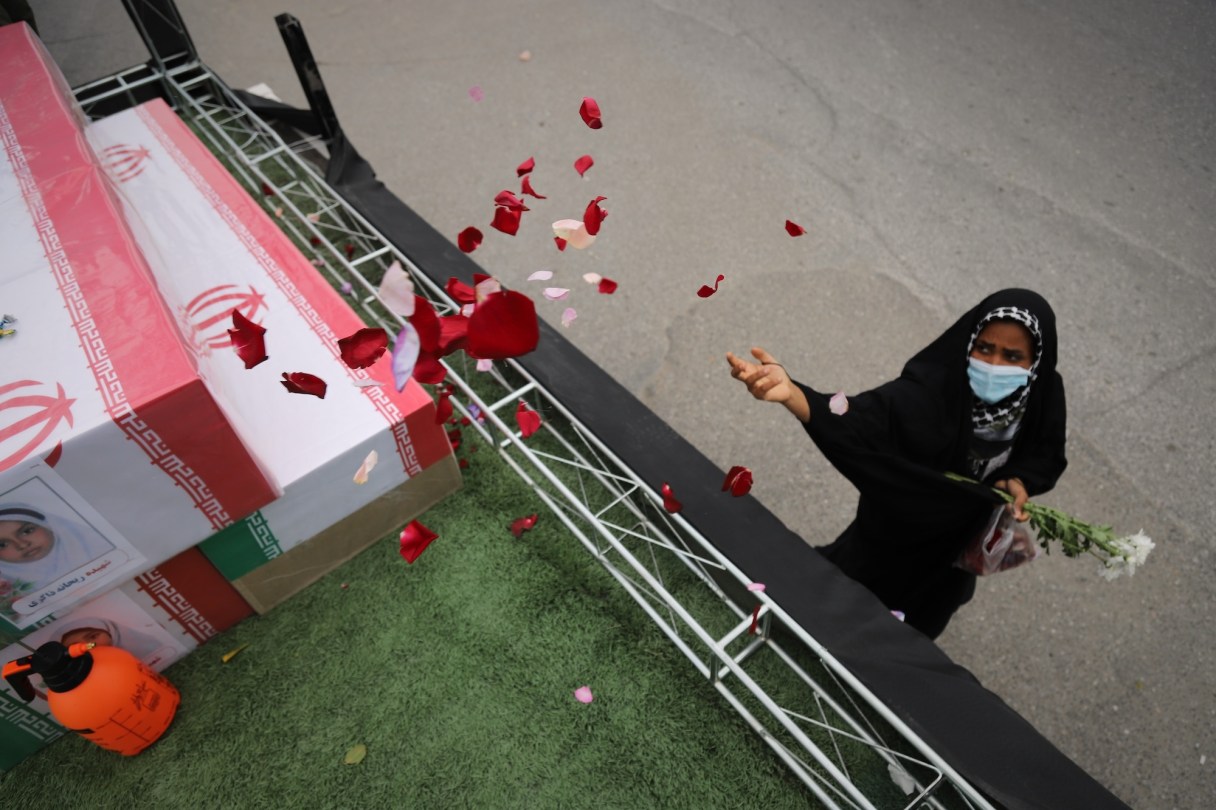
Those moments, big and small, taught me that consequences ripple far beyond the individual. The deaths of children in war weigh heavily on me, in Iran or elsewhere. When I read about students and teachers killed at a school, I could not see them as statistics. One child’s death reshapes hundreds of lives; multiplied across a hundred deaths, thousands more are touched forever. Children who grow up in that shadow may never think of the United States as a place of partnership, democracy or kindness.
Locally, inequities are closer to home. Some private schools with millions in endowments require families applying for financial aid to first apply for state vouchers — while those same people and decision-makers have likely never set foot in a public classroom. My husband, a public school teacher, fights for paper towels and toilet paper; my kids tell me their school often runs out of basic supplies. The contrast is striking. And as someone who went to private schools in Chattanooga, I can honestly say the education is just as good and my children are much less anxious and more grounded — it is the facilities that are different.
One moment from the Walk for Peace remains vivid. Walking quietly past the Capitol, surrounded by people moving peacefully, I thought about what this country was built on. The nation I learned about growing up was not founded by people storming buildings in anger, but by people who gathered to debate, collaborate and wrestle with difficult questions before taking action. Imperfectly, yes, but with the belief that decisions affecting millions deserved patience, humility and reflection.
In Buddhism there is a concept called right view. It does not mean clinging to a rigid ideology or believing you alone hold the truth. It means learning to see clearly — recognizing suffering and understanding the conditions that create it. Christianity expresses a similar idea, when Jesus teaches us to remove the plank from our own eye so we can see clearly. Over time, my own view of the world has shifted. And once your eyes begin to see differently, it is difficult to return to the simpler story you once believed. Sometimes it would be easier not to see so much suffering. But the strange gift of clearer vision is that when we allow ourselves to see suffering honestly, we also become more capable of easing it.
And in the same way, when we stop looking away from the world as it truly is, we also become able to experience its joy more fully. Maybe that isn’t radicalization. Maybe it is simply learning to see clearly.
Lauren Sloan is a multi-generational Hamilton County resident, mom of three in Hamilton County public schools, a healthcare executive and wife of a Hamilton County public school teacher.