
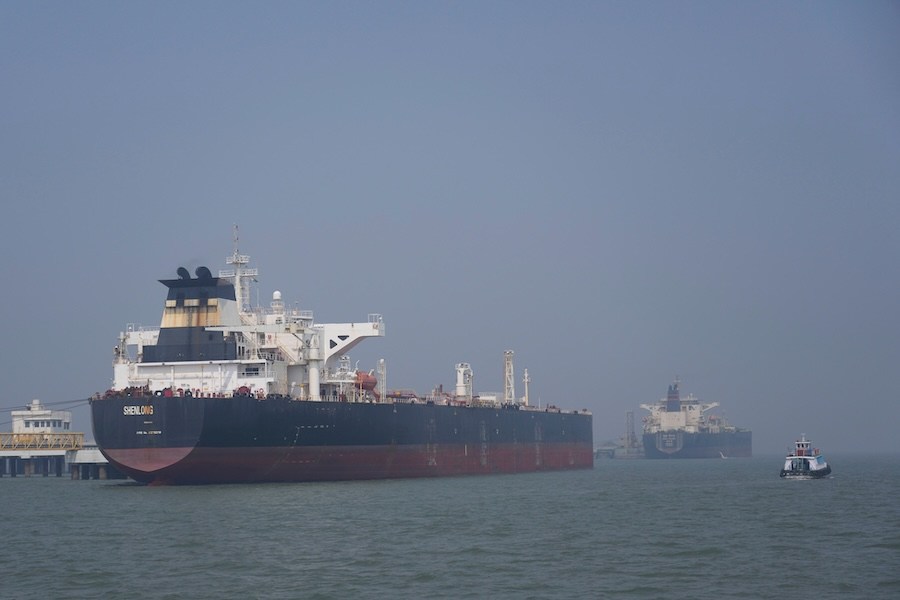
HONG KONG (AP) — About 90 ships including oil tankers have crossed the Strait of Hormuz since the outset of the war with Iran and it is still exporting millions of barrels of oil at a time when the waterway has been effectively closed, according to maritime and trade data platforms.
Many of the vessels that passed through the strait were so-called “dark” transits evading Western government sanctions and oversight that likely have ties to Iran, maritime data firm Lloyd’s List Intelligence said. More recently, vessels with ties to India and Pakistan have also successfully crossed the strait as governments stepped up negotiations.
As crude prices spiked above $100 a barrel, U.S. President Donald Trump pressured allies and trade partners to send warships and reopen the strait, hoping to bring oil prices lower.
Most shipping traffic through the Strait of Hormuz, a waterway for global oil and gas transport that supplies roughly one-fifth of the world’s crude oil, has been halted since early March, after the war started. About 20 vessels have been attacked in the area.
However, Iran has still managed to export well above 16 million barrels of oil since the beginning of March, trade data and analytics platform Kpler estimated. Due to Western sanctions and associated risks, China has been the biggest buyer of Iranian oil.