
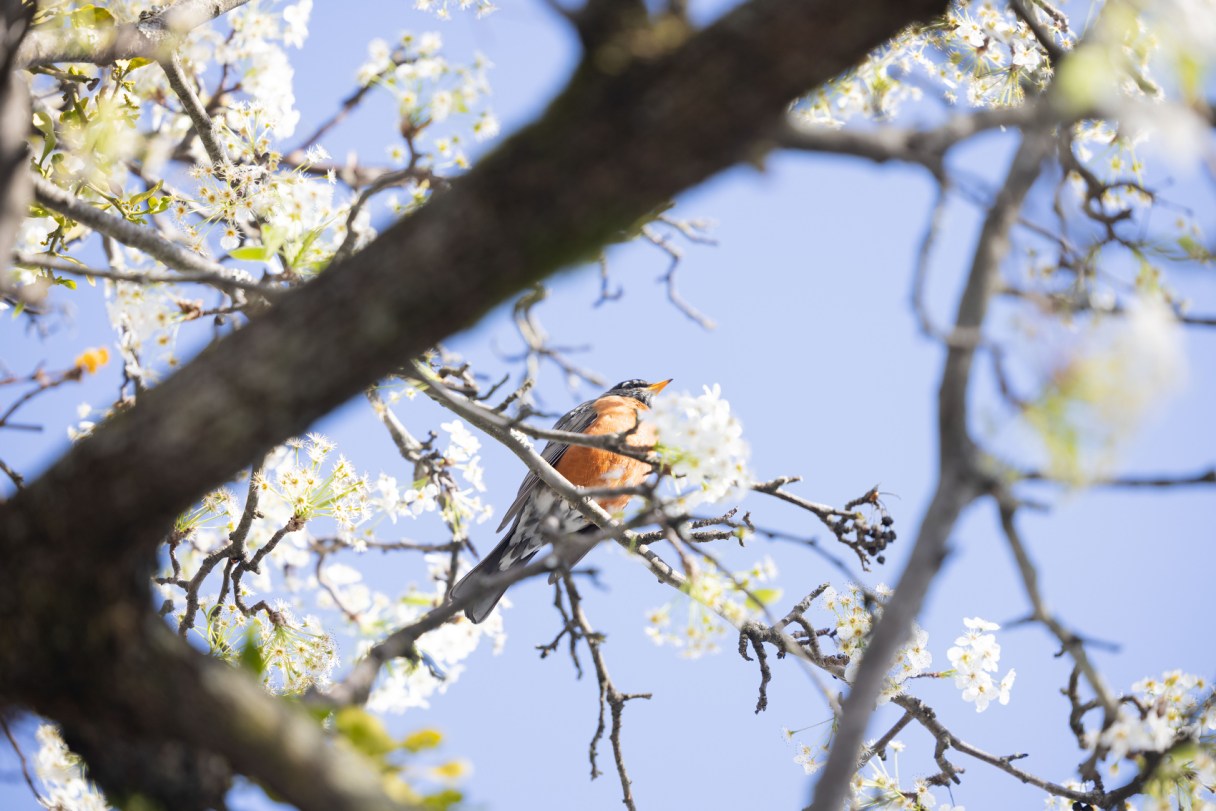
Whether loved or hated, Bradford pear trees are as good a sign as any that spring has come to Chattanooga.
The Bradford pear is a cultivar of the Callery pear tree, which was brought over from East Asia to the U.S. in the 1900s to help develop disease-resistant pear trees, according to the U.S. Department of Agriculture. The Bradford pear came about in the 1960s, becoming a popular ornamental tree.
The Bradford pear was deemed “the perfect urban tree” because it was fast-growing, had beautiful blossoms and could not reproduce, master arborist Chris Winters said by phone. As such, the trees proliferated across various cities during the ’70s and into the ’90s, Winters said.
But, the Bradford pear’s attributes are not without detriments.
“It is fast-growing, but it is weak-wooded,” Winters said. “The flowers smell horrible. And it was not sterile. Once its flowers interbred with some of our fruiting pear varieties, it became reproducible. So, basically, everything they had said about it was false.”