
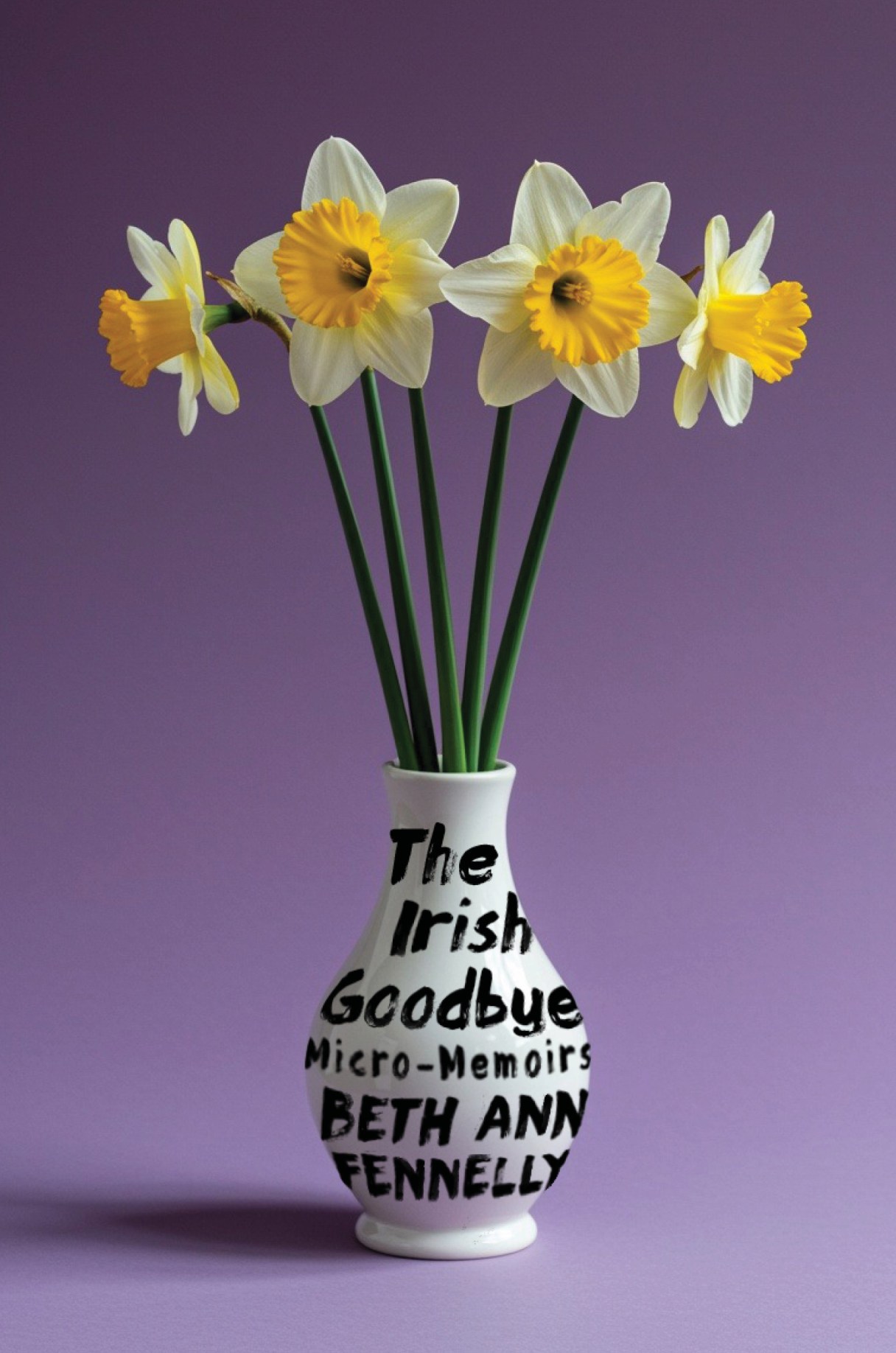
“The Irish Goodbye: Micro-Memoirs” By Beth Ann Fennelly (W.W. Norton, 144 pages, $22.99)
––––
There’s a moment near the end of her “The Irish Goodbye: Micro-Memoirs” when author Beth Ann Fennelly describes the impact of artist Rob Townsend’s nude portraiture, in which “viewers are compelled to see themselves in the other.” With that phrasing, she’s also describing the empathy-building experience of reading memoir. We are made privy to details — fears, weaknesses, self-indulgences, petty prides — that we might not ordinarily encounter, shrinking the distance between self and other.
Fennelly, Mississippi’s Poet Laureate from 2016-2021, complicates that arrangement in assembling these “micro-memoirs,” a practice that fragments the revealing moments. This shorter mode, previously explored in her 2018 book “Heating & Cooling,” offers readers a bright spark of a scene in which there is, perhaps, less space to see themselves. This style of memoir befits a social media-saturated world, creating a written equivalent of carefully composed images, richly detailed but naturally limited by their frame. Brief though they may be, these aren’t all pretty pictures. Many pieces in “The Irish Goodbye” focus on grief — over her sister’s death years before, her mother’s memory loss and decline, the loss of friends and memories over the years.
There are a handful of longer pieces in the collection, and these often turn the poet’s descriptive power toward someone else, as in “My Mother-in-Law in the Mirror,” a beautiful memorial to her husband’s mother, Betty, who kept a Post-it note on her mirror that read, “It’s not about YOU.” Here, Fennelly acknowledges that her admiration for the ever-humble Betty springs from their differences: “Any Post-it stuck on my vanity mirror would proclaim, ‘Why YES, darling! It IS about you!'” But pieces like this one, where Fennelly brings someone else’s life into the frame, proves her avowed self-centeredness at least partially wrong.