
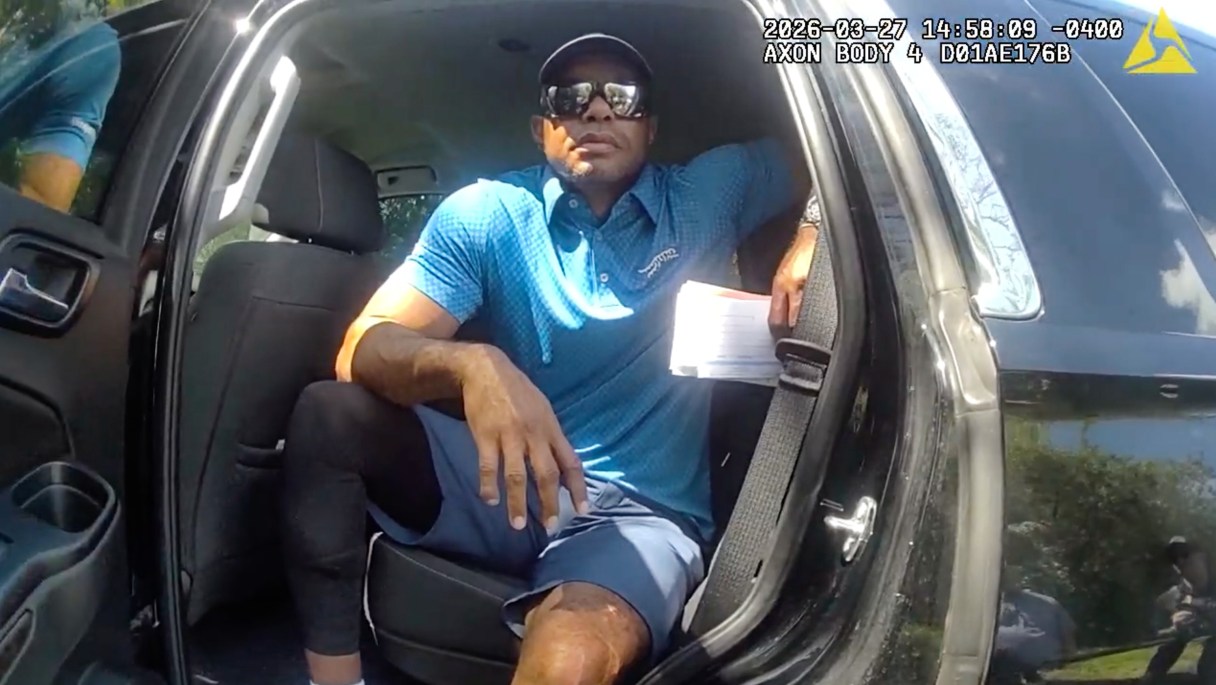
STUART, Fla. (AP) — Tiger Woods ‘ prescription drug records will be handed over to prosecutors following his March arrest in Florida on suspicion of driving under the influence, a judge ruled Tuesday morning.
Judge Darren Steele approved an agreement between Woods’ defense attorney and prosecutors following a four-minute hearing in Martin County circuit court, just north of Palm Beach County.
Prosecutors had issued a subpoena seeking copies of all prescription medication records for the legendary golfer at a Palm Beach pharmacy from the start of the year through the end of March. Defense attorney Doug Duncan had previously argued that Woods has a constitutional right to privacy when it comes to his prescription medications, but he acknowledged during the hearing that the right is not absolute and that prosecutors could make a compelling argument for why they were needed.
Meanwhile, prosecutors agreed to Duncan’s request for a protective order limiting the release of records only to prosecutors, law enforcement officers, state experts and Woods’ defense team.
Bob Jarvis, a law professor at Nova Southeastern University who is not connected to the case, said the agreement and the judge’s approval seems normal for DUI case, particularly one that involves drugs instead of alcohol. Florida law considers a driver with a blood-alcohol content of 0.08% or higher to be impaired, but there’s no clear, measurable standard to determine impairment for other drugs. That means prosecutors will have to use field sobriety tests, officer testimony and other evidence to convince jurors beyond a reasonable doubt that Woods was impaired.