
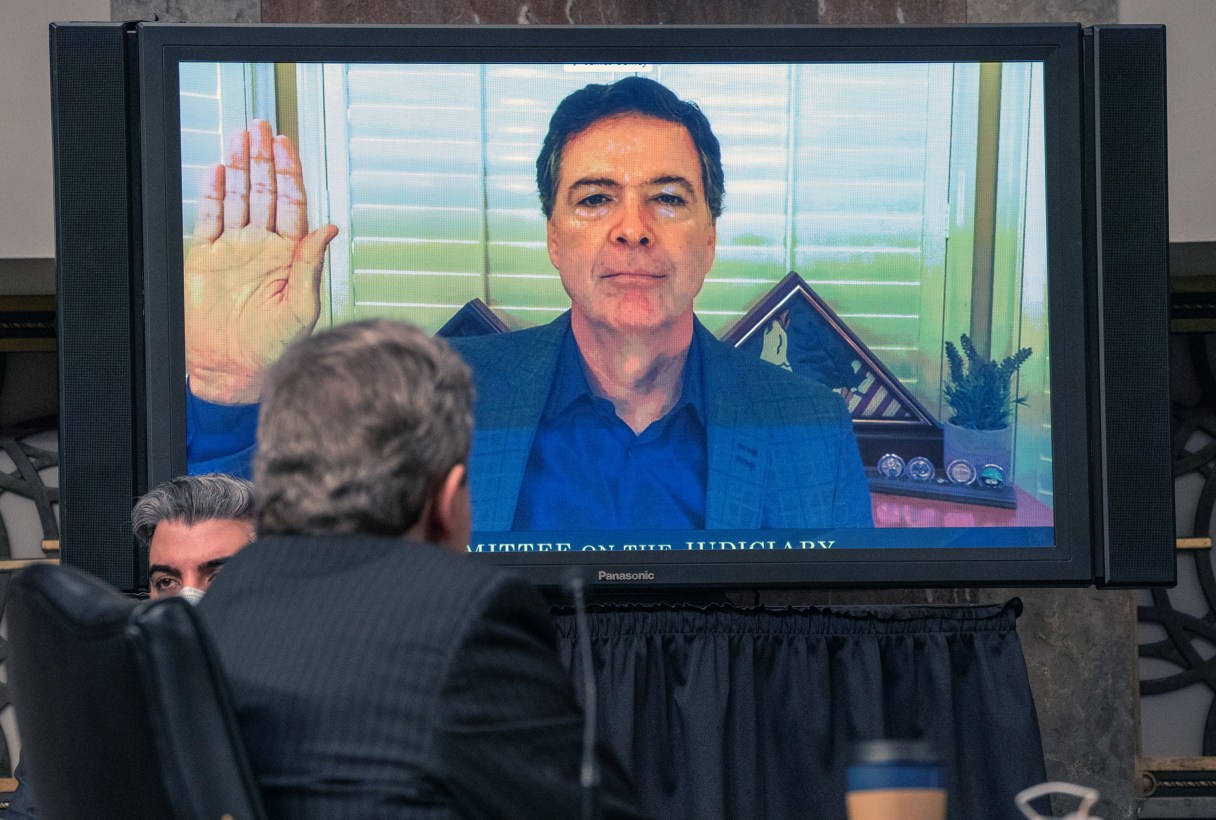
For an administration that has been all too willing to weaponize the Department of Justice, the recent indictment of former FBI Director James Comey marks a new low.
Comey’s purported crime came a year ago, when he posted a photograph on social media of seashells arranged as “86 47,” and writing, “Cool shell formation on my beach walk.” The Justice Department alleges that the photo constituted “a threat to take the life of, and to inflict bodily harm upon, the President of the United States.” According to the president, eighty-six is “a mob term for ‘kill him.'”
Trouble is, most Americans use the slang term in the same way that Merriam-Webster defines it: to eject or ban a customer (i.e., “eighty-six them”), or “to reject, discontinue, or get rid of (something).” As acting Attorney General Todd Blanche acknowledged, the phrase 86 47 “is used constantly” by Americans who aren’t indicted for it. Comey’s post may have been in poor taste, but to state the obvious, it doesn’t equate to a murder hit.
Of course, actual threats of political violence should be taken seriously, as the recent presidential assassination attempt demonstrates. But such extremism must not be used as a pretext for political prosecutions, and this isn’t the first one Comey has faced.
Last year, the Justice Department indicted Comey on contrived charges of perjury and obstructing a congressional hearing, which were quickly dismissed. His real crime? As director of the Federal Bureau of Investigation, he had opened an investigation into Russia’s interference in the 2016 election, an effort the president insists never happened. Former Central Intelligence Agency Director John Brennan is being investigated for similar reasons. (A lead prosecutor in that case was reportedly removed after expressing reservations.)