
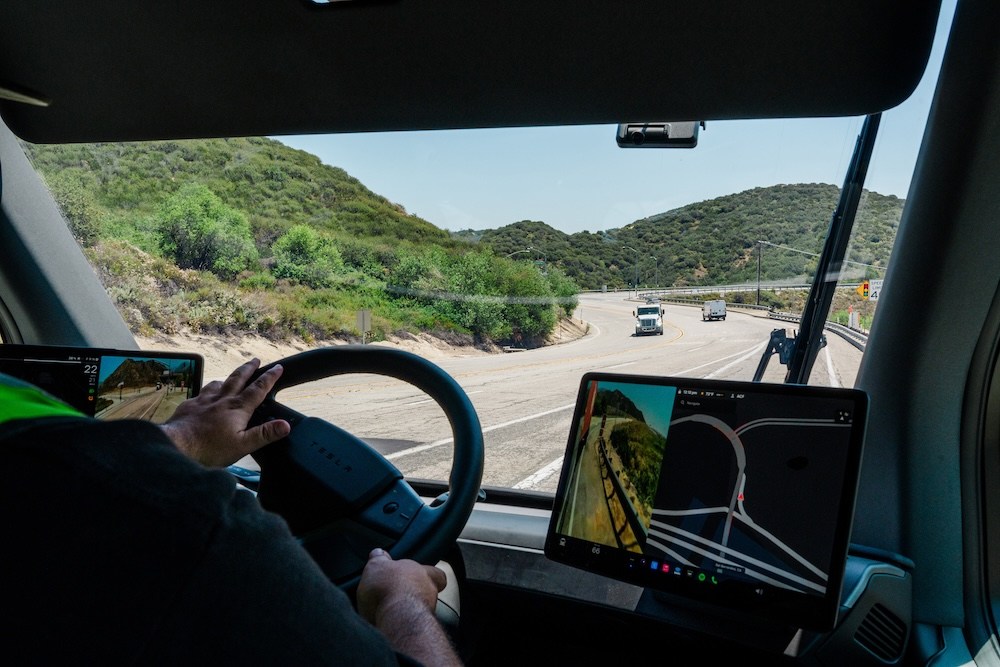
LONG BEACH, Calif. — Tesla hasn’t had a blockbuster new product since the Model Y sport utility vehicle went on sale in 2020.
But early reviews of the Tesla Semi, an electric heavy truck, suggest that it could be a much-needed hit for the company. And it could shake up the staid business of truck manufacturing in the same way that Tesla’s cars upended the auto industry.
After years of delays, Tesla has begun taking orders for the Semi, which is expected to cost around $290,000 for the version that can travel up to 500 miles on a charge, much less expensive than heavy-duty electric trucks sold by Daimler, Volvo and other companies, which usually sell for at least $400,000, according to estimates by the International Council on Clean Transportation. Tesla has said the Semi will also have a more affordable model that can travel 350 miles between charges. Both options would travel farther than trucks from other suppliers.
Cost and range are two of the main reasons that many logistics and delivery firms have been reluctant to buy electric trucks, which cost at least twice as much as diesel models and account for only a sliver of heavy truck sales.
“The problem with the technology that’s out there right now is their range is limited. They’re quite heavy, and they’re very expensive,” said Jennie Abarca, owner of King Fio Trucking in Long Beach, California, which has ordered 20 Tesla Semis. “This is something new coming to the market that kind of answers all those problems.”