
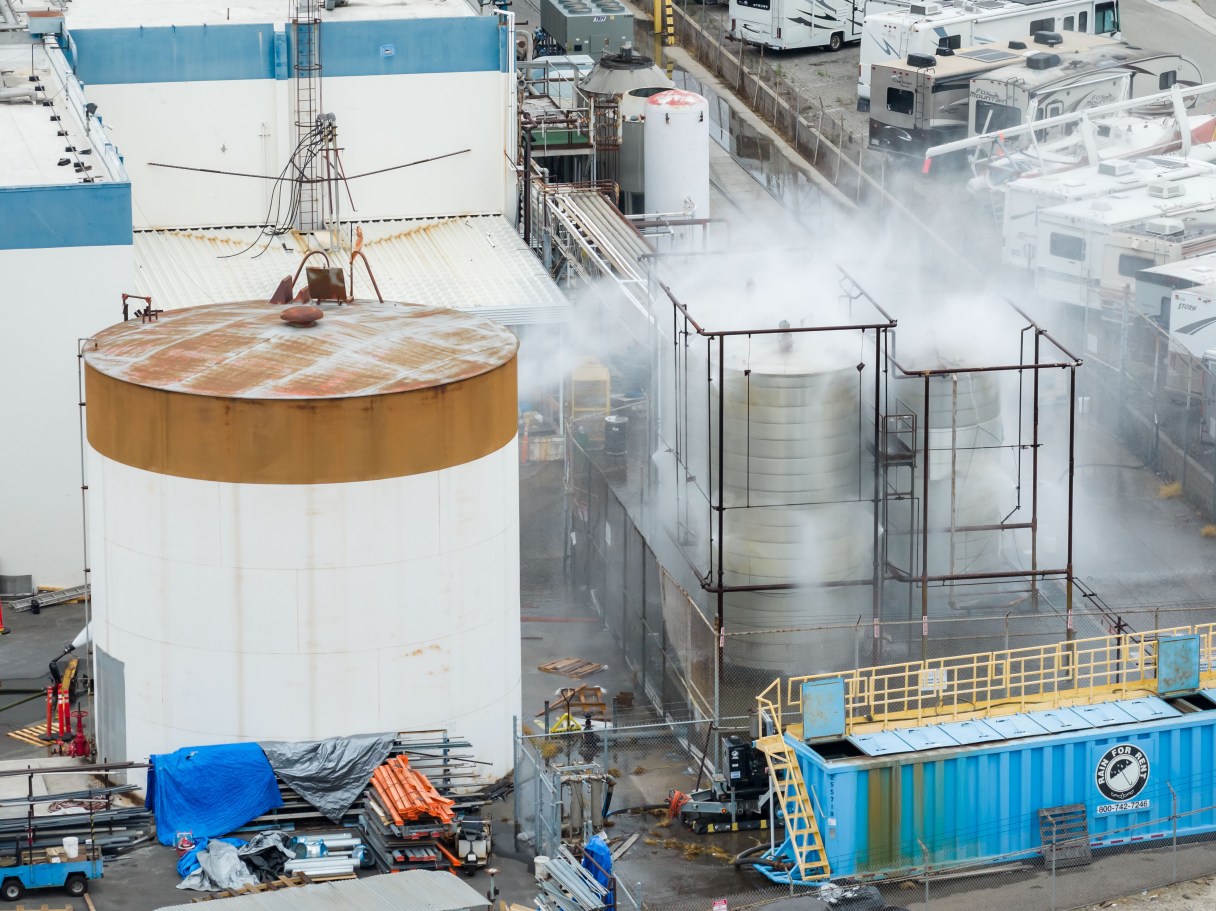
GARDEN GROVE, Calif. (AP) — Southern California officials lifted the final evacuation orders Tuesday night for residents who live near a damaged chemical tank, allowing 16,000 people to return home.
The crisis that began Thursday had forced 50,000 people to evacuate in and around the Orange County city of Garden Grove. A crack that formed by chance on the tank relieved pressure and helped avert a catastrophic explosion, allowing most evacuees to return home over the Memorial Day weekend. Authorities announced they were lifting the final orders after the temperature on the tank remained stable for four hours without intervention from sprinklers.
“All residents will go home,” Orange County Fire Authority Division Chief Craig Covey said during a meeting that grew raucous at times as residents questioned why the chemical was allowed in a densely populated area and urged city officials to hold the company that operates the tank accountable.
The tank contains methyl methacrylate, which is highly flammable. Health officials have assured residents that no contamination or fumes were released, and that they will keep monitoring the air for several months and checking the sewer and storm drains. Exposure to the chemical can cause serious respiratory problems, neurological issues and irritation to the skin, eyes and throat, according to the federal Environmental Protection Agency.
The tank at GKN Aerospace Transparency Systems, which makes cockpit windows, canopies and windshields, contains 6,000 to 7,000 gallons (22,700 to 26,500 liters) of the chemical.