
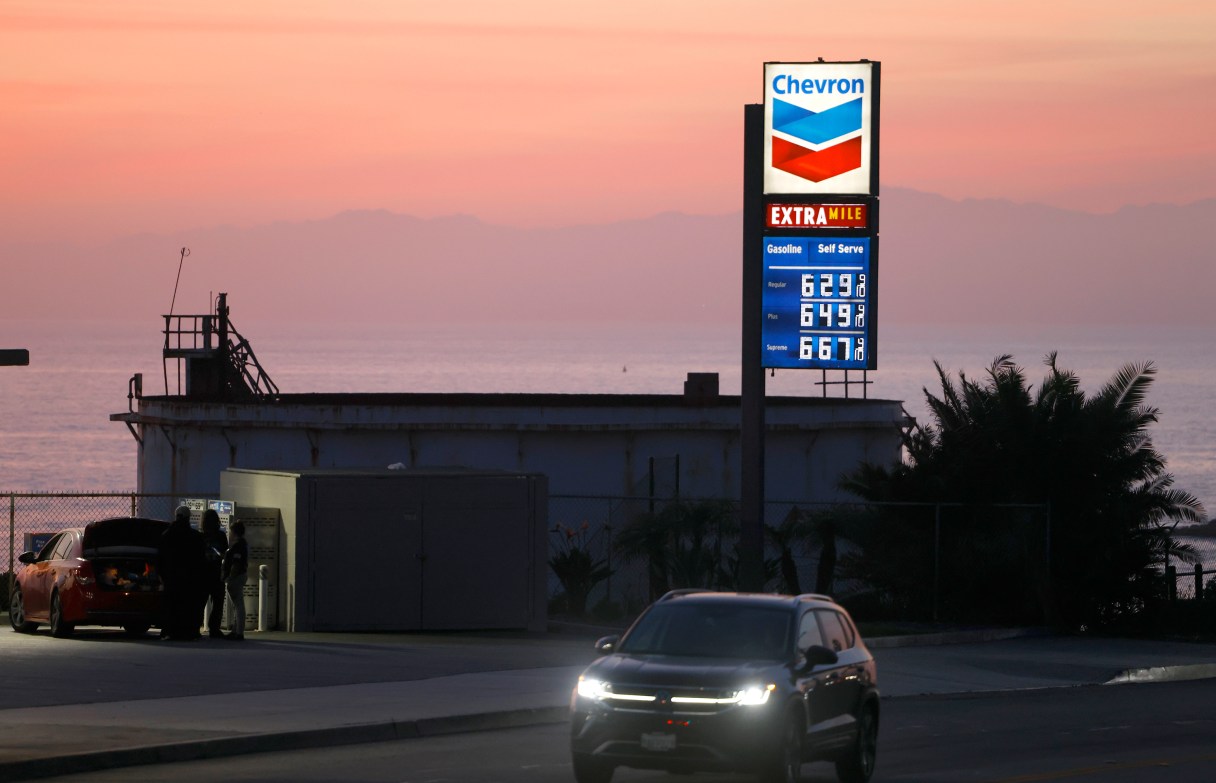
Even as the U.S. and Iran wrestle over an agreement to reopen the Strait of Hormuz, surging gas prices have turned the government’s attention to a perennially popular fiscal scam: Ease the pressure on household budgets with a gas tax holiday. In reality, such a plan to curry favor with voters would make them, all things considered, worse off. Responsible policymakers should have nothing to do with it.
Back in 2022, President Joe Biden also called for a temporary suspension of the gasoline tax when Russia’s attack on Ukraine sent energy costs soaring. Now, with the price of gas back above $4 a gallon and midterm elections approaching, a different White House is floating the same idea. Republican Sen. Josh Hawley promptly introduced a bill to lift the tax for 90 days. Democrats in both chambers have offered similar proposals, and several states have already suspended their own gas taxes.
The idea is politically attractive because the price of gas is so conspicuous. Its superficial appeal doesn’t make the fiscal impact any less damaging.
Note first that the immediate benefit to households is trivial. The federal tax is 18.4 cents a gallon; state taxes vary, adding on average another 33 cents. The evidence is clear that retailers and producers keep some of the difference when the tax is cut, but even if nearly all of it passed through to consumers, suspending the federal levy would save the typical driver less than $10 a month — enough to lower total household spending by around 0.2%.
And the cost of this negligible benefit is substantial. The federal gas tax finances the Highway Trust Fund, used to pay for maintaining interstate highways and other infrastructure. The fund is already on course for insolvency in 2028.