
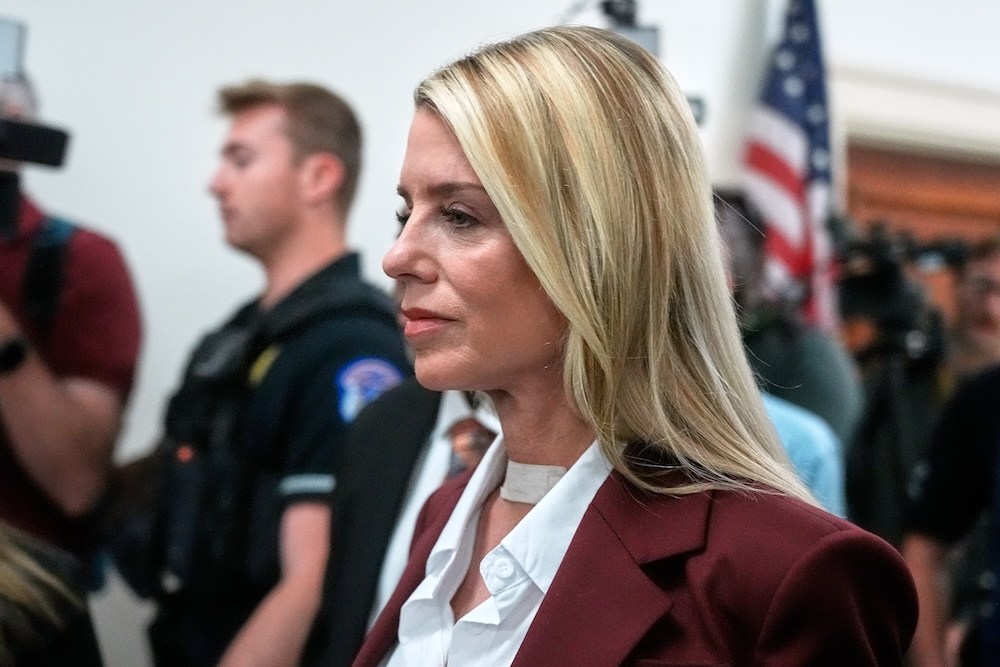
WASHINGTON (AP) — Former Attorney General Pam Bondi refused to answer questions Friday on President Donald Trump’s involvement in the release of the Jeffrey Epstein case files as she defended the Trump administration’s actions before House lawmakers scrutinizing the process.
Bondi, who spent roughly four hours on Capitol Hill for her closed-door interview, was again defiant when she was confronted by lawmakers about the Epstein investigation. In her opening statement, she stood behind the Department of Justice’s handling of the case files and said that Deputy Attorney General Todd Blanche, now the acting attorney general and Trump’s former personal attorney, had overseen the process to publish them.
“The bottom line is: justice and transparency in this matter have been delivered at the direction of President Trump and his administration,” she said, according to her opening statement.
Bondi’s transcribed interview presented lawmakers with an opportunity to question a Cabinet official who was central to the political firestorm over Epstein that at times has rattled Trump’s Republican administration. She initially raised expectations for the full release of the Epstein case files, only to later backtrack. That reversal prompted Congress to step in and pass the law requiring the release.
But Democratic lawmakers said that Bondi told them she would not speak about the president in the interview and, consulting with a lawyer from the Department of Justice, said that she could decline those questions because she agreed to appear before the committee voluntarily.