
Thursday, November 12, 2026Nov 12

Experts tell Alabama lawmakers to clearly define ages, artificial intelligence in future legislation

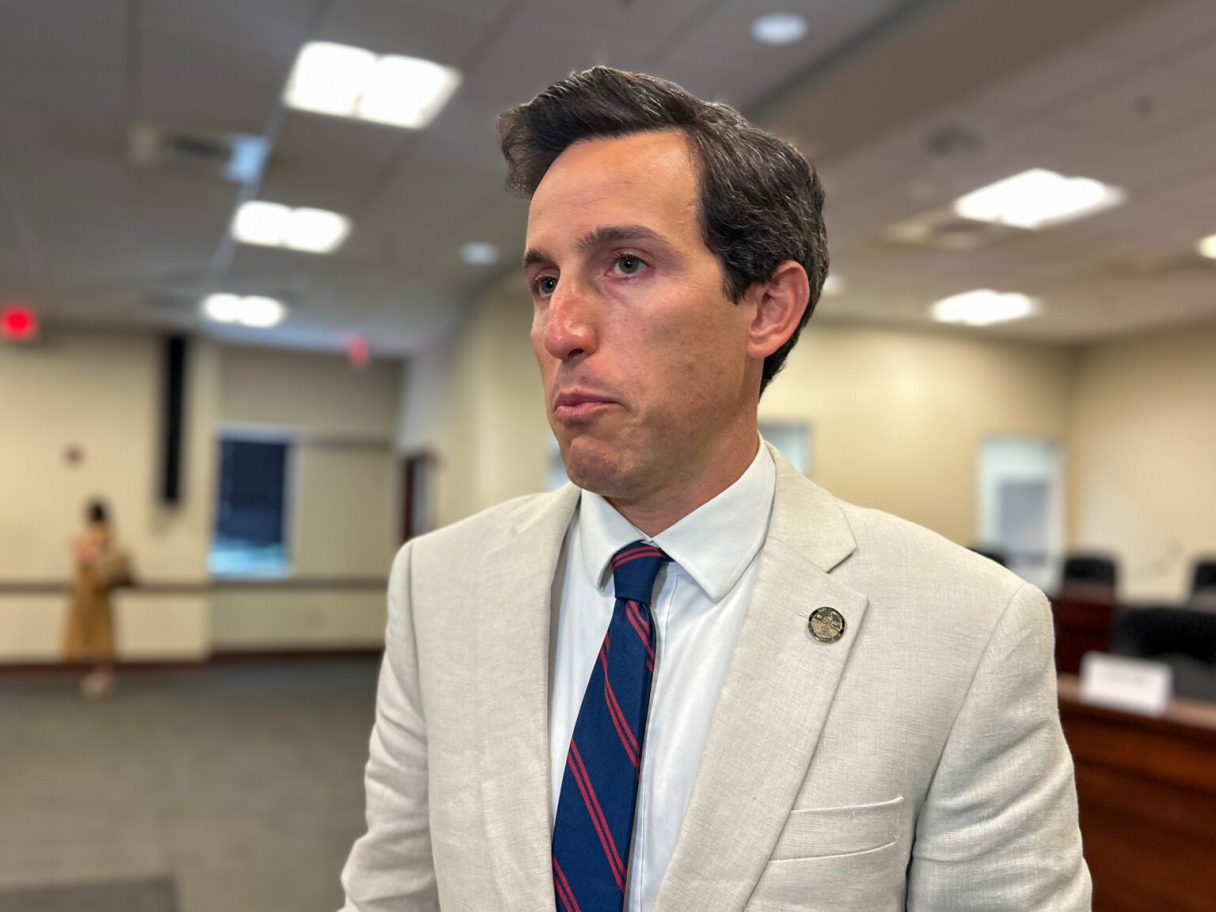
Rep. Ben Robbins, R-Sylacauga, is pictured speaking to reporters after a meeting of the Study Commission on Artificial Intelligence and Children's Safety in the Alabama Statehouse in Montgomery, Ala. Lawmakers were advised to not outright ban and to clearly define terms in future legislation regulating artificial intelligence. (Anna Barrett/Alabama Reflector)
Rep. Ben Robbins, R-Sylacauga, is pictured speaking to reporters after a meeting of the Study Commission on Artificial Intelligence and Children's Safety in the Alabama Statehouse in Montgomery, Ala. Lawmakers were advised to not outright ban and to clearly define terms in future legislation regulating artificial intelligence. (Anna Barrett/Alabama Reflector) Rep. Ben Robbins, R-Sylacauga, is pictured speaking to reporters after a meeting of the Study Commission on Artificial Intelligence and Children's Safety in the Alabama Statehouse in Montgomery, Ala. Lawmakers were advised to not outright ban and to clearly define terms in future legislation regulating artificial intelligence. (Anna Barrett/Alabama Reflector)

Experts told Alabama lawmakers that regulating artificial intelligence for children should start with clear definitions.

Speaking before the Study Commission on Artificial Intelligence and Children’s Safety — a group of lawmakers, child advocates, a representative from the Attorney General’s Office and the Department of Mental Health — Kevin Frazier, AI innovation and law fellow at the University of Texas, told lawmakers that an outright ban on AI is not the answer.

“Blanket bans just ignore the fact that there’s so many contextual factors that for one family versus another, AI use may make sense,” Frazier said.

The commission is tasked with studying the effects of AI, social media and Internet access and usage on children, and to recommend legislation to address issues related to such technologies, according to the resolution creating the commission.

A 2025 study from the National Institutes of Health found potential benefits and risks when children and teens use AI. The study found that using AI for homework or the classroom could free up time to focus on other topics but can also cause cognitive biases or lead students to offload tasks to AI that they would otherwise learn on their own.