
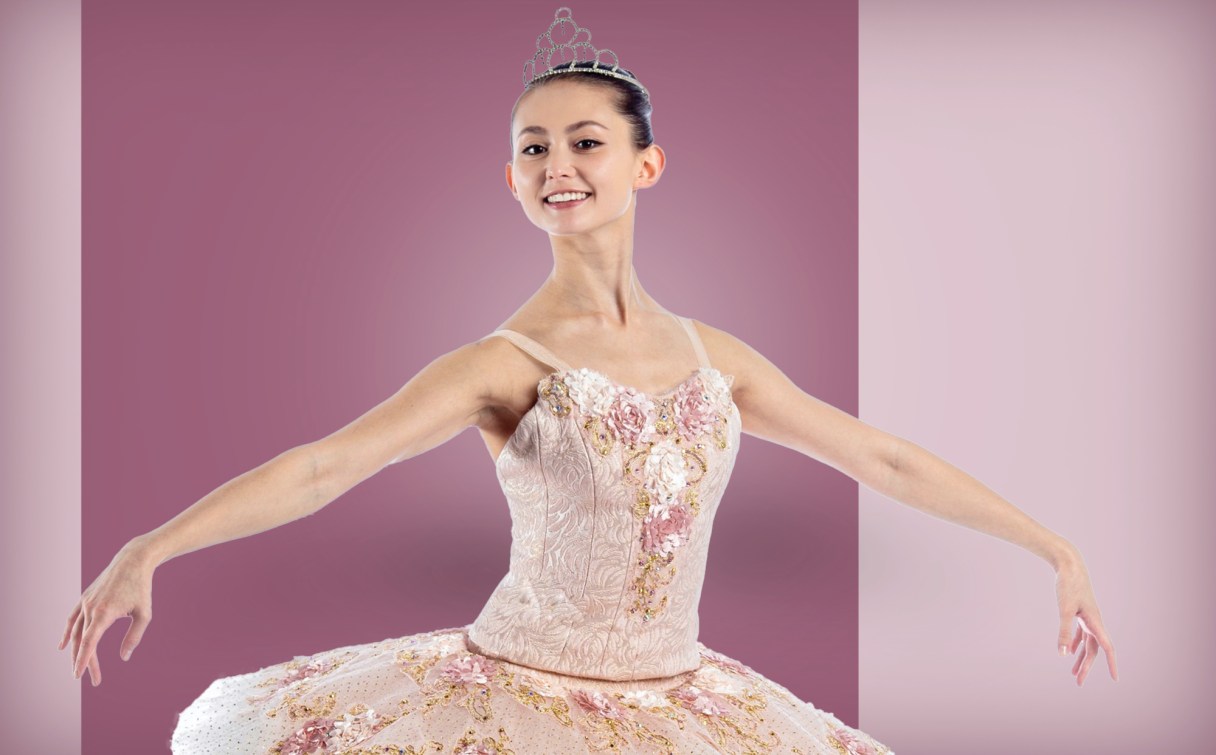
For generations, “The Nutcracker” has delighted audiences with its holiday magic. This year, we caught up with Chattanooga Ballet dancers Alessandra Ferrari-Wong, who plays the Sugar Plum Fairy, and Bishop Kaschock-Marenda, who plays the mysterious Drosselmeyer, to learn more about their characters and favorite moments from the show.
Leah Perrel
Alessandra Ferrari-Wong, The Sugar Plum Fairy
A native of Westwood, New Jersey, Alessandra Ferrari-Wong began her dance training in hula before moving on to classical ballet. She earned an art degree from Washington University in St. Louis, where she continued her dance training. She later joined New York Dance Project as an apprentice.
Since joining Chattanooga Ballet in 2021, she has danced principal roles in “The Nutcracker,” “Sleeping Beauty” and “Cinderella,” along with contemporary works. Offstage, Alessandra serves as Chattanooga Ballet’s social media manager and works as a freelance graphic designer and photographer.
Who is the Sugar Plum Fairy?
The Sugar Plum Fairy is the ruler of the Land of Sweets. She welcomes Clara when she arrives and invites all of the sweets in the kingdom to dance for Clara and her prince. She guides Clara through the final chapter in her adventure and helps her return home safely.
How is it watching the children in the audience react?
Each year, we kick off Nutcracker season with performances for second graders in Chattanooga through ArtsBuild’s Imagine! Program. Their energy is infectious! It brings me such joy to perform for them. It always reminds me of the first time I saw “The Nutcracker” and the magic it brought to my life.
What’s your favorite part of the show?
Portraying the Sugar Plum Fairy, who embodies generosity and joy. She is regal and tender in how she relates to young Clara, almost as if she is her older sister. There is a moment at the end of the production before Clara returns from her journey when she and the Sugar Plum Fairy dance together and embrace. This part always moves me, as it feels that I am passing on knowledge of this wonderful art to the next generation.
What is it like getting dressed to become ballet royalty?
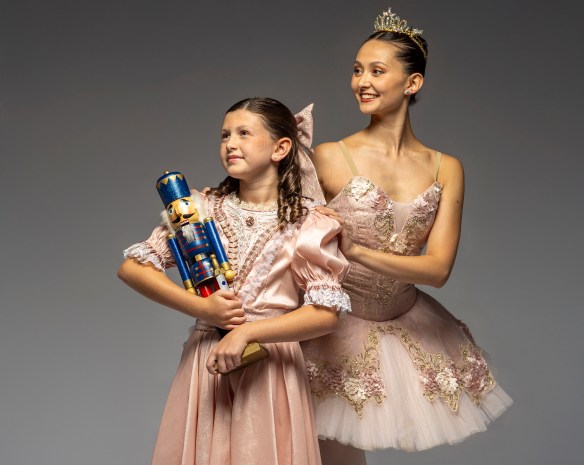
The Sugar Plum Fairy tutu is a beautiful jeweled and embroidered costume. Stepping into it and placing the crown on my head helps me immerse myself and transform into the character. Who wouldn’t love wearing something so beautiful?
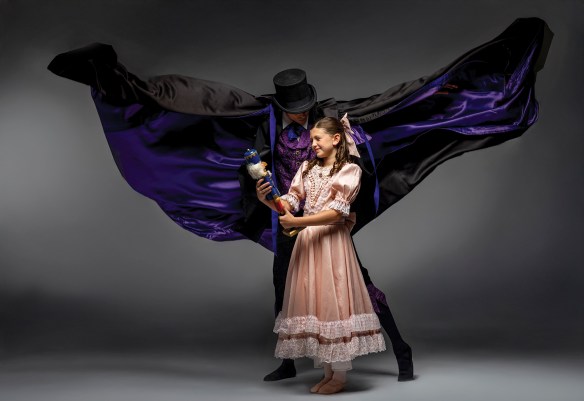
Photo by Joseph Schlabs / Bishop Kaschock-Marenda as Drosselmeyer with actor
Leah Perrel
Bishop Kaschock-Marenda, Drosselmeyer
Bishop Kaschock-Marenda began his dance training at Philadelphia Dance Theatre and continued through summer programs at Walnut Hill School of the Arts, Ballet Hispánico, Hubbard Street and BalletX.
At New York University’s Tisch School of the Arts, he performed student-choreographed works and pieces by José Limón and Laja Fields. He graduated with a bachelor’s degree in dance and a minor in computer science.
He has also performed as a guest artist with Delaware Dance Company, Philadelphia Dance Theatre and Baltimore Ballet. He is now in his second season with Chattanooga Ballet.
Who is the mysterious Drosselmeyer?
Drosselmeyer is Clara’s magical uncle. He shows up to the Christmas party with his many toys and gifts. He gives Clara the Nutcracker, who later transforms into a prince and helps guide them on a magical journey to the Land of Sweets.
Do you enjoy playing such a mischievous character?
I do really enjoy playing Drosselmeyer. I get to interact with everyone at the party, and I especially enjoy bringing the life-size dolls who come to life onstage before their dances.
What’s the most fun part of playing Drosselmeyer? And the most challenging?
My favorite part has to be my entrance onto the stage. Before Uncle Dross makes his entrance, the ballet is fun and lighthearted, but when he enters, suddenly there is a sense of mystery and excitement. The most challenging part is definitely the costume. I have to wear about three layers of clothing with props tucked into every pocket, along with a giant cape. It gets pretty hot onstage in all those layers with the lights shining on you.
What is it like watching the children react?
It’s always a privilege to perform for someone who has never seen “The Nutcracker” before. Seeing the kids after a performance and hearing how much they loved the music, or how they wanted to join in the dancing during the Land of Sweets, reminds me how important ballet and live performances are.
A Tough Nut to Crack
Think you know “The Nutcracker”? Put your knowledge to the test.
Russia, 1892
San Francisco, 1944
False. The musical suite was praised, but the original ballet received mixed reviews.
The celesta. Tchaikovsky discovered it while in Paris, and kept it a secret until the show’s premiere.
“Fantasia”
True
False. Hoffmann wanted the story to show humanity’s dark nature and was not at all child-friendly. In fact, the battle of mice and soldiers was inspired by an invasion by Napoleon.
“Swan Lake” and “The Sleeping Beauty”
Spain (chocolate), China (tea), Arabia (coffee) and Russia (candy cane/trepak dance)
True
Sources: kennedy-center.org; southerncaliforniaballet.org; d23.com; balletaz.org; chaballet.org