For a year and a half, I’ve written for Astronomy magazine about everything from the Artemis program to the latest breakthroughs in planetary science. Ironically, I didn’t own a telescope until recently, when a coworker gifted me a 6-inch Celestron SkyProdigy, a go-to scope that aligns itself then swings to thousands of objects at the push of a button.
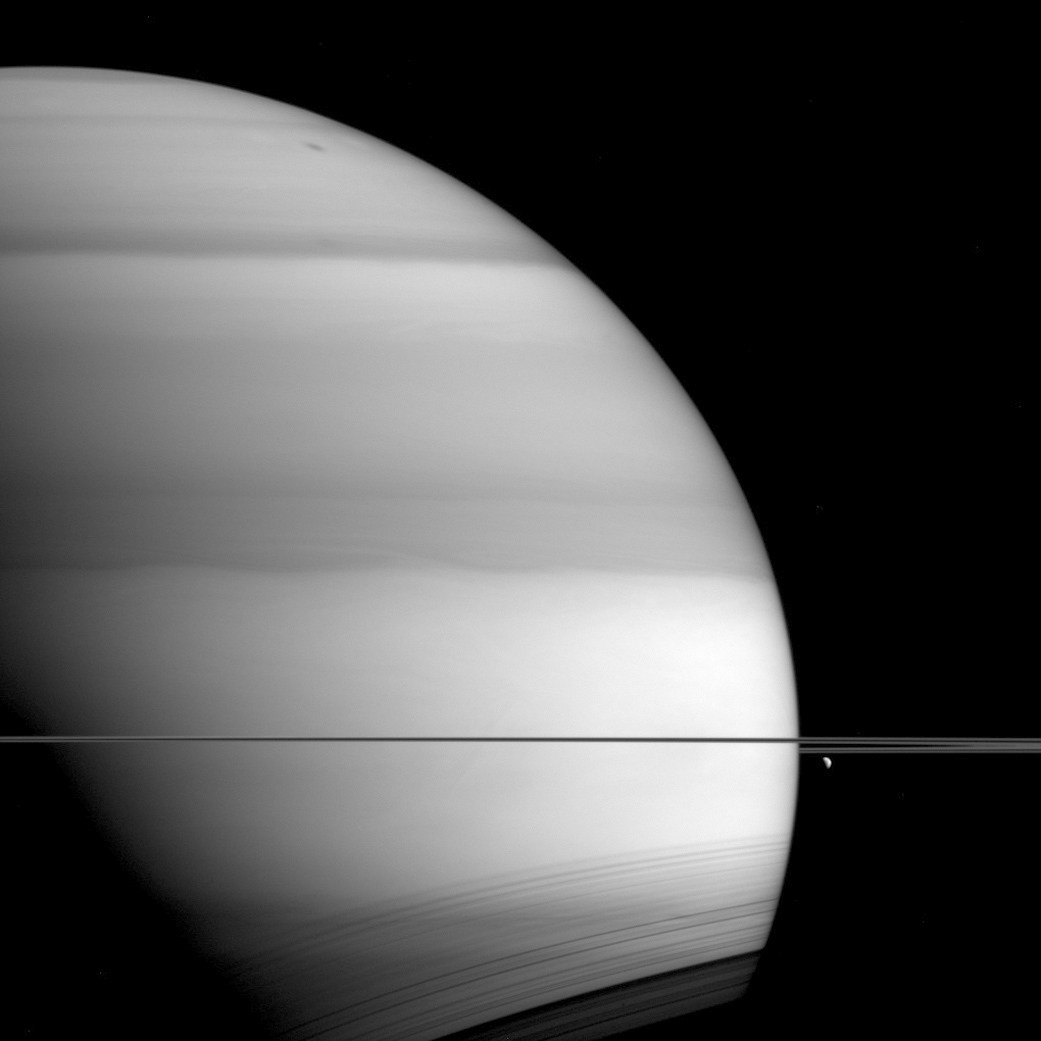
On my first night, clouds rolled in, the scope wouldn’t align and my friend headed home before we saw anything. Just before midnight, I went back out. The clouds had cleared. I nudged the scope across the patch of sky where Saturn should be until finally, there was a fuzzy little doughnut of light. As I turned the focus knob, the rings sharpened into view. It was sublime. It was also, somehow, adorable — a tiny cartoon planet floating in the black.
Earlier this year, an industry employee expressed to me that he didn’t understand why more people aren’t excited about astronomy, given how easy and accessible it has become. “You can see the rings of Saturn from your own backyard tonight!” he exclaimed.
Part of the problem is that reality doesn’t always live up to expectations, and our instant-gratification world has set those expectations too high. On forums, beginners shopping for telescopes are often warned not to get their hopes up. If you’ve seen a colorful image of the Orion Nebula on your phone, a faint gray smudge in an eyepiece pales in comparison, they say.
The first time I found it, hovering over my roof, I mistook it for a passing cloud. In a way, it was: a cloud of gas some 1,300 light-years away, set aglow by young, hot stars. Its photons had traveled nearly 8 quadrillion miles to reach my eye. Once I knew what I was seeing, though, it was more incredible than any image on a phone screen.
In my short tenure, I’ve found observing to be less about visually stunning objects and more about connecting, in a small way, with something impossibly big. The universe is incomprehensible. Yet night after night, you can build a familiarity with it, learning which stars rise when and how the constellations shift with the seasons. People have been building that knowledge since our earliest days. It’s an essential part of the human story.
I didn’t realize how much of that connection I’d built until I left the telescope at home.
On a recent trip with Two Bikes Chattanooga, our group had special permission to camp at Lula Lake Land Trust. I slept on the bluff’s rocky edge, the clear eastern sky before me like an IMAX screen, framed by slender pines and soundtracked by a screeching owl. As the campfire died down, I was greeted by Cygnus the Swan, a constellation I’d come to recognize from my backyard. To its left, I picked out Cassiopeia and Andromeda.
Then, low on the horizon, I noticed the Pleiades. With some 8,000 acres of protected land keeping city lights at bay, the cluster was incredibly vivid. Cultures all around the world have stories about these stars. The ancestral caretakers of this land, the Cherokee, told of seven mischievous boys who danced their way into the sky. Lying on that bluff, I was looking at the same stars, from the same mountains, that inspired their story. Things are far from perfect in this world. But isn’t it remarkable, I thought, to be on a world at all? Warm and grateful, I dozed off.
A few of my favorite things
Here are three targets I’ve enjoyed this fall from my Chattanooga backyard. With the new noon arriving Monday, this is a great week to find them yourself.
By 8 p.m., the Double Cluster (NGC 869 and NGC 884) is high in the northeast between the outlines of Cassiopeia and Perseus. These two sparkling clumps of stars sit side by side and are even visible in binoculars.
A telescope brings out much more in the other two targets. By 11 p.m., Orion is up in the east. Just below its belt (to the right of the bottom star in the belt as Orion rises on his side) is the Orion Nebula (M42), a glowing cloud where new stars are being born. Then to Orion’s left, near the feet of Gemini, is the Shoe-Buckle Cluster (M35), a rich open cluster sporting hundreds of stars.
For more observing events, check out Astronomy’s Sky This Week coverage.
Brooks Mendenhall is a staff writer at Astronomy magazine. He is based in Chattanooga. Reach him at brooks.mendenhall@firecrown.com.