
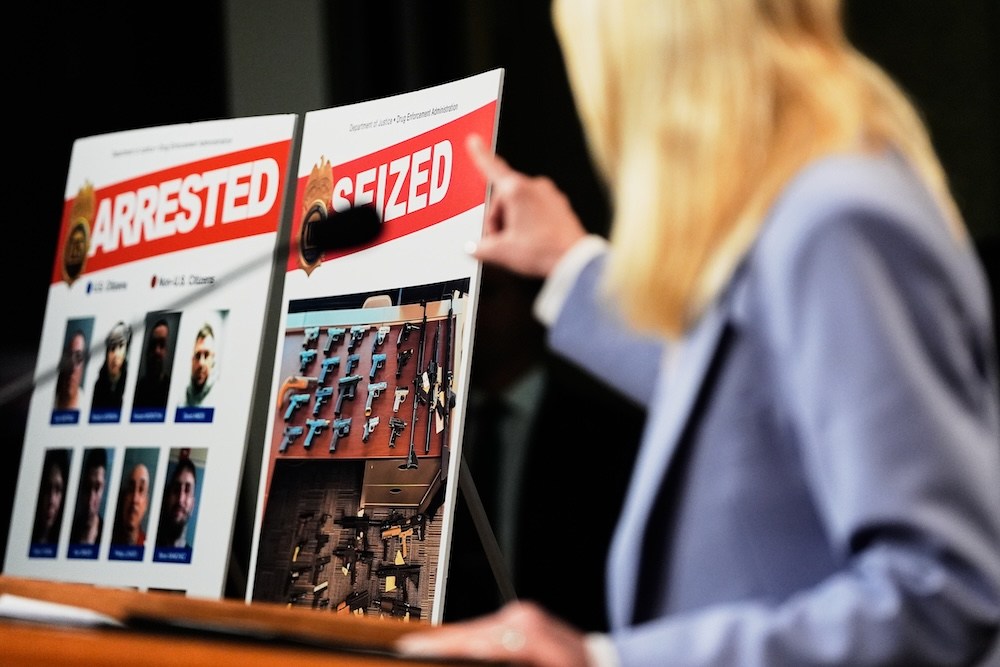
ALBUQUERQUE, N.M. (AP) — Federal narcotics agents monitored the fentanyl deal from every angle, staking out the parking lot and lobby of a hotel while a surveillance plane circled overhead.
As the buyer arrived at 2:24 p.m. in a white pickup, the agents watched as he nonchalantly greeted a mohawked courier and entered the Home2 Suites. Eight minutes later, they exited separately into the blazing sun — one of them toting a backpack stuffed with as many as 100,000 potentially lethal counterfeit pain pills.
But the U.S. Drug Enforcement Administration did not pounce that Sunday in August 2024. Eight months passed before agents dismantled the major fentanyl ring flooding the Southwest as the U.S. reeled from an epidemic of opioid overdose deaths.
The DEA’s decision to stand down fit a pattern that would play out as agents allowed staggering amounts of fentanyl to hit the streets.
The controversial tactic has sparked state and federal investigations since The Associated Press in June revealed that agents in New Mexico in recent years permitted hundreds of thousands of fentanyl pills to go unseized. At the time, the DEA denied it ever knowingly allowed the trafficking of a synthetic opioid the White House has designated a “weapon of mass destruction.”