
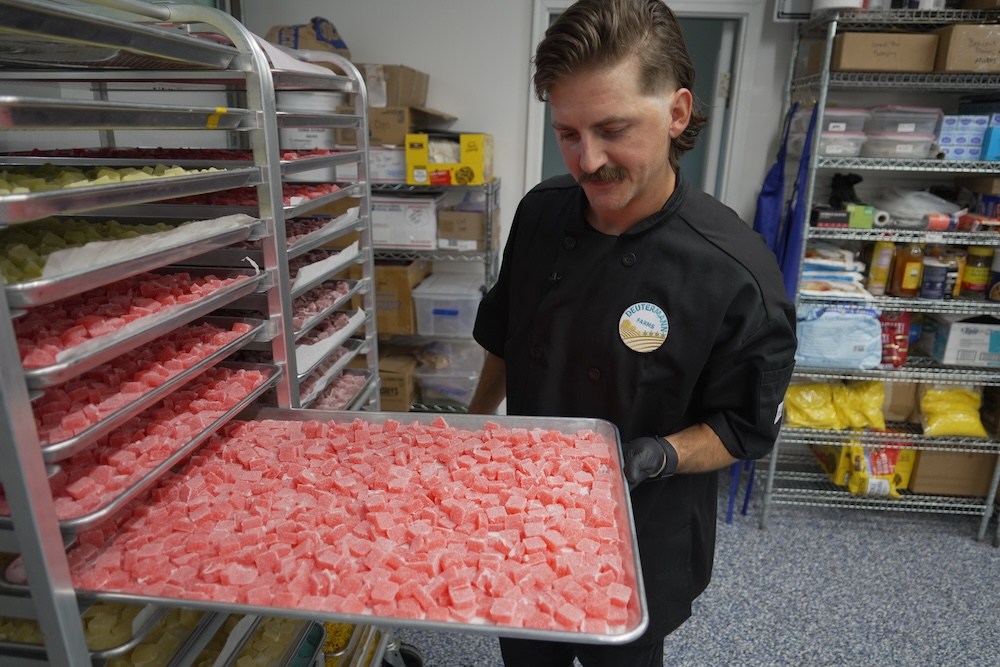
In a commercial kitchen outside Raleigh, North Carolina, Nicholas Hohns spreads a blue-green goo into a gridded mold, making one of his company’s signature products: potent THC gummies, featuring the primary intoxicating compound found in marijuana.
It’s a business he might soon have to give up. America’s multibillion-dollar market for impairing hemp products — from THC seltzers sold at some Target stores to smokable cannabis flowers, and different from the regulated legal marijuana industry — faces potential elimination after Congress voted to close a loophole in federal law that has allowed it to flourish.
Advocates for the industry, along with some lawmakers, are fighting to save it. The short-term government-funding bill signed by President Donald Trump last month delayed the effective date of the “hemp THC ban” from Nov. 12 to Dec. 11, giving Congress more time to consider regulating the products rather than banning them.
“It’s such a weird spot to be in,” said Hohns. “You worked 100 hours a week for the past four years, and, yeah, you made some money. But now you might have nothing to show for it.”
Sen. Mitch McConnell closed a loophole in the hemp law he championed