
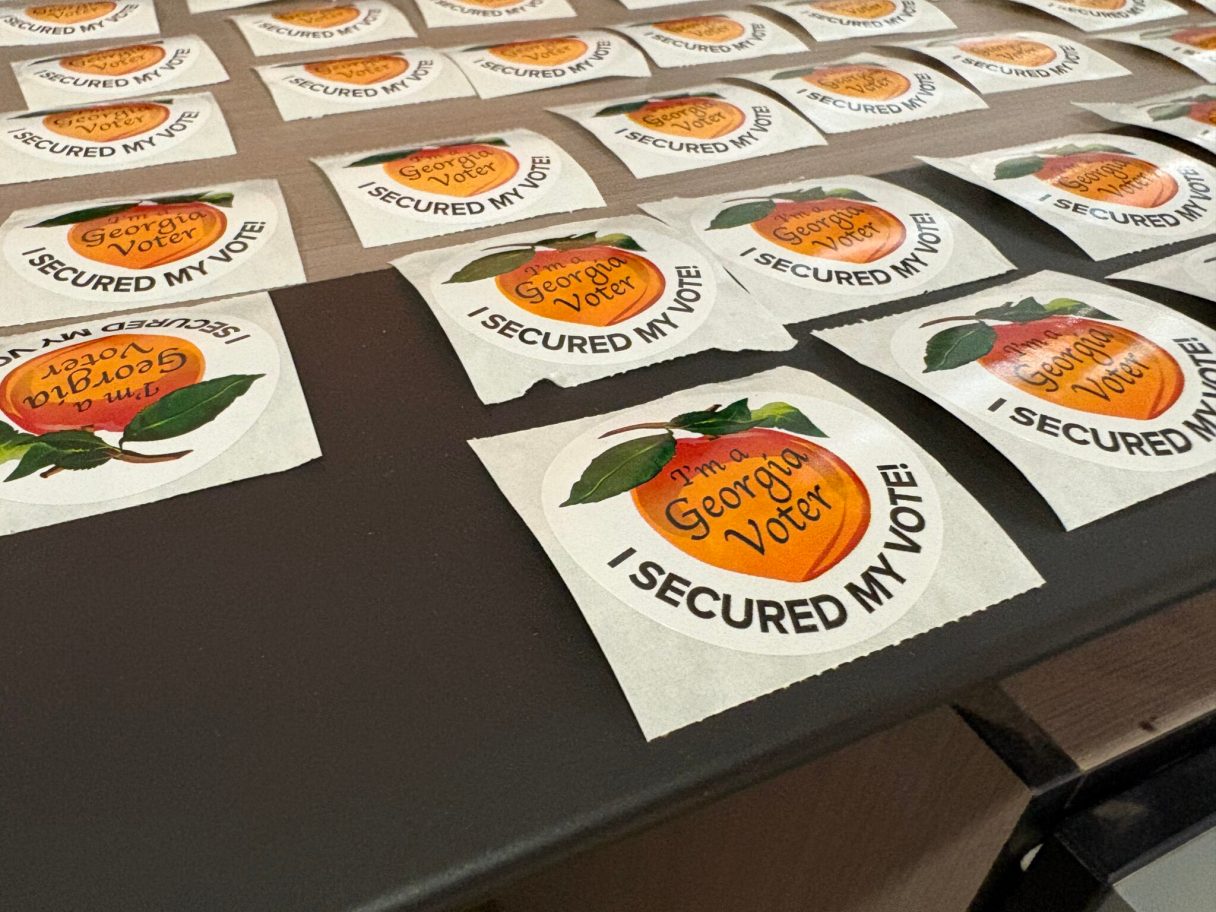
Friday was the last day to vote early in Georgia ahead of Tuesday’s midterm election, and leaders from both parties have been poring over the record early voting numbers to try to figure out where their voters are turning out and where they need to marshal their resources.
Some of Georgia’s top races are expected to be tight. The governor’s race between Republican Rick Jackson and Democrat Keisha Lance Bottoms is polling within the margin of error, and Sabato’s Crystal Ball, which rates the competitiveness of contests, recently shifted Georgia’s attorney general and secretary of state races from lean Republican to toss-up.
The early voting numbers are in flux, and unlike some other states, Georgia voters do not indicate their party affiliation when registering to vote. That makes using early voting information an imprecise measure, said Trey Hood, director of the survey research center at the University of Georgia’s School of Public and International Affairs.
“We have to be cautious about inferring what’s going to happen for the election outcome as a whole just from early voting in Georgia, especially because we don’t have party registration figures,” Hood said.
“People just love to speculate using any kernel of information that may be out there, but it is speculation,” he added.