
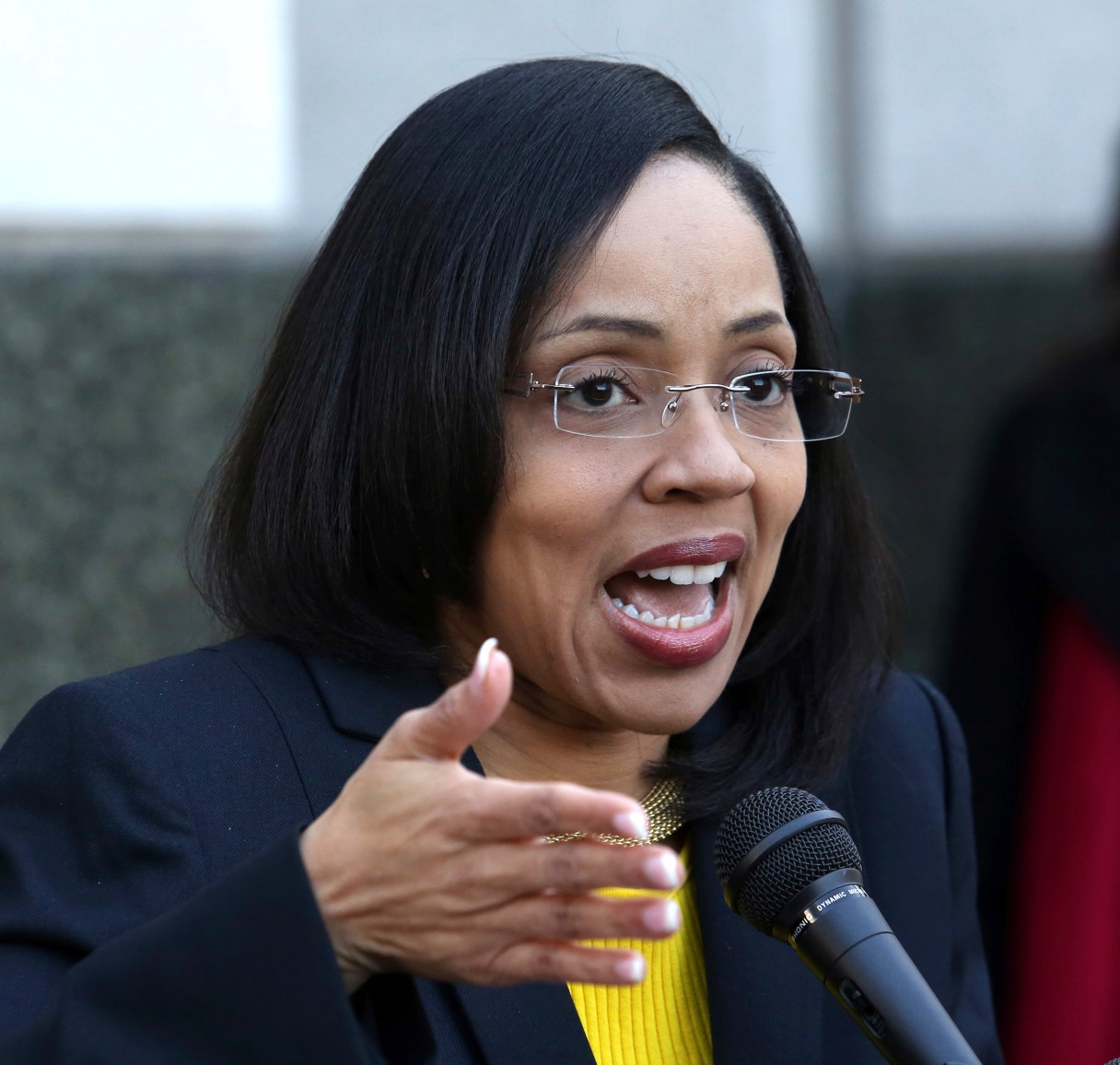
ORLANDO, Fla. (AP) – The Florida prosecutor who thrust herself into the forefront of the anti-death penalty movement is a political novice who was elected just seven months ago.
Aramis Ayala, a Democrat and former public defender and assistant state attorney, surprised many of her own supporters when she announced this week that her office would no longer seek capital punishment in a state that has one of the largest death rows. In response, the state’s Republican governor promptly transferred a potential death penalty case – the killing of a police officer and a pregnant woman earlier this year – to another Florida prosecutor.
“I understand this is a controversial issue, but what isn’t controversial is the evidence that led me to my decision,” said Ayala, the first black state attorney elected in Florida.
She said there is no evidence that shows the death penalty improves public safety for citizens or law enforcement, and it’s costly and drags on for years for the victims’ families.
Advocates seeking to abolish the death penalty said Ayala sent a powerful message. Her decision reflects decreasing support for capital punishment in the U.S., said Karen Clifton, executive director of the Catholic Mobilizing Network to End the Use of the Death Penalty.