
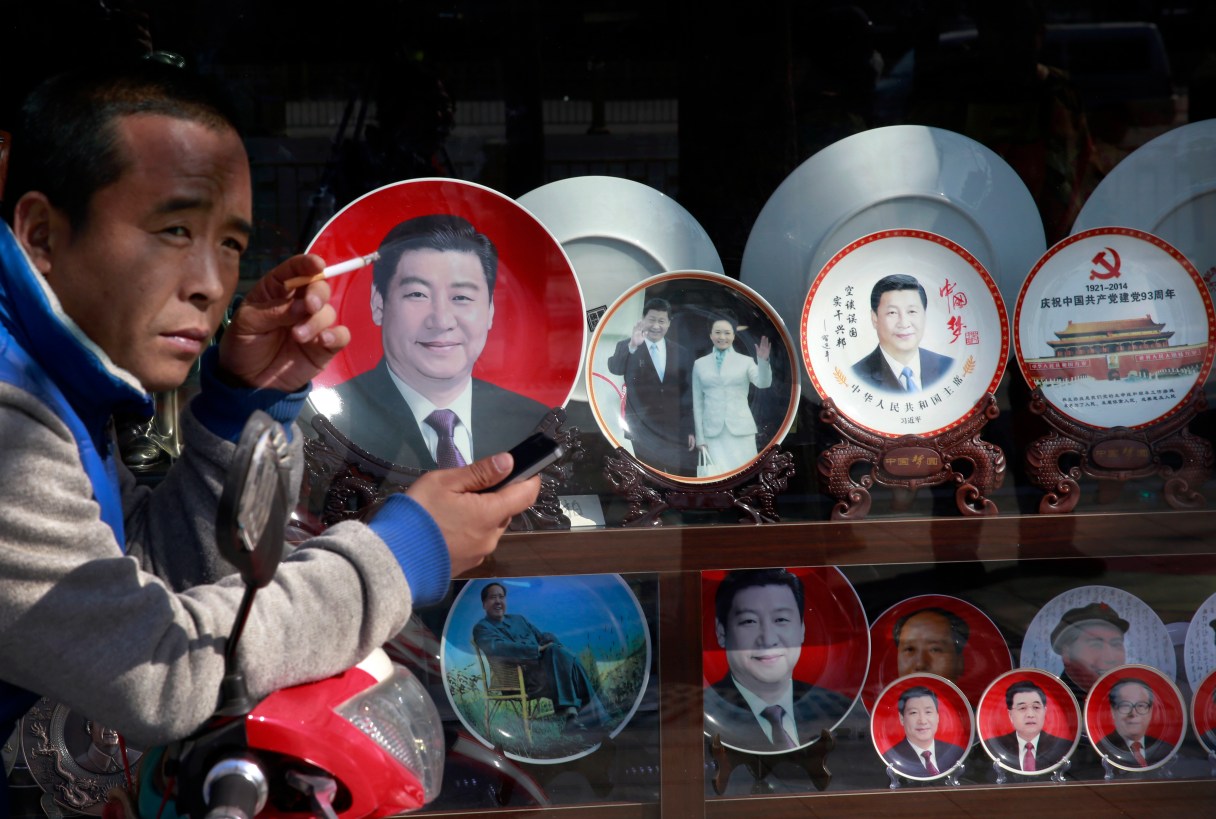
BEIJING (AP) – His smiling visage beams from decorative plates and plastic trinkets sold in Beijing’s Tiananmen Square. State television coverage is wallpapered with his signature slogans, and his every pronouncement and meeting with foreign dignitaries leads the nightly news broadcast.
Not one, but two books collect Chinese President Xi Jinping’s speeches and favorite classical Chinese allusions – highly unusual in that they have been published so early in his tenure instead of after his retirement.
Barely two years into office, Xi has attracted an extraordinary degree of attention to his public persona that veers perilously close to a full-blown personality cult. Such a phenomenon has not been seen since the days of Mao Zedong, with successors wary of the turmoil his leadership unleashed and generally favoring a dry, rule-by-consensus approach.
While the attention on Xi reflects his popularity with the public, it’s also a sign of how thoroughly he’s consolidated power by sidelining or reducing the influence of rivals in the ruling Communist Party. Like Chairman Mao, Xi even has a popular personal sobriquet: “Xi Dada,” roughly translated as “Daddy Xi.”
The son of a party elder, Xi has always had a sense of destiny about himself, say observers and those who knew him as a younger man, believing that he and others in the “second red generation” are the rightful inheritors of the communist state.