
Wednesday, November 11, 2026Nov 11

Rosatom and American artist collaborate for art exhibit

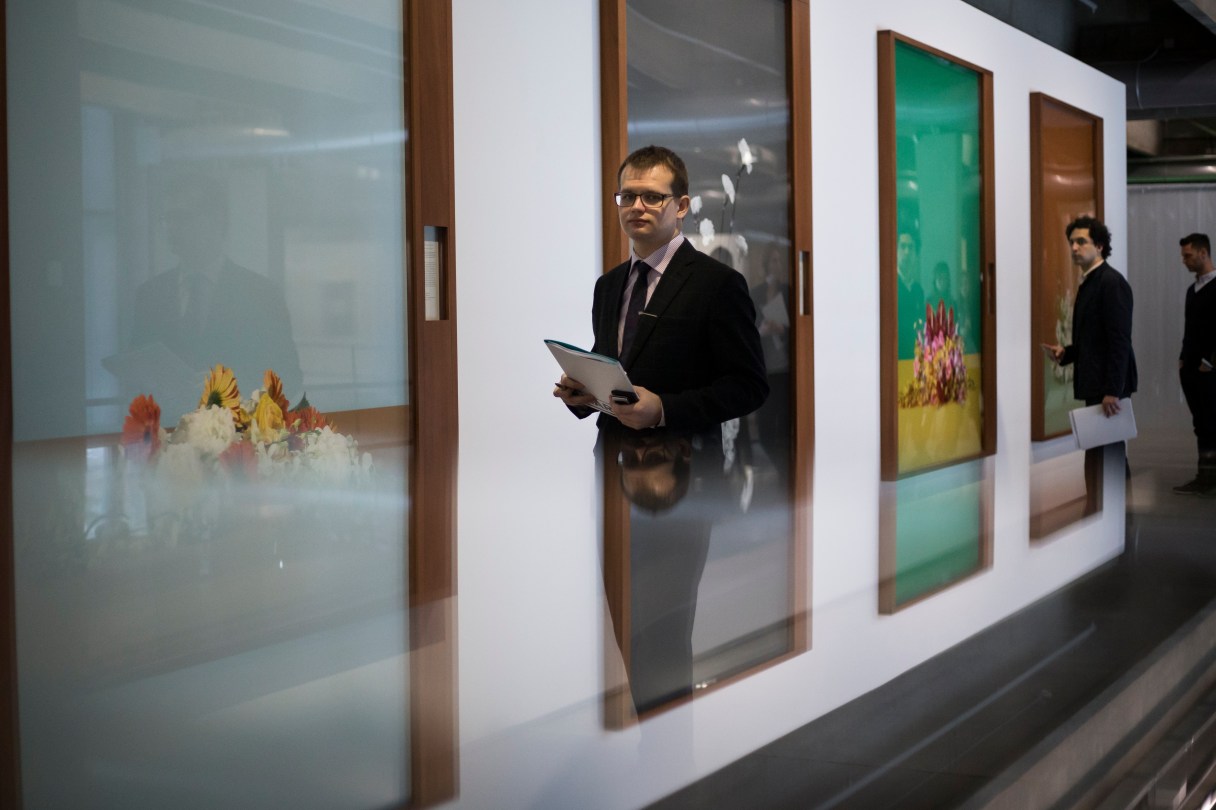
Visitors view exposition in the Garage Museum of Contemporary Art, in Moscow, Russia, Wednesday, March 16, 2016. A new series of exhibits opens on March 17, 2016, at the Garage Museum of Contemporary Art in Moscow, including the parcel-sized replica concrete cube meant to house decayed nuclear waste by American artist Taryn Simon, inspired by Russian artist Kazimir Malevich's original early 1900's  "Black Square" artwork. (AP Photo/Alexander Zemlianichenko)
Visitors view exposition in the Garage Museum of Contemporary Art, in Moscow, Russia, Wednesday, March 16, 2016. A new series of exhibits opens on March 17, 2016, at the Garage Museum of Contemporary Art in Moscow, including the parcel-sized replica concrete cube meant to house decayed nuclear waste by American artist Taryn Simon, inspired by Russian artist Kazimir Malevich's original early 1900's "Black Square" artwork. (AP Photo/Alexander Zemlianichenko) Visitors view exposition in the Garage Museum of Contemporary Art, in Moscow, Russia, Wednesday, March 16, 2016. A new series of exhibits opens on March 17, 2016, at the Garage Museum of Contemporary Art in Moscow, including the parcel-sized replica concrete cube meant to house decayed nuclear waste by American artist Taryn Simon, inspired by Russian artist Kazimir Malevich's original early 1900's "Black Square" artwork. (AP Photo/Alexander Zemlianichenko)

MOSCOW (AP) – A parcel-sized concrete cube meant to house decayed nuclear waste is one of the latest artworks at Moscow’s Garage contemporary art museum.

This ambitious take on Russian artist Kazimir Malevich’s original “Black Square” paintings is the brainchild of American artist Taryn Simon and the product of years of coordination with Russia’s state-controlled Rosatom nuclear agency.

Like Malevich’s work, Simon said hers is also “the great nothing designed out of quite something.”

Rosatom’s first reactions to the project were confusion and surprise- why would an artist want a box of nuclear waste- but after two years of negotiations via proxies, work began on Simon’s black square.

As a foreign citizen, Simon hasn’t been allowed onto Rosatom nuclear facilities and for both safety and security reasons has never physically touched or seen her work of art. Instead, she has communicated with a team of nuclear physicists across Russia.