
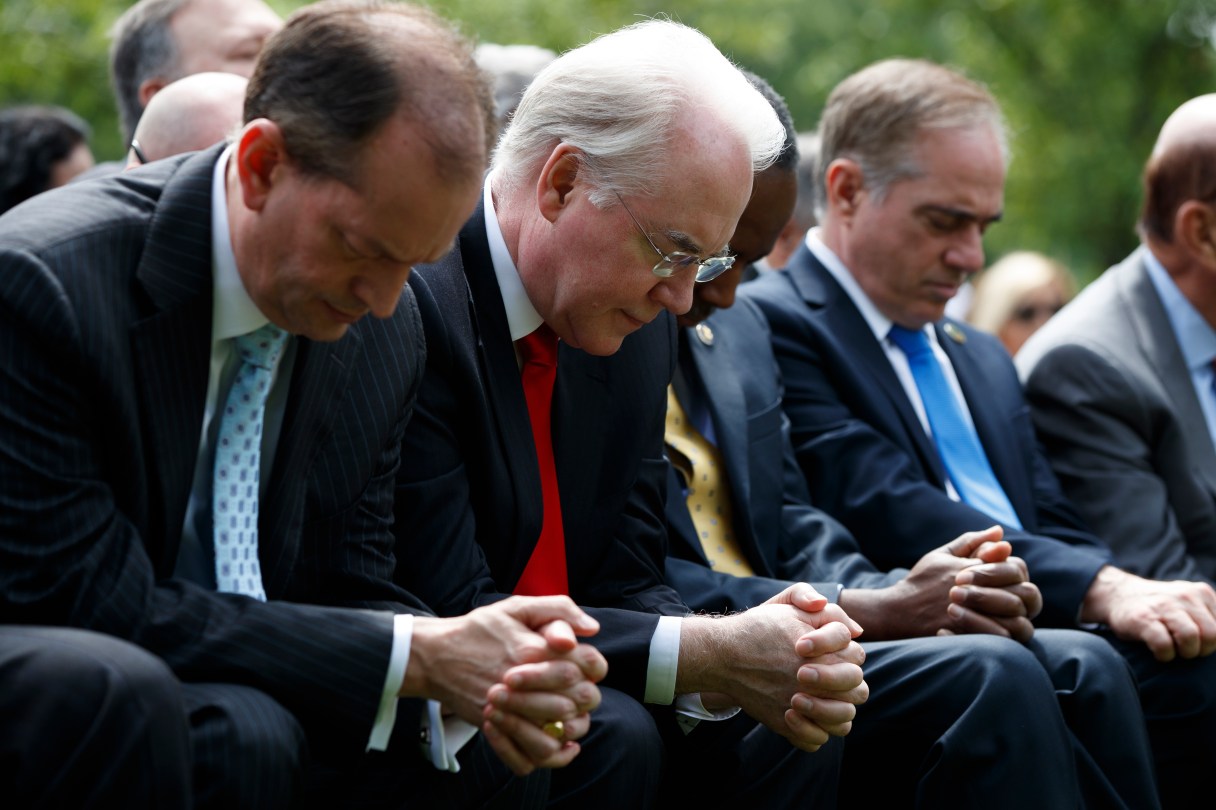
WASHINGTON (AP) – Pitching religious free expression, President Donald Trump accused the former Obama administration Thursday of banning patients at a military hospital from receiving religious items from visitors. That episode is not quite as the president described it.
Here’s what he said and what happened more than five years ago at Walter Reed National Military Medical Center in Bethesda, Maryland:
TRUMP, citing lawsuits against the Obama administration alleging violations of religious freedom: “The abuses were all over. As just one example, people were forbidden from giving or receiving religious items at a military hospital where our brave service members were being treated, and when they wanted those religious items. These were great, great people. These are great soldiers. They wanted those items. They were precluded from getting them.”
THE FACTS: The policy, in 2011, was a bungled rule that was never enforced, Walter Reed officials said at the time. So it’s unlikely that patients who wanted a Bible or religious item from a visiting family member or friend were denied.
The policy was meant to stop benevolent organizations from bothering patients by proselytizing to them, after complaints surfaced that visitors from some groups were persistent and occasionally even threatening. But it was written too broadly, stating no religious items could be given away or used during a visit.