
Tuesday, November 10, 2026Nov 10

Trying for test-tube baby? Risks to mom are rare, study says

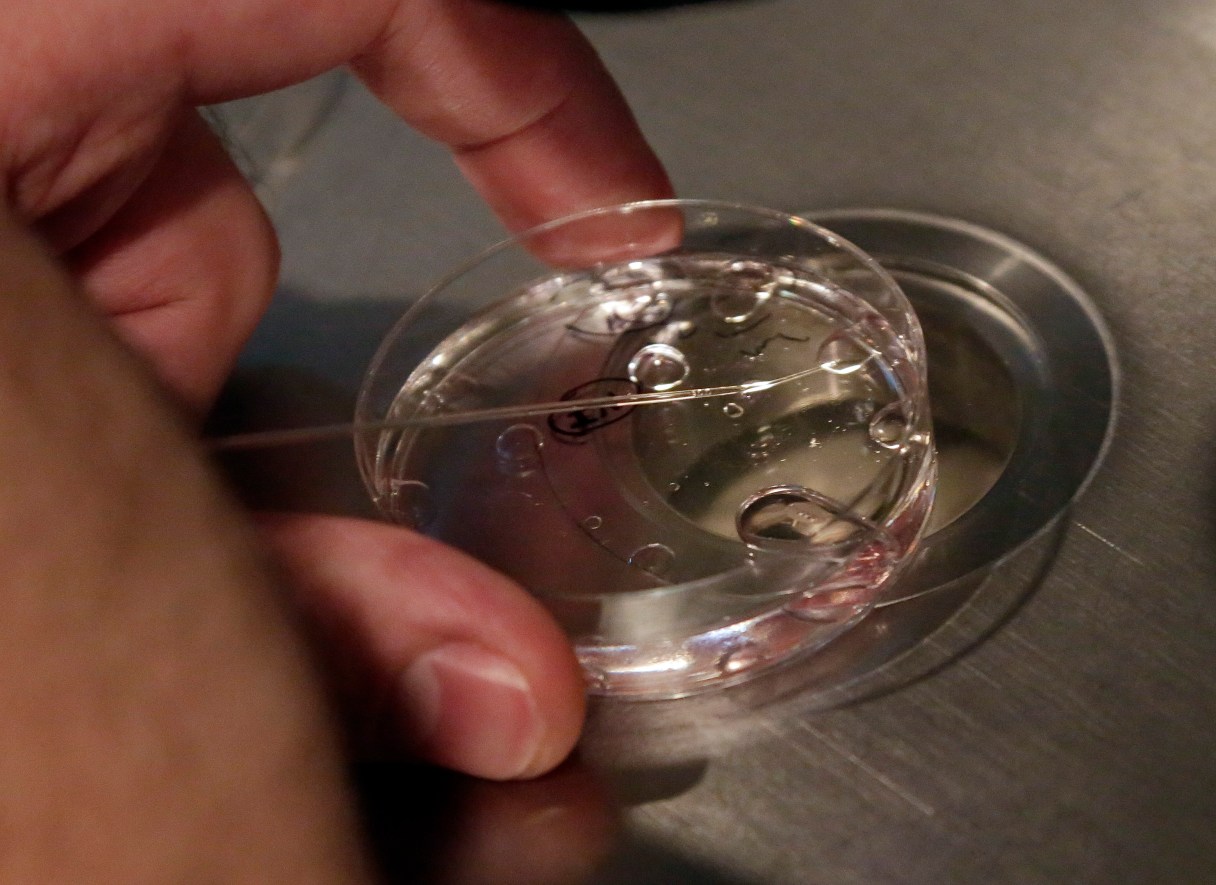
FILE- In this Oct. 11, 2013, file photo, Embryologist Rick Slifkin demonstrates fertilization techniques on a nonviable embryo at Reproductive Medicine Associates of New York, in New York. A new 12-year U.S. study published Tuesday, Jan. 6, 2015, in the Journal of the American Medical Association shows complications including deaths are uncommon from procedures that include IVF. (AP Photo/Richard Drew, File)
FILE- In this Oct. 11, 2013, file photo, Embryologist Rick Slifkin demonstrates fertilization techniques on a nonviable embryo at Reproductive Medicine Associates of New York, in New York. A new 12-year U.S. study published Tuesday, Jan. 6, 2015, in the Journal of the American Medical Association shows complications including deaths are uncommon from procedures that include IVF. (AP Photo/Richard Drew, File) FILE- In this Oct. 11, 2013, file photo, Embryologist Rick Slifkin demonstrates fertilization techniques on a nonviable embryo at Reproductive Medicine Associates of New York, in New York. A new 12-year U.S. study published Tuesday, Jan. 6, 2015, in the Journal of the American Medical Association shows complications including deaths are uncommon from procedures that include IVF. (AP Photo/Richard Drew, File)

CHICAGO (AP) – Complications are uncommon for women undergoing test-tube fertility procedures: A new 12-year U.S. study shows the most frequent involve drugs used to stimulate ovaries, but it suggests problems are rarely fatal.

Over-stimulated ovaries occurred in 154 out of every 10,000 pregnancy attempts; rates of other complications were less than 10 per 10,000 attempts. There were 58 deaths reported during the 2000-11 study. The study lacks information on their causes, and with more than 1 million pregnancy attempts involved, the results are reassuring, said Dr. Jennifer Kawwass, an Emory University assistant professor and the lead author.

The study is the first large-scale effort to quantify risks for U.S. patients undergoing these treatments, Kawwass said. Results were published in Tuesday’s Journal of the American Medical Association.

TREATMENTS STUDIED

The researchers examined federally mandated reports from U.S. fertility clinics.