
 The Associated Press
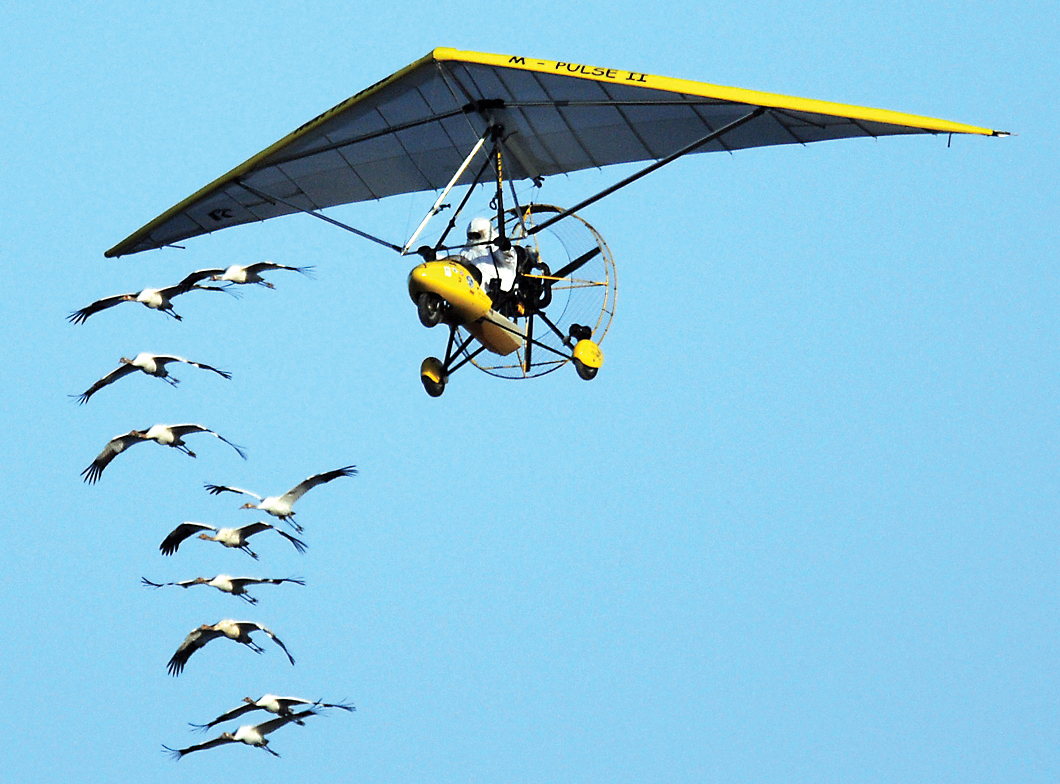
Pilot Joe Duff in his ultralight aircraft flies with 10 juvenile whooping
cranes on Dec. 2, 2010, as part of Operation Migration on their journey from
Wisconsin to their wintering habitats in Florida. Three cranes were found
shot and killed in South Georgia later that month.
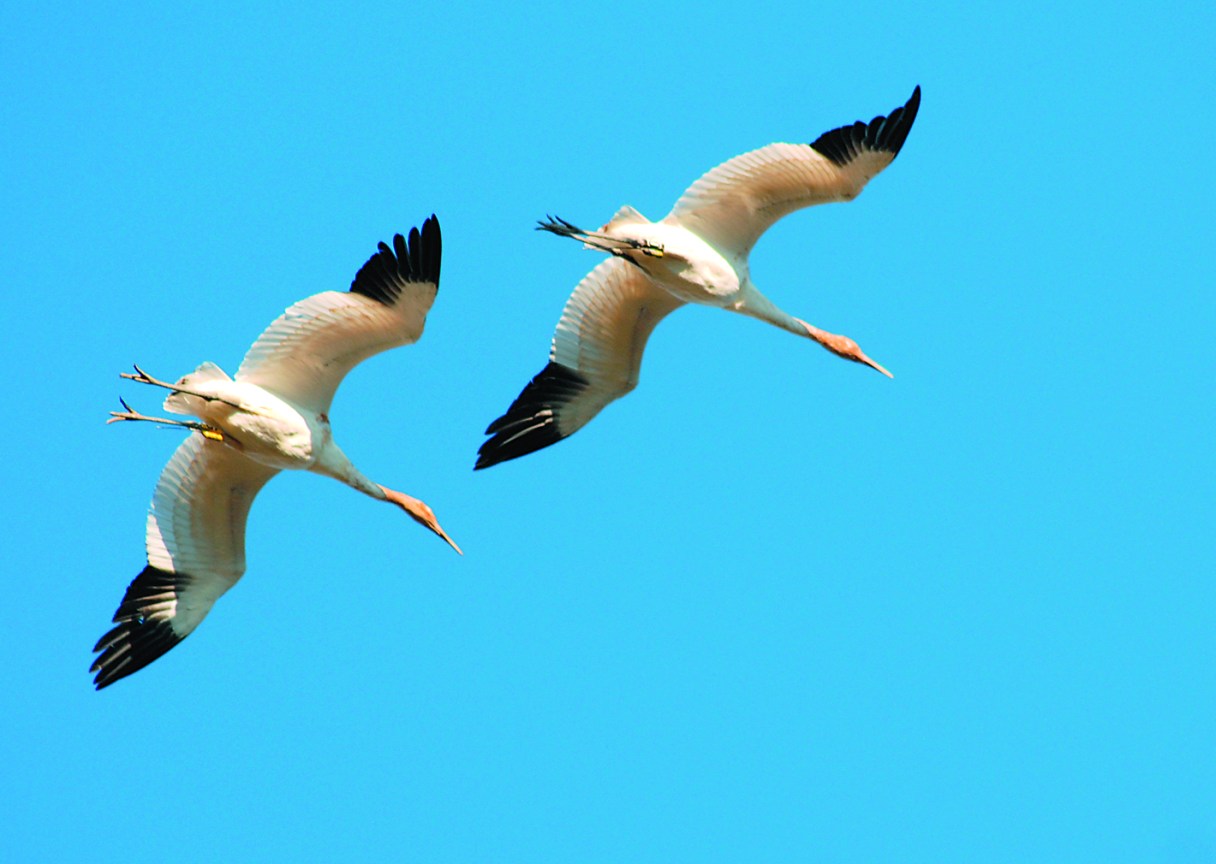
The three endangered whooping cranes killed by gunshot in south Georgia were last tracked in Hamilton County, where they roosted on Dec. 10.
The cranes, discovered near Albany, Ga., by hunters, were shot sometime before Dec. 30, wildlife scientists concluded through preliminary testing, according to a news release from the U.S. Fish and Wildlife Service.
Up to $12,500 is being offered for information that leads to an arrest and successful prosecution of the perpetrator or perpetrators.
The cranes, banded and equipped with transmitters, were part of the Whooping Crane Eastern Partnership effort – a group of nonprofit organizations and government agencies – to reintroduce whooping cranes into the eastern United States. There are about 570 whooping cranes left in the world, 400 in the wild and about 100 cranes are in the eastern migratory population, according to the release.
“Any preventable loss for this population is what we try to go for, obviously,” said U.S. Fish and Wildlife Spokesman Tom MacKenzie. “We have been working on setting up this population for the last 10 years to increase the species’ chances of survival, and anything we can do to prevent needless deaths is high on our priority list.
INFORMATION• Any information concerning the deaths of the cranes should be provided to U.S. Fish and Wildlife Service Special Agent Terry Hasting at 404-763-7959 and/or the Georgia Department of Natural Resources’ 24-hour tip hotline at 1-800-241-4113.ON THE WEB• For more information about the reintroduction effort, visit www.bringbackthecranes.org.BACKGROUND• Of the 10 whooping cranes led south by ultralights, five have already arrived at their wintering location at St. Marks National Wildlife Refuge in Florida, and five are still on the migration in north Florida, two stopovers away from their final destination, Chassahowitzka National Wildlife Refuge.• Biologists from the International Crane Foundation and the U.S. Fish and Wildlife Service reared 11 other whooping cranes at Necedah National Wildlife Refuge and released them in the company of older cranes, which teach the young birds the migration route.• The birds were released Oct. 25. One was killed on Oct. 30 by a predator at Necedah National Wildlife Refuge.Source: U.S. Fish and Wildlife Service
“The shooting of these birds is not acceptable and we will do everything we can to find the perpetrators and do what we can to ensure it doesn’t happen again,” he added.
The cranes were not part of the ultralight aircraft-led migration effort – basically when the birds follow an ultralight aircraft through the migration route – but were among a group of five cranes released as part of the 2010 Direct Autumn Release.
The Direct Autumn Release is another technique introduced in 2005 where young cranes are released in small groups with wild whooping cranes with the idea that they will learn the migration route from the older, more experienced birds.
The shooting of a whooping crane is not very common, said Rick Lavender, a spokesman for the Georgia Department of Natural Resources.
“We are just encouraging the public, anyone who might know anything to what happened here, to talk to us,” he said.
“I’m guessing that the people who shot them are not what you call true sportsmen; most hunters would not do that,” said David Stone, president of the Chattanooga Chapter of the Tennessee Ornithological Society.
“It’s just a shame. I’m sure it’s partly ignorance on the part of those people because there’s a lot of money spend to raise those birds,” he said.
In addition to protection under the Endangered Species Act, whooping cranes are protected by state laws and the federal Migratory Bird Treaty Act, so those charged with the crime can be prosecuted under any of these laws.
Under the Endangered Species Act, they may face a fine of not more than $50,000 or one year in prison. Under the Migratory Bird Treaty Act, the perpetrator could face up to a $15,000 fine per bird shot and one year in federal prison, said MacKenzie.