
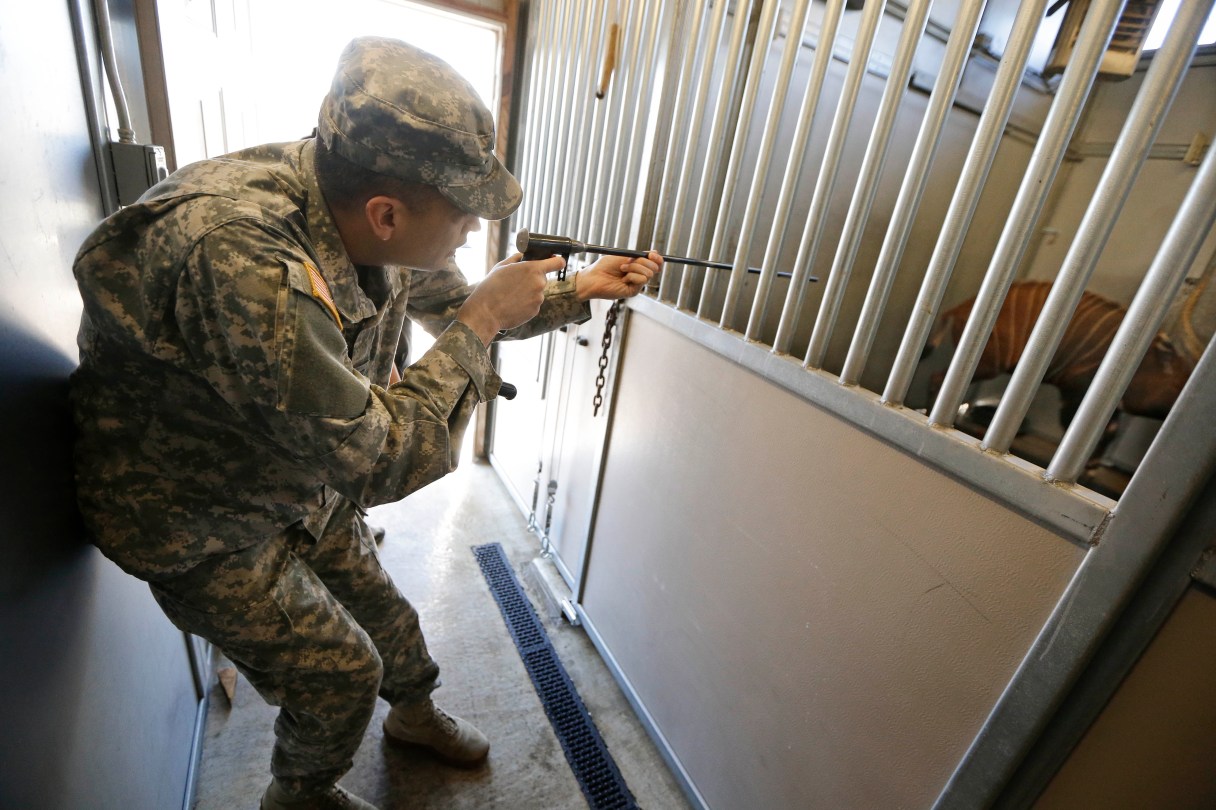
NASHVILLE, Tenn. (AP) – At home in Fort Campbell, Army veterinarians mostly treat military working dogs and family pets. But once deployed, they could be called upon to treat just about anything.
It could be camels or livestock or even lions and tigers, as some Army veterinarians discovered during the war in Iraq when they were brought in to help rebuild the devastated Baghdad Zoo.
In order to be ready for whatever is thrown at them, Fort Campbell veterinarians and techs are improving their skills by going on rounds at the Nashville Zoo. It’s about an hour from the base, which straddles the Kentucky-Tennessee border.
A recent Wednesday found Capt. Eric Zuniga and Maj. Renee Krebs huddled around a radiograph of the tiny lungs of a hedgehog named Lady. She had A.D.R., Zuniga said, explaining that the acronym is short for “Ain’t Doin’ Right,” a common complaint among the pets they deal with at the Fort Campbell veterinary clinic.
Getting the radiograph required sedating Lady by placing a tiny conical mask over her nose through which she breathed in anesthetic gas.