
Monday, November 9, 2026Nov 9

Electric fans might may make seniors hotter in extreme heat

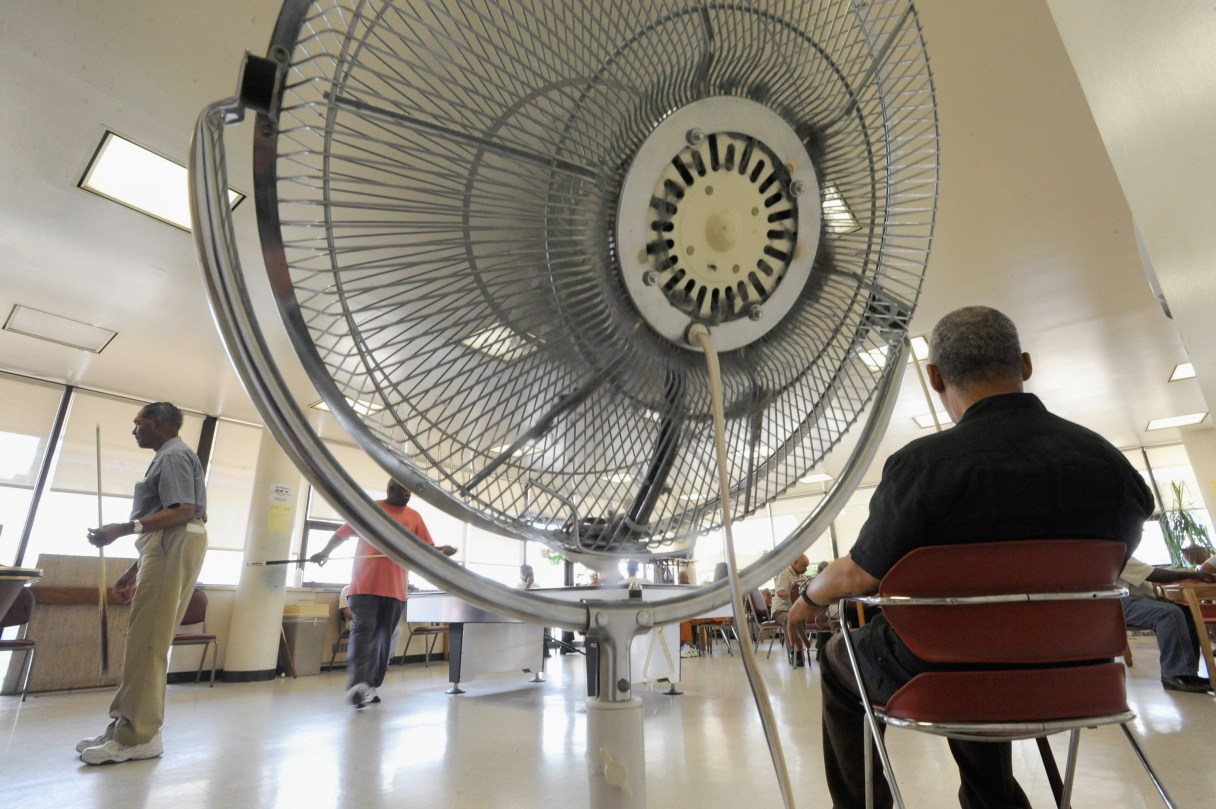
FILE - In this Thursday, June 9, 2011 file photo, seniors spend time near a fan at the Waxter Senior Center in Baltimore. The center was designated as a cooling station by Baltimore officials. Results of a study published Tuesday, Sept. 6, 2016 in the Journal of the American Medical Association suggest that in triple-digit heat, age-related changes that limit sweating might make fans less effective in those 60 and up than in young people. But the conclusion isn't clear-cut and the study authors say more research is needed. (AP Photo/Steve Ruark)
FILE - In this Thursday, June 9, 2011 file photo, seniors spend time near a fan at the Waxter Senior Center in Baltimore. The center was designated as a cooling station by Baltimore officials. Results of a study published Tuesday, Sept. 6, 2016 in the Journal of the American Medical Association suggest that in triple-digit heat, age-related changes that limit sweating might make fans less effective in those 60 and up than in young people. But the conclusion isn't clear-cut and the study authors say more research is needed. (AP Photo/Steve Ruark) FILE - In this Thursday, June 9, 2011 file photo, seniors spend time near a fan at the Waxter Senior Center in Baltimore. The center was designated as a cooling station by Baltimore officials. Results of a study published Tuesday, Sept. 6, 2016 in the Journal of the American Medical Association suggest that in triple-digit heat, age-related changes that limit sweating might make fans less effective in those 60 and up than in young people. But the conclusion isn't clear-cut and the study authors say more research is needed. (AP Photo/Steve Ruark)

CHICAGO (AP) – True or false: Electric fans are a cheap and effective way to stay cool during extreme heat waves. A tiny new experiment in older adults suggests the answer may not be as simple as it seems.

It’s an important issue, particularly for seniors and sick people, whose bodies struggle to adapt to extreme temperatures that are becoming more common as the climate changes. The results of the experiment suggest that fans may be less effective for those 60 and up than in younger people during triple-digit heat because older people don’t sweat as much.

The authors don’t want anyone to stop using fans in normal hot weather, though, and they caution that their conclusions are not clear-cut because they studied so few people at just one extremely high temperature.

THE EXPERIMENT

Eight adults aged 60 to 80 years agreed to sit for about two hours in a chamber resembling a walk-in freezer, only it was heated to 107 degrees. Researchers used a steam generator to gradually increase humidity to 70 percent. The participants sat with a 16-inch electric fan in the chamber on one day, and came back another and sat without the fan.