
Monday, November 9, 2026Nov 9

At odds on human rights, US and Cuba move toward embassies

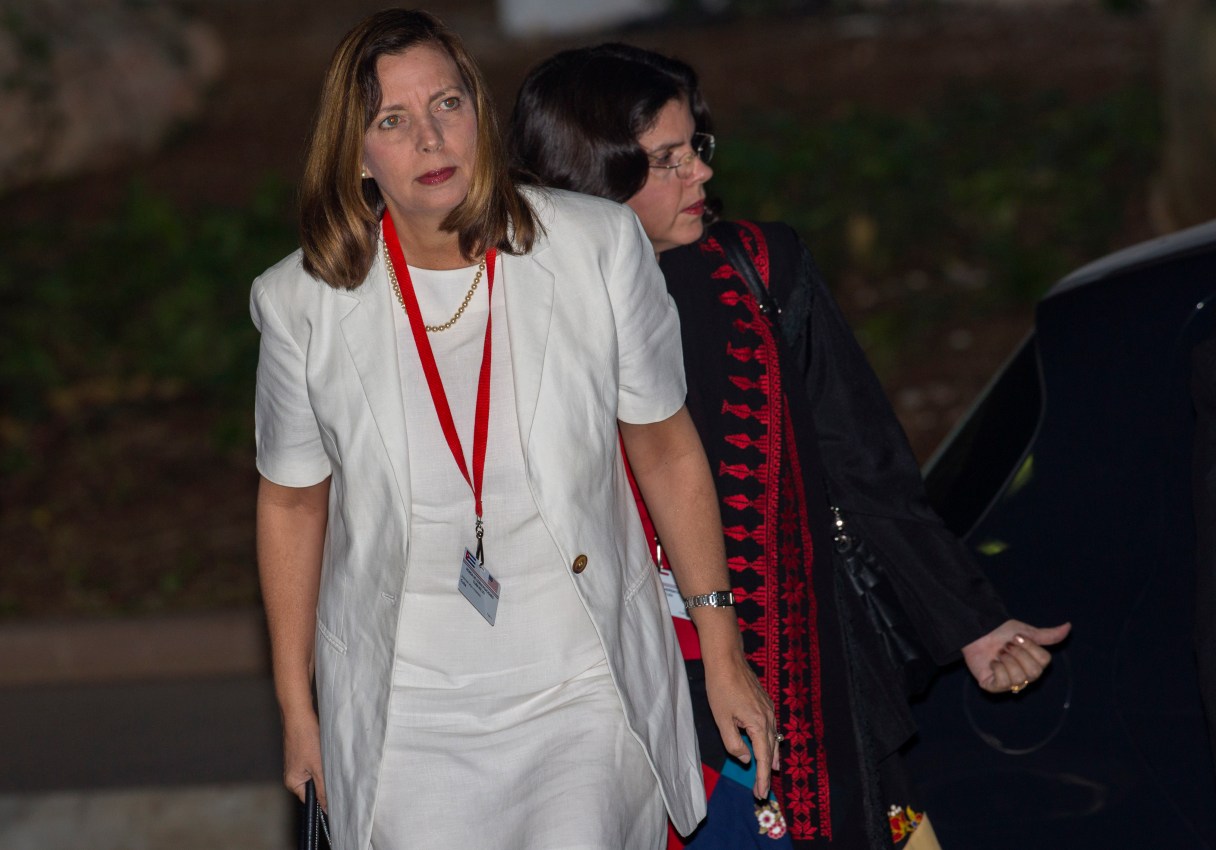
Ministry of Foreign Relations General Director for the United States, Josefina Vidal, arrives for a second day of talks with a U.S. delegates, in Havana, Cuba, Thursday, Jan. 22, 2015. The two countries are trying to eliminate obstacles to normalized ties as the highest-level U.S. delegation to the communist island in more than three decades holds a second day of talks with Cuban officials. Cuba is demanding its removal from a U.S. list of state sponsors of terrorism, which Washington says it is considering. (AP Photo/Ramon Espinosa)
Ministry of Foreign Relations General Director for the United States, Josefina Vidal, arrives for a second day of talks with a U.S. delegates, in Havana, Cuba, Thursday, Jan. 22, 2015. The two countries are trying to eliminate obstacles to normalized ties as the highest-level U.S. delegation to the communist island in more than three decades holds a second day of talks with Cuban officials. Cuba is demanding its removal from a U.S. list of state sponsors of terrorism, which Washington says it is considering. (AP Photo/Ramon Espinosa) Ministry of Foreign Relations General Director for the United States, Josefina Vidal, arrives for a second day of talks with a U.S. delegates, in Havana, Cuba, Thursday, Jan. 22, 2015. The two countries are trying to eliminate obstacles to normalized ties as the highest-level U.S. delegation to the communist island in more than three decades holds a second day of talks with Cuban officials. Cuba is demanding its removal from a U.S. list of state sponsors of terrorism, which Washington says it is considering. (AP Photo/Ramon Espinosa)

HAVANA (AP) – Still at odds over human rights, the United States and Cuba closed two days of historic talks in Havana with some progress toward restoring diplomatic ties after a half-century of estrangement.

It wasn’t immediately clear whether the human rights issue, which has previously blocked closer U.S.-Cuban relations, would pose a threat to the new diplomatic process.

“As a central element of our policy, we pressed the Cuban government for improved human rights conditions, including freedom of expression,” said Roberta Jacobson, the top U.S. diplomat for Latin America and most senior American official to visit the island country in more than three decades. In Spanish, however, her statement said the U.S. “pressured” Cuba on the issue.

“Cuba has never responded to pressure,” Josefina Vidal, Cuba’s top diplomat for U.S. affairs, responded.

The comments by Jacobson and Vidal reflected longstanding positions of their governments. And they laid bare the pressures each side faces at home – the U.S., from Republican leaders in Congress and powerful Cuban-American groups and Cuba, from hardliners deeply concerned that rapprochement could undermine the communist system founded by Fidel Castro.