
Wednesday, November 11, 2026Nov 11

Heading up the Joint Chiefs of Staff: 5 notable chairmen

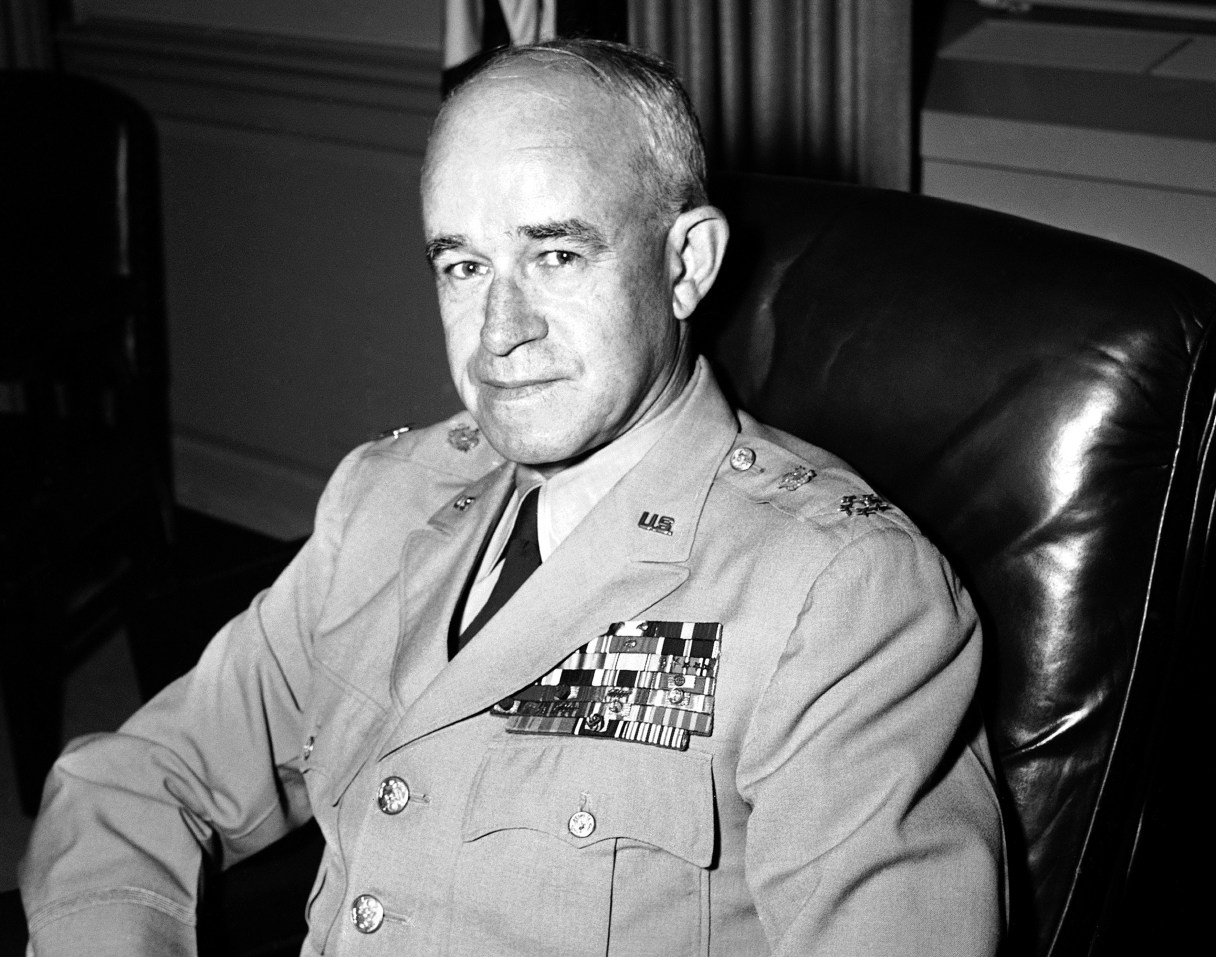
FILE - In this Sept. 22, 1951, file photo, Joint Chiefs of Staff Gen. Omar Bradley poses in his office after being promoted to the five-star rank of General of the Army in Washington, wearing his new insignia. Bradley was the first chairman of the Joint Chiefs. (AP Photo/Byron Rollins, File)
FILE - In this Sept. 22, 1951, file photo, Joint Chiefs of Staff Gen. Omar Bradley poses in his office after being promoted to the five-star rank of General of the Army in Washington, wearing his new insignia. Bradley was the first chairman of the Joint Chiefs. (AP Photo/Byron Rollins, File) FILE - In this Sept. 22, 1951, file photo, Joint Chiefs of Staff Gen. Omar Bradley poses in his office after being promoted to the five-star rank of General of the Army in Washington, wearing his new insignia. Bradley was the first chairman of the Joint Chiefs. (AP Photo/Byron Rollins, File)

A “joint board” bringing together top leaders of the U.S. military was established in 1903 during President Theodore Roosevelt’s administration. It gained members after World War I but remained largely advisory. The joint board was eclipsed during World War II by a “unified high command” that became known as the Joint Chiefs of Staff. The National Security Act of 1947 formally established its official role in military matters.

Five notable chairmen of the Joint Chiefs of Staff:

GEN. OMAR N. BRADLEY

A World War II hero with the rare distinction of reaching five-star rank, he was the first chairman of the Joint Chiefs. He served from August 1949 to August 1953, a period marked by the outbreak of the Korean War and, before that, a “revolt of the admirals” in a Washington battle over nuclear war roles between the Navy on one side and the Army and Air Force on the other.

GEN. EARLE G. WHEELER