
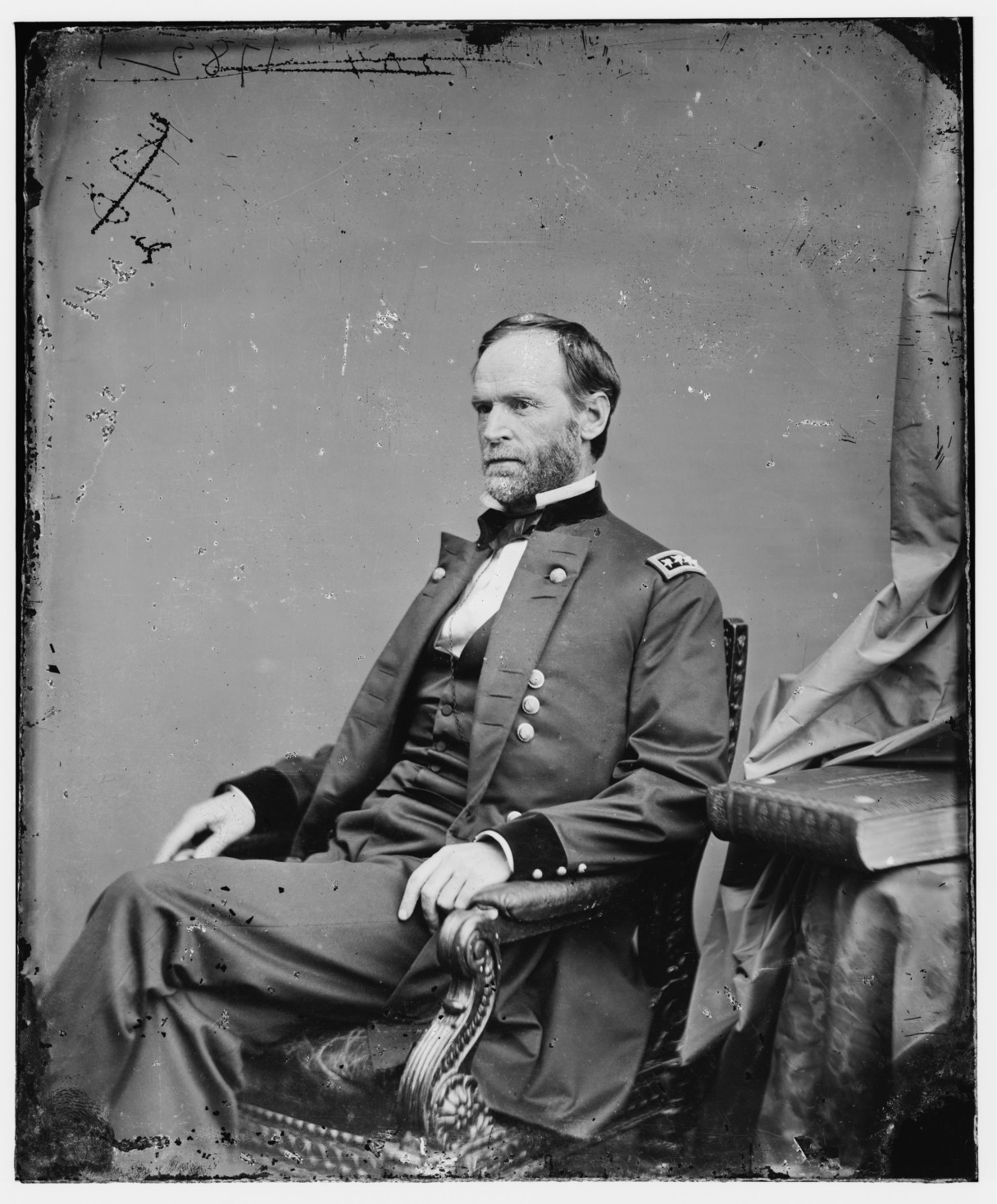
MILLEDGEVILLE, Ga. (AP) – At the heart of this well-preserved antebellum city, sunbeams stream through the arched windows of a grand public meeting room that mirrors the whole Civil War – including its death throes, unfolding 150 years ago this week when Union Gen. William Tecumseh Sherman launched his scorching March to the Sea.
The first major objective along Sherman’s route, Milledgeville was Georgia’s capital at the time, and this room was the legislative chamber. Crossing its gleaming floor, Amy Wright couldn’t help recalling family stories of the hated “foragers” who swept through then. “They were just called ‘Sherman’s men,'” she said, in a hushed voice.
Gesturing across the room, she pointed to the spot where Georgia’s leaders had voted to secede in 1861. This, too, was where, after three years of brutal fighting, battle-hardened soldiers in Sherman’s juggernaut burst in, drunkenly convened a mock assembly and “repealed” secession.
Their raucous laughter soon gave way to rampaging – and then to tears and fury among local people, including Wright’s forebears, and countless others along the path of destruction Sherman slashed from smoking Atlanta to trembling Savannah and beyond. For many, even a century and a half later, Sherman’s name still evokes epithets – villain, war criminal, devil – for the horrors he countenanced, and even commanded.
Still, if his reputation for mayhem remains firmly intact, the passage of time has allowed for his march and indeed his own complex character to receive a more nuanced reassessment. And it’s not just historians who are looking anew.