
Friday, November 6, 2026Nov 6

This story is free to read.

Justices send dispute over service dog back to lower court

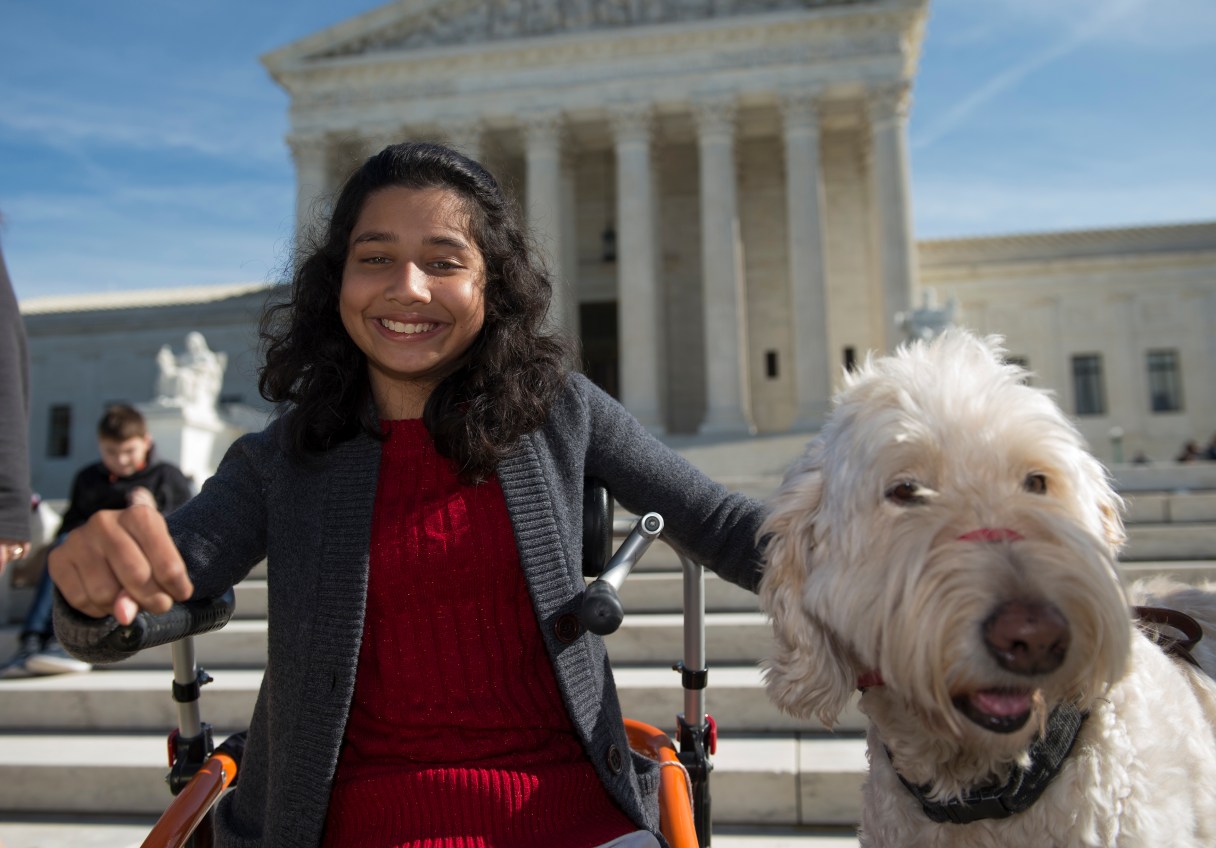
FILE - In this Oct. 31, 2016 file photo, Ehlena Fry of Michigan, sits with her service dog Wonder, while speaking to reporters outside the Supreme Court in Washington. The Supreme Court says a lower court should take another look at whether Fry, who has cerebral palsy can sue Michigan school officials over their refusal to let her to bring a service dog to class.  (AP Photo/Molly Riley, File)
FILE - In this Oct. 31, 2016 file photo, Ehlena Fry of Michigan, sits with her service dog Wonder, while speaking to reporters outside the Supreme Court in Washington. The Supreme Court says a lower court should take another look at whether Fry, who has cerebral palsy can sue Michigan school officials over their refusal to let her to bring a service dog to class. (AP Photo/Molly Riley, File) FILE - In this Oct. 31, 2016 file photo, Ehlena Fry of Michigan, sits with her service dog Wonder, while speaking to reporters outside the Supreme Court in Washington. The Supreme Court says a lower court should take another look at whether Fry, who has cerebral palsy can sue Michigan school officials over their refusal to let her to bring a service dog to class. (AP Photo/Molly Riley, File)

WASHINGTON (AP) – The Supreme Court says a lower court should take another look at whether a girl with cerebral palsy can sue Michigan school officials over their refusal to let her to bring a service dog to class.

The justices ruled unanimously on Wednesday that federal disability laws may allow Ehlena Fry to pursue her case in court without having to wade through a lengthy administrative process first.

The narrow ruling from Justice Elena Kagan said exhausting the administrative process is not always required. Disability advocacy groups were hoping for a more sweeping opinion that would make it easier for disabled students to protect their rights under the Americans with Disabilities Act.

Lower courts had ruled against Fry, saying she first had to try informally resolving her dispute with the school district.