

Researchers have good news for those of us worried that we’ve passed our prime: 60 is the new 25. According to a survey by the Gallup World Poll, people report that they are more satisfied with life after the age of 60. Survey results indicate that level of perceived happiness increases steadily from one’s 60s on due to a corresponding decrease in stress. So where does that leave those of us in our 20s, 30s, 40s or 50s?
To better understand the nuances of this study, we asked four locals in different stages of life to talk about the positives and negatives that come with their place on the journey. For those of us facing doubts about the coming years, their experiences provide a snapshot of the future and make it abundantly clear that no matter your place in life right now, things do, in fact, get better.
 Aubrey LaRue
One’s 20s are often depicted as carefree years filled with potential and partying, but beneath their breezy facades, many millennials feel as if they’re living in a pressure cooker, says 27-year-old Aubrey LaRue.
Over the course of a single decade, these quasi-adults are expected to find the perfect career, track down their soul mate and figure out who they want to be – all while facing constant reminders that they’re far behind in the game of life.
“With the social media age that we’re in, it’s constant comparison no matter where you look,” LaRue says. “They’re posting about their job promotions, they’re posting about all the vacations, they’re posting about their love life and it’s hard to stop those thoughts from entering your head like ‘Why don’t I have this, why don’t I have that?'”
Luckily, LaRue has had a head start in the never-ending game of catch-up. Two years ago, she married her best friend, Christian, and the two have found a way to successfully balance home life and social life. But it wasn’t until recently that she finally began to whittle away at the question marks still surrounding her career.
When LaRue took a marketing position at a local real estate development firm nearly five years ago, she found herself plagued with a new set of inquiries. Where did she fit best within the profession? What could she do to rise up in the ranks? Was she even in this field for the long haul, or would she want to change career paths later?
Anxiety about the unknown persisted until LaRue decided to do something that many do not: take a risk.
A month before her wedding, she took a job as a Realtor, leaving her salaried position to work on commission.
“That was probably the most scared I’ve ever been in my career,” she laughs. Yet her leap of faith paid off. “I think, for the first time in my life, I’ve found what I’m good at and feel encouraged to work harder every day because I feel like I’m in the right place.”
Simple as it sounds, she says her willingness to fail young could be the key to surviving the “decade of decision.”
“I feel like for the biggest rewards in life, as cheesy as it sounds, you have to take a risk,” LaRue says. “If you’re not risking anything and not putting yourself out of your comfort zone, I don’t see how the reward could be that great. I think that’s just how you fall into complacency.”
LUCKY NUMBER 30
The Gallup World Poll lists 32 as the age at which people say they feel the happiest, and Katie Harvey can understand why. Now 35, Harvey and her friends often talk about how grateful they are that they aren’t in their 20s anymore, as much of those post-college years were spent learning who they were. Today, as a stay-at-home mom with her second child on the way, Harvey says she feels as if she’s finally settled into herself and begun to reap the benefits of everything she worked toward during the last decade. “I recently realized that I had gotten everything that I’d ever wanted,” she says. “I wanted to be married to the right guy, I wanted a house in a neighborhood, I wanted [to have] a boy and a girl, and I got that. I don’t know that I can say that it’s the happiest time of my life, but it’s the happiest I’ve ever been up until now.”
 Mary Fortune stands alongside her husband, Jim, and their sons Ben (left) and Jack.
When Mary Fortune looks at her 18-year-old son Jack, she can still remember how terrified she felt back when he was just a toddler and she couldn’t get him to eat.
“Now he’s a head-and-a-half taller than me, and I can’t even begin to describe the amount [of food] the kid puts away,” the 46-year-old laughs. “That’s silly, but it’s one of those things where I think about all the hours I spent worrying ‘Will this kid ever eat?’ Yes, the kid will eat. He absolutely will.”
This year, as she sends Jack off to college, Fortune harbors concerns that far surpass the gravitas of uneaten macaroni and cheese.
She wonders what kinds of decisions he’ll make and contemplates what kind of man he’ll grow up to be. She thinks about his 13-year-old brother, Ben, and wonders what she can do to help him navigate the emotional roller-coaster that is middle school. She also wonders how she’ll keep up with the payments for their education over the next five years.
But unlike years past, when macaroni left untouched could send her into a frenzy, she’s confident that she can figure it all out – especially since those early experiences taught her that she’s more than capable of powering through any worries that come her way.
“I’ve got to be honest – I was more stressed at 25 than I am at 46,” Fortune says. “Now, I don’t feel stressed; I just feel like that’s what I’ve got to get done.”
The attitude is one that she’s adopted toward every challenge that comes with being in her 40s, such as staying relevant in the workplace.
While the main focus of her 30s was building her career, Fortune has found that, now, the primary challenge in her corporate communications position is keeping up with the industry as tech-savvy 20-year-olds bring fresh energy and new ideas. Instead of feeling paralyzed by the fear of becoming obsolete, however, Fortune places her focus on learning new skills to stay up-to-date with the changes, and looks for ways she can act as a mentor to the new generation of communicators.
“When I think about how much things have changed in the past 10 years, I can’t imagine how much they’ll change in the next 10. And I really want to be there for that,” she says.
At the same time, Fortune is also taking steps to get ahead of another stressor that also weighs heavy on the minds of those in their 40s and 50s: providing care for parents as their health begins to decline.
Though her own parents are still in good shape, Fortune lives nearby in case anything should go wrong, and she has already begun having conversations with them about everything from their long-term-care insurance plans to their wishes if they become incapacitated.
“You have to talk about kinda dark stuff,” she admits. “But it’s important to have those conversations, and we’ve had them for those reasons.”
The past few years of Fortune’s own life have brought more than just new challenges to overcome, however. With a great job, a supportive family and her health, Fortune says she has found no shortage of joy – her reward, she muses, for surviving the past two decades.
“I hope my 50s are as fun as my 40s have been,” she laughs. “Things have gotten nothing but better. I really hope that continues to be the case.”
 Casper Cox
Some people might consider turning 60 a bummer. Casper Cox says ‘nuh-uh.’
When the 61-year-old crossed that pivotal threshold during his birthday last May, he was surprised to find himself telling friends and family it was the best May of his life.
A devout snorkeler fascinated by native fish, Cox had been hired by the BBC to look for river chubs in the Hiwassee River. He had also been selected to narrate a film about the little-known life of Southern Appalachian rivers, called “Hidden Rivers,” to air on PBS.
“Everything was falling into place,” Cox says. “And I’ve still got more years to go.”
Strange as it may sound to those who fear the passage of time, life doesn’t come to an end after your 50s, 60s or even 70s. For many like Cox, a new chapter is just beginning.
With the last of his three children heading off to college next year, Cox has seen a reduction in his number of responsibilities. He compares it to getting back to “the simpler life” reminiscent of his 20s, when he was just a young artist who could stay up all night perfecting a painting, with little financial concerns outside of providing the bare minimum to support his lifestyle.
Unlike those early days, however, he is unburdened by the “checklist of life,” having found his spouse, raised his children and settled into his career.
“A lot of the mystery is behind you,” he says.
The cleared agenda makes it easier to focus on living in the here and now and enables him to spend more time pursuing projects he’s passionate about.
When his first child was born 30 years ago, Cox explains, he shifted his focus from creating and selling artwork to developing his sign designing business, Prizam!, to ensure his family had a sustainable source of income to pay the bills. Now with the mortgage paid off and funding secured for schooling, he’s free to tackle the projects he always hoped to get around to.
Still, he says, that feeling of later-life happiness doesn’t come on like a switch.
“It’s not like a magic number when you hit 60,” he says.
Plenty of people his age are unhappy, he says, and there are still issues that weigh heavy on his own mind, such as investing in his future so he doesn’t have to worry about finances during his retirement.
Diagnosed with diabetes last year (he blames the sweet tea) and feeling the beginning of back pain, Cox is also becoming increasingly aware that his body is wearing out, and he’s beginning to make lifestyle changes to stay healthy.
“You don’t want to die as an invalid where you’re laying in a bed and someone’s taking care of you for 10 years,” he says. “I want to stay as active as possible for as long as possible, then die quickly in my sleep – or snorkeling.”
Still, he says, he prefers to keep his focus on the here and now, and he’s already accepted that life will throw problems his way.
“I can see myself doing the type of things I’m doing until I’m 70,” Cox says. “Then we’ll see what’s going to happen after that.”
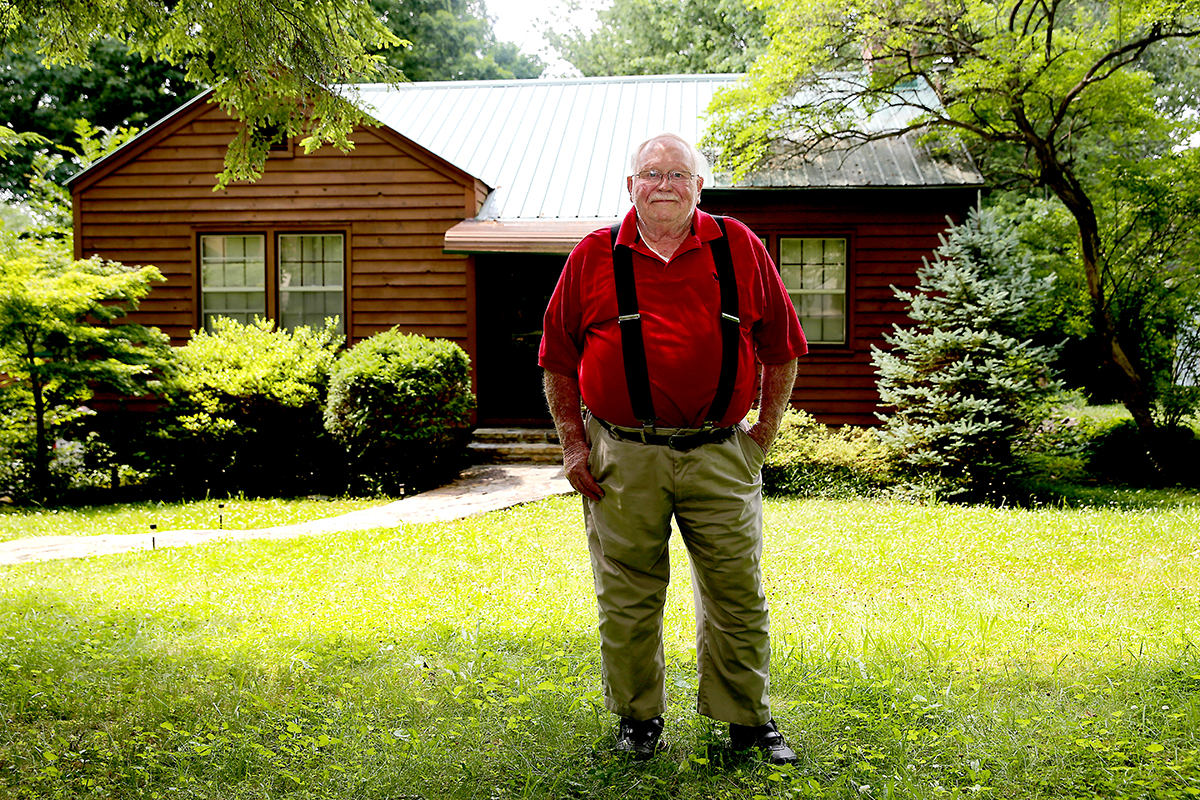 Dun Monroe poses for a photo Sunday, June 17, 2018 at his home in Signal Mountain, Tennessee.
At 80 years old, Dun Monroe has crossed off all the destinations on his wish list. He’s taken the trip to Paris, vacationed in Greece, toured the cities of Kenya.
These days, he says, there’s no place quite like home.
“It’s kind of hard to explain, but you start to appreciate your home as much as you do the vacations,” Monroe says.
Since retiring from his job as a mail carrier for the U.S. Postal Service 12 years ago – which he equivocates to the rush of getting out of school for the summer – Monroe has been living the good life.
Each morning, he gets up, tackles the crossword, spends some time at the gym. Then maybe he’ll catch one of his great-nephews’ baseball games.
“I’m a natural-born bum,” Monroe laughs. “So I just enjoy each day, you know? Kick back, relax and see what happens.”
While young people are just beginning to worry about their 401(k) plans, Monroe has already surpassed that stage, and he says money hasn’t been much of a concern. In addition to his wife’s retirement pay, Monroe has his pension from his 30-year stint in the military, a pension from his years as a mail carrier for the U.S. Postal Service, and “a little bitty smidgen” of Social Security benefits.
The couple may not have as much left over for savings as they once did, Monroe admits, but with their 43-year-old son living in Mississippi, they only have two mouths to feed, and what they have is more than enough.
“I don’t owe anything,” Monroe says. “That’s the big kicker.”
Though trips to the doctor have become a lot more routine and he can’t run or lift weights like he once did, Monroe says he honestly doesn’t spend a lot of time worrying about himself or what comes next at all.
What does worry him, however, is what kind of world his grandson will inherit once he and the rest of his generation is gone.
With technology advancing, Monroe worries about the devaluation of the American worker. As a child of the Great Depression, he also wonders whether today’s youth would be able to handle hardships like wartime without the resourcefulness he learned during his own upbringing.
“I don’t think they have the attitude that produces realism,” Monroe says, recounting stories of growing up with holes in his shoes. “That scares me.”
Still, Monroe knows it’s not too late to make a difference. He uses his days full of free time to frequent local government meetings and make his voice heard on issues ranging from education to neighborhood expansion. With any luck, he’ll be able to do his part to make his piece of the world a better place for those who come after him – even if it means he’ll just have to be a “closet bum” for a little while longer, he laughs.