
Tuesday, November 10, 2026Nov 10

Spain’s hunt for author Cervantes’ remains enters key phase

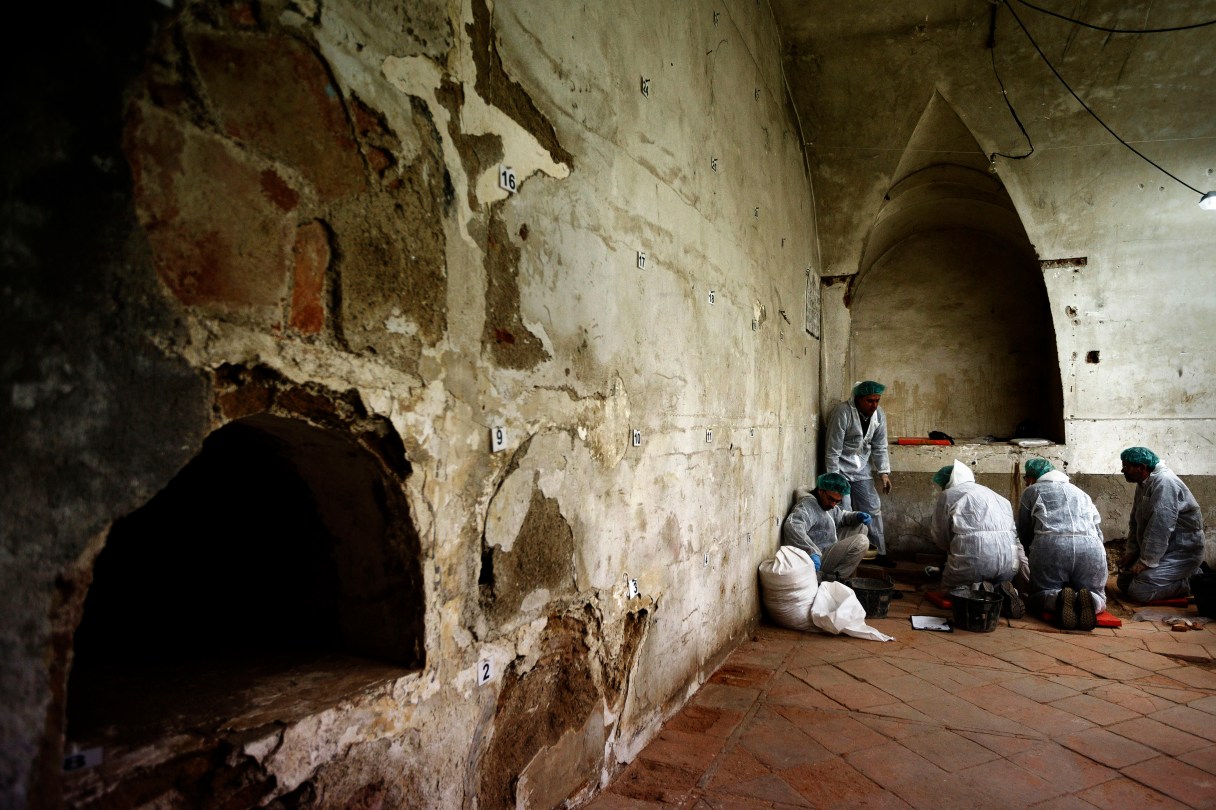
A team of archaeologists and anthropologists take notes after starting the excavation work after identifying three unrecorded and unidentified graves in the chapel’s crypt of the closed order Convent of the Barefoot Trinitarians in Madrid's historic Barrio de las Letras, or Literary Quarter, Spain, Saturday, Jan. 24, 2015. Experts searching for the remains of Miguel de Cervantes hope they may be entering the final phase of their nine-month quest to solve the mystery of where the great Spanish writer was laid to rest. The 'Don Quixote' author was buried in 1616 at the Convent but the exact whereabouts of his grave in the tiny convent chapel are unknown. The bones found will be exhumed and analyze, after that, the experts will try to identify the bones using DNA profiling. (AP Photo/Daniel Ochoa de Olza)
A team of archaeologists and anthropologists take notes after starting the excavation work after identifying three unrecorded and unidentified graves in the chapel’s crypt of the closed order Convent of the Barefoot Trinitarians in Madrid's historic Barrio de las Letras, or Literary Quarter, Spain, Saturday, Jan. 24, 2015. Experts searching for the remains of Miguel de Cervantes hope they may be entering the final phase of their nine-month quest to solve the mystery of where the great Spanish writer was laid to rest. The 'Don Quixote' author was buried in 1616 at the Convent but the exact whereabouts of his grave in the tiny convent chapel are unknown. The bones found will be exhumed and analyze, after that, the experts will try to identify the bones using DNA profiling. (AP Photo/Daniel Ochoa de Olza) A team of archaeologists and anthropologists take notes after starting the excavation work after identifying three unrecorded and unidentified graves in the chapel’s crypt of the closed order Convent of the Barefoot Trinitarians in Madrid's historic Barrio de las Letras, or Literary Quarter, Spain, Saturday, Jan. 24, 2015. Experts searching for the remains of Miguel de Cervantes hope they may be entering the final phase of their nine-month quest to solve the mystery of where the great Spanish writer was laid to rest. The 'Don Quixote' author was buried in 1616 at the Convent but the exact whereabouts of his grave in the tiny convent chapel are unknown. The bones found will be exhumed and analyze, after that, the experts will try to identify the bones using DNA profiling. (AP Photo/Daniel Ochoa de Olza)

MADRID (AP) – Experts searching for the remains of Miguel de Cervantes hope they are entering the final phase of their nine-month quest to solve the mystery of where the great Spanish writer was buried.

The author of “Don Quixote” was laid to rest in 1616 at the Convent of the Barefoot Trinitarians in Madrid’s historic Barrio de las Letras, or Literary Quarter, but the exact whereabouts of his grave within the tiny convent chapel are unknown.

A team of archaeologists and anthropologists on Saturday are starting excavation work after identifying three unrecorded and unidentified graves in the chapel’s crypt. The bones there will be exhumed and analyzed.

Almudena Garcia Rubio, who leads the project, said if they don’t find Cervantes’ remains in those places, there are still other possible locations.