
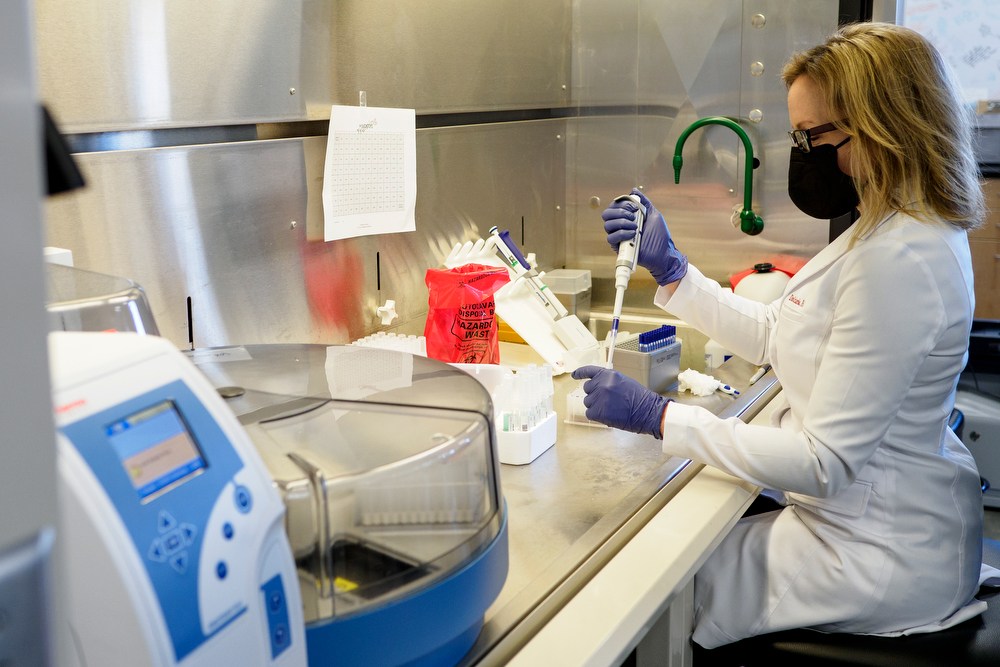
Tennessee lags every state in the nation at sequencing coronavirus variants – a scientific discipline that’s key to understanding and fighting new strains of the virus that are coming online, and a weakness that’s not likely to help as the U.K. variant was confirmed in Hamilton County this week.
Only 0.02% of Tennessee’s cumulative positive samples – 153 cases – have been sequenced for variants, according to data as of Feb. 12 from the National Genomic Surveillance Dashboard on the U.S. Centers for Disease Control and Prevention website.
“At this point, we literally are just flying blind,” said Elizabeth Forrester, a research scientist at the Baylor Esoteric and Molecular Laboratory at Baylor School in Chattanooga. “The reality is that we don’t even really know what’s here.”
The highly contagious B.1.1.7 coronavirus variant confirmed in Hamilton County this week likely circulated in the Chattanooga region for months before being detected, and researchers believe other dangerous variants could be here as well.
Not only is Tennessee behind other states at sequencing to understand the spread, but the U.S. as a whole is far behind where experts say it should be in monitoring for variants, posing a threat to recent gains made to curb the pandemic even as vaccine supplies increase.