
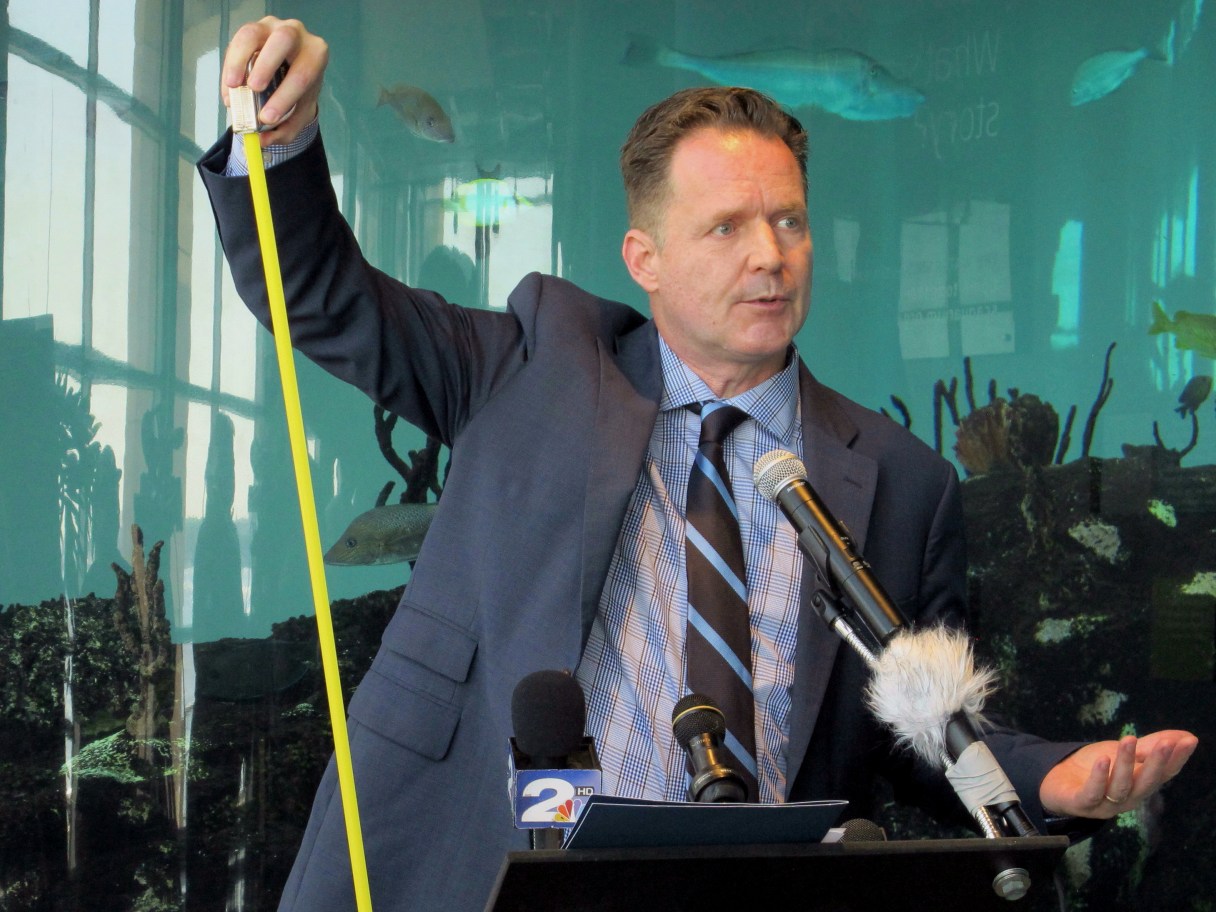
CHARLESTON, S.C. (AP) – Informing Gullah communities of slave descendants about the effects of sea level rise is part of a new initiative announced Thursday to help South Carolina coastal residents deal with climate change.
The South Carolina Aquarium on Thursday announced the Resilience Initiative for Coastal Education – called RICE for short. That’s in reference to the rice economy of colonial times that was built on the backs of slaves whose descendants now comprise the Gullah sea island culture.
Among the goals of the three-year initiative are raising public awareness both of sea level rise and the need for planning as well as working with local governments on solutions.
Emory Campbell, a Gullah community leader and director emeritus of the Penn Center near Beaufort, said sea level rise is a long-term development that often is not readily noticed.
“I think in some instances people have sensed a change in the tides because it affects their travels getting back and forth” to work, he said. “But by and large people are not aware of the changes now on weather.”