
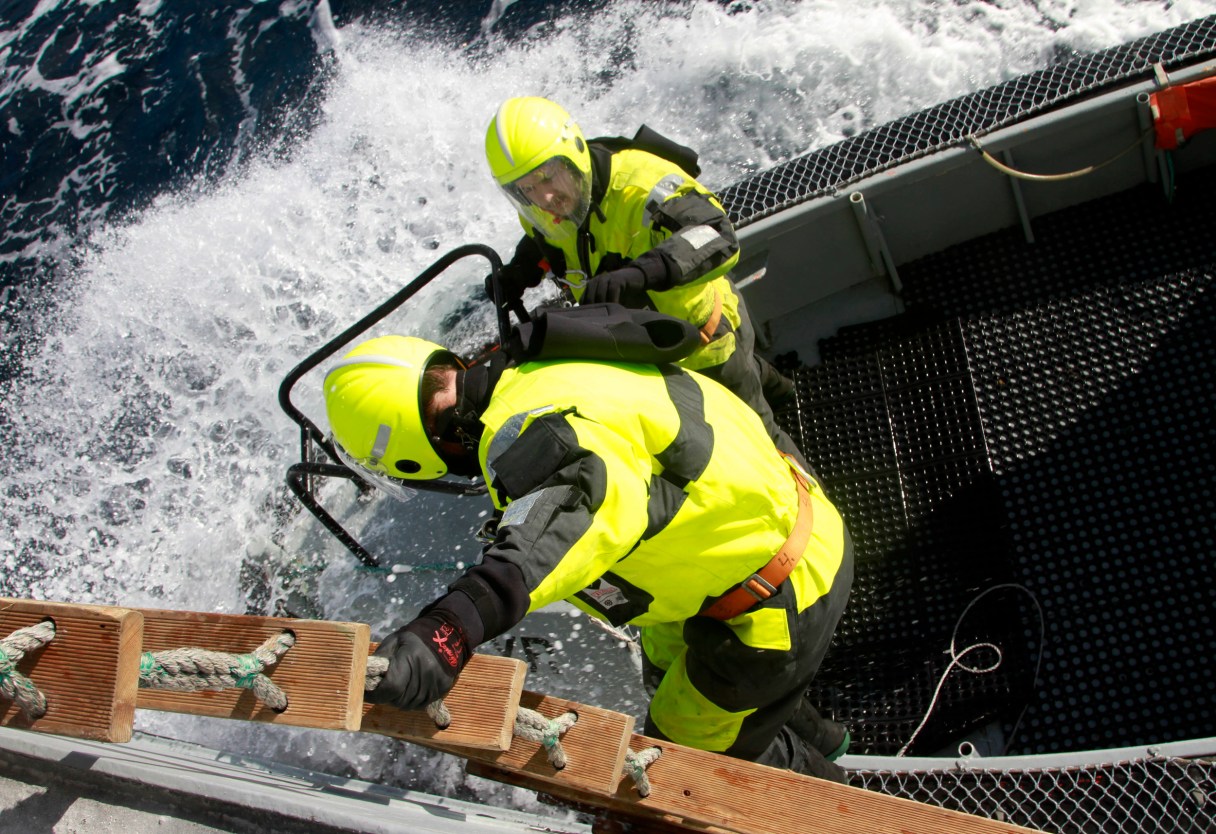
ABOARD THE COAST GUARD CUTTER TYR (AP) – The crew was about to dig into dinner when word of the “ghost ship” came through: a freighter hurtling out of control toward Italy with no crew – and hundreds of Syrians as cargo.
The cattle freighter – its animal pens crammed with families – was on a collision course with the Italian coast, and the refugee who had phoned authorities from on board said the cabin’s controls were jammed. The Tyr changed course and set off on a race against time.
The rescue operation by the Icelandic cutter Tyr was one of the most perilous in a string of high-seas dramas that point to a new modus operandi among smugglers who send migrants across the Mediterranean. Gangs buy scrapyard-bound cargo ships over the Internet and pack them with Syrians willing to pay top dollar to flee their ravaged homeland. The ships are then pointed toward Europe and abandoned, the migrants’ fate hanging between shipwreck and rescue.
Until recently, most migrants paid several hundred dollars for a trip aboard an old fishing boat, dinghy or speedboat. Hundreds of men, women and children perish every year in those voyages when their unseaworthy vessels capsize in stormy seas.
The war in Syria, which has driven more than 3 million people into flight, has offered a new, lucrative opportunity for smugglers. Comparatively well-off refugees are able to pay higher prices for passage on bigger, safer ships from the far eastern Mediterranean directly to Italy, from where they then cross overland to central and northern European countries.