
Wednesday, November 11, 2026Nov 11

Syria: IS destroys part of Roman theater in Palmyra

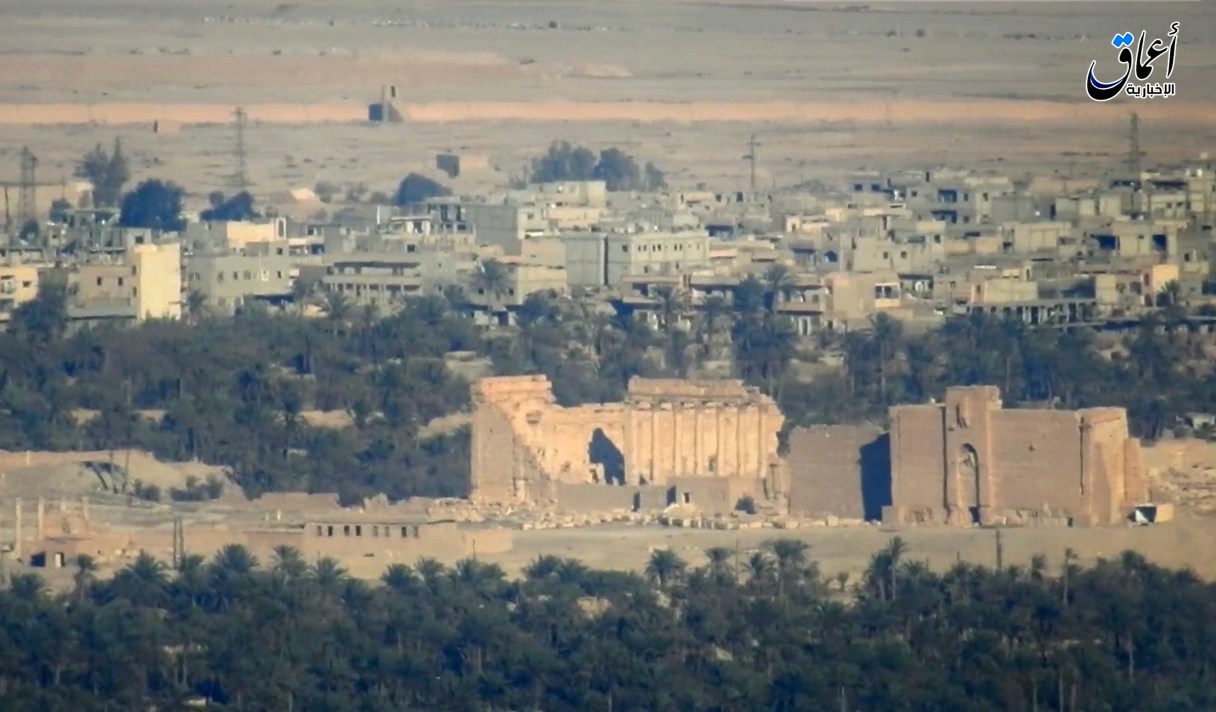
FILE - This Dec. 11, 2016, file image made from militant video posted online by the Aamaq News Agency, a media arm of the Islamic State group, purports to show a general view of the ancient ruins of the city of Palmyra, in Homs province, Syria. Islamic State group militant destroyed a landmark ancient Roman monument and parts of the amphitheater in Syria’s historic town of Palmyra, the Syrian government and opposition monitoring groups said Friday, Jan. 20, 2017. (Militant Video via AP, File)
FILE - This Dec. 11, 2016, file image made from militant video posted online by the Aamaq News Agency, a media arm of the Islamic State group, purports to show a general view of the ancient ruins of the city of Palmyra, in Homs province, Syria. Islamic State group militant destroyed a landmark ancient Roman monument and parts of the amphitheater in Syria’s historic town of Palmyra, the Syrian government and opposition monitoring groups said Friday, Jan. 20, 2017. (Militant Video via AP, File) FILE - This Dec. 11, 2016, file image made from militant video posted online by the Aamaq News Agency, a media arm of the Islamic State group, purports to show a general view of the ancient ruins of the city of Palmyra, in Homs province, Syria. Islamic State group militant destroyed a landmark ancient Roman monument and parts of the amphitheater in Syria’s historic town of Palmyra, the Syrian government and opposition monitoring groups said Friday, Jan. 20, 2017. (Militant Video via AP, File)

BEIRUT (AP) – Islamic State group militants destroyed a landmark ancient Roman monument and parts of the theater in Syria’s historic town of Palmyra, the government and opposition monitoring groups said Friday.

Maamoun Abdulkarim, the head of Syria’s antiquities department, said the militants destroyed the facade of the second-century theater along with the Tetrapylon, a cubic-shaped ancient Roman monument that sits in the middle of the colonnade road that leads to the theater.

Abdulkarim told The Associated Press that reports of the destruction first trickled out of the IS-held town late in December. But satellite images of the damage were only available late Thursday, confirming the destruction.

The imagery, provided by the US-based American Schools of Oriental Research, show significant damage to the Tetrapylon and the theater. The ASOR said the damage is likely caused by intentional destruction from IS but they were unable to verify the exact cause.

Abdulkarim said only two of the 16 columns of the Tetrapylon remain standing. The stage backdrop has sustained damage, according to ASOR.