
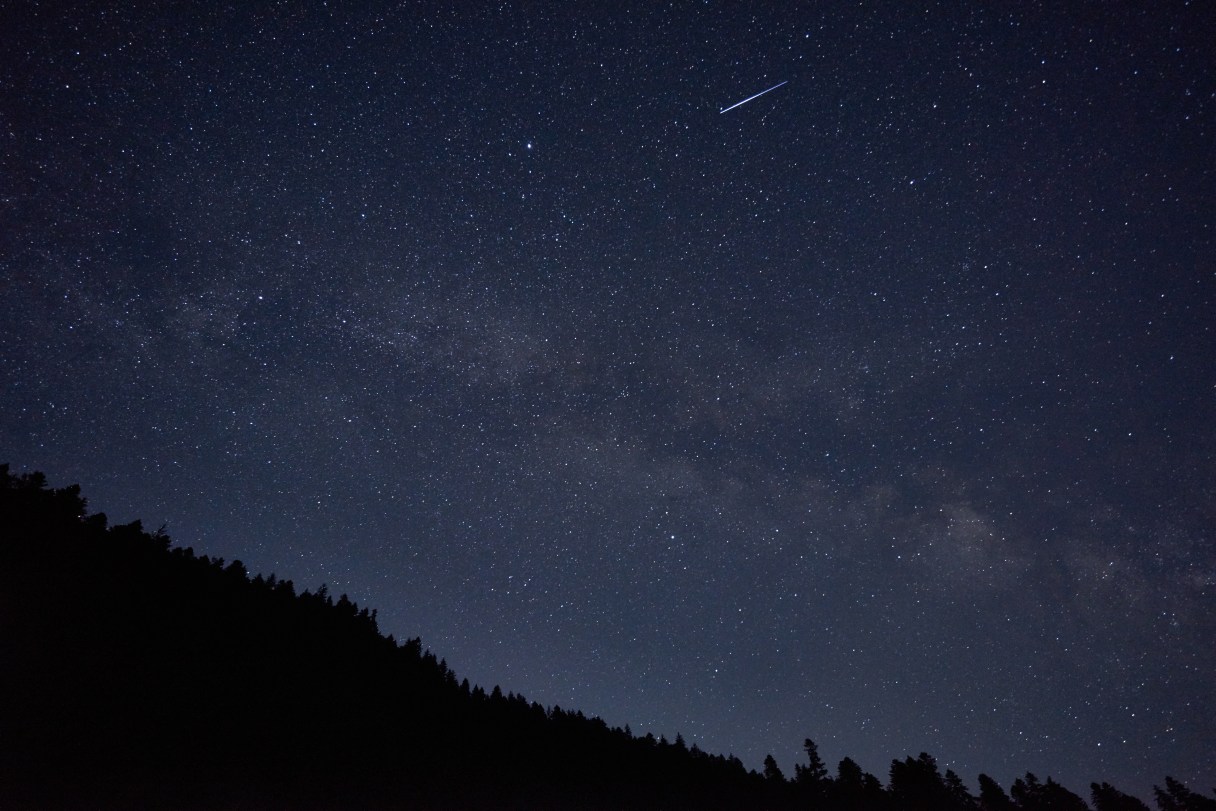
The Leonid meteor shower peaks tonight, and the early-morning hours Wednesday offer Chattanooga stargazers their best shot at catching its bright streaks.
What is a meteor shower?
Meteors are bits of space debris, some as tiny as a grain of sand, slamming into Earth’s atmosphere at tens of thousands of miles per hour. Friction with the surrounding air heats the speeding debris until it vaporizes, leaving behind a brief glowing streak.
A meteor shower happens when Earth passes through a trail of dust left behind by a comet. As a comet nears the Sun, its ice turns to gas; this process can also release dust that spreads out along its orbit. Earth crosses these trails at the same time each year, so showers return on schedule.
As Earth crosses through the trail of debris, the meteors appear to fan out from a single point in the sky, called the radiant. The effect is similar to how snowflakes hitting your windshield all appears to originate outward from one point in the distance — Earth is the car and the meteors are the snow.
What are the Leonids?
Meteor showers are named for the constellation where their radiant happens to sit. The Leonids take their name from Leo the Lion, the constellation that holds their radiant. Their source is Comet 55P/Tempel-Tuttle, which circles the Sun once every 33 years.